loading...
ANCHOR POINT CERTIFICATION & TESTING SYDNEY
Every anchor tested with calibrated equipment, tagged where it sits, and logged against a register you can actually use.
- Pull tested with calibrated equipment
- Tagged and logged on the spot
- Failures taken out of service before we leave
- Digital register you can scan on the roof

Talk to our team
Tell us a bit about your building or project and our team will get back to you. No obligation.
500+
Projects completed
100%
Safety record
34+
Years, since 1991
PROJECT HIGHLIGHTS
500+
Projects Completed
Successfully delivered height access solutions across Australia
100%
Safety Record
Maintaining the highest safety standards on every project
34+
Years Experience
Australia's original height access company since 1991
 IRATA certifiedRope access technicians
 WAHA memberWorking at Height Association
 CM3 prequalifiedContractor safety prequalification
- Australian StandardsDesigned & certified to Standard
- In-house engineeringDesign, install & certify
An anchor point is the simplest height safety system on a building and the one most likely to be wrong. It is a single fixing, usually installed years ago, often by a contractor nobody at the building remembers, and it is the thing a worker puts their whole weight on. Testing it is not a formality. It is the only way anyone finds out whether the anchor and the structure behind it are still capable of doing the job.
Karabiner tests, certifies and recertifies roof anchors across Sydney and the rest of Australia. We test anchors we installed and, more often, anchors somebody else installed. Where an anchor cannot be identified, or there is no documentation behind it, we say so in the report rather than certifying it and hoping.
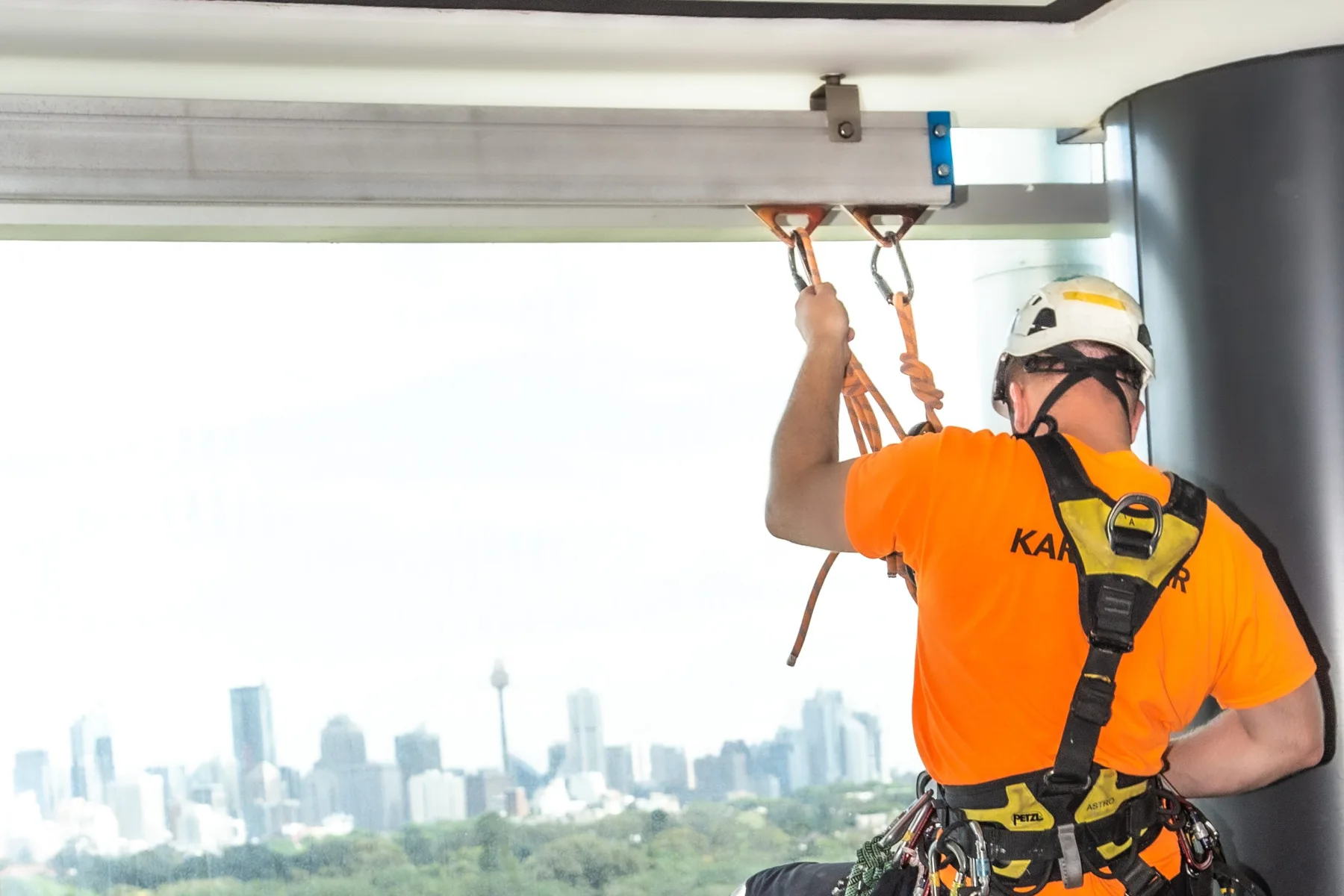
This page covers anchors specifically. If your building also has static lines, rigid rail, ladders, walkways or harnesses to deal with, our full height safety certification and audit service covers the lot in one visit. If the anchors turn out to be beyond repair, we also design and install replacement systems, and we use rope access where the anchor itself sits somewhere you cannot safely walk to.
What we check on every anchor
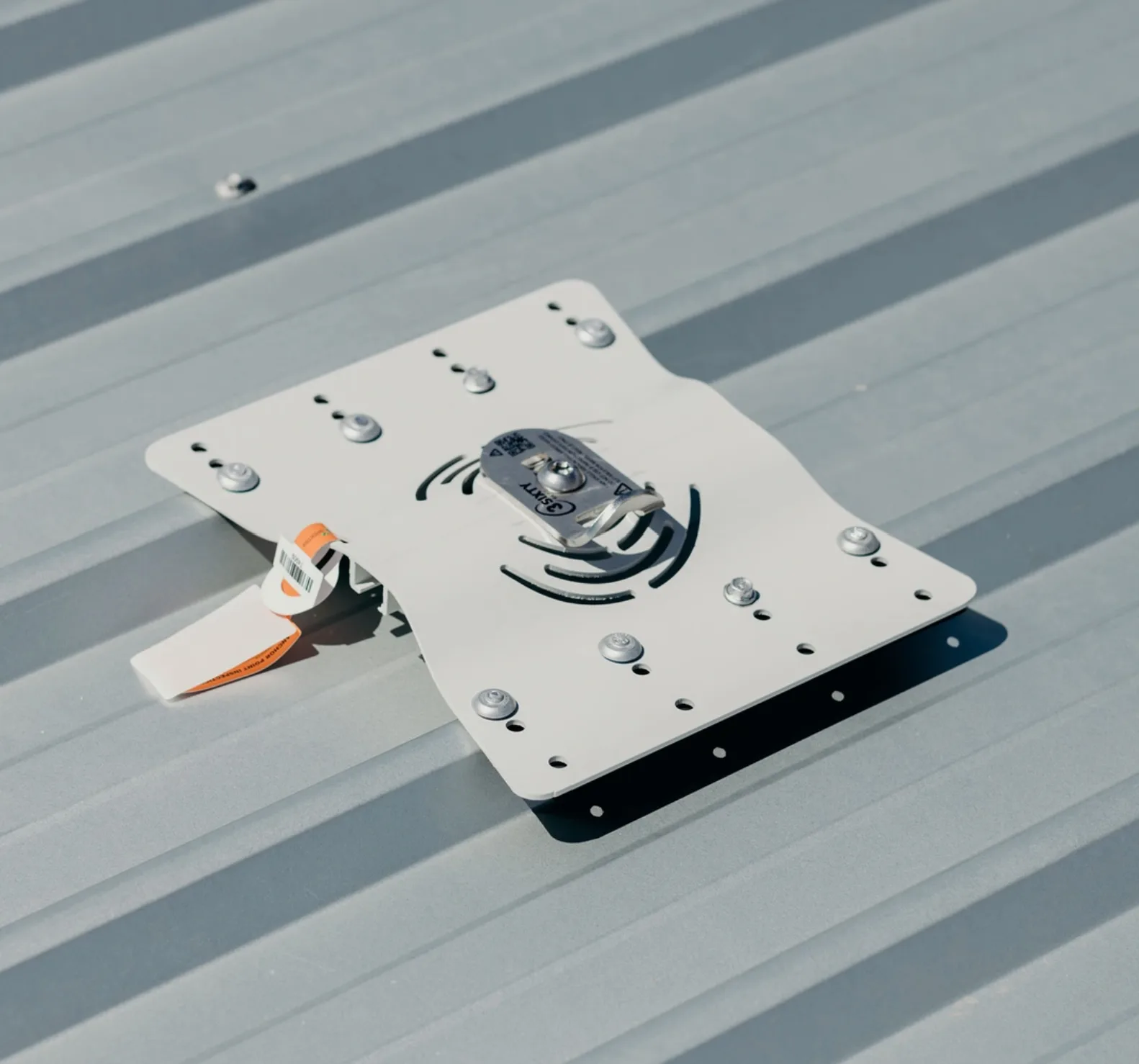
An anchor fails in a small number of predictable ways, and most of them are invisible from a distance. The hardware gets examined, and so does whatever it is fixed to, because an anchor is only ever as good as the purlin, slab or beam behind it.
- CorrosionAt the base plate, and at every point where two different metals meet. Coastal sites give us plenty of this one.
- Movement in the fixingAny play in the fixing itself, and the condition of the fixing.
- Weld conditionCracking and fatigue on welded anchors, and coating breakdown around the weld.
- Sealant failureA bead that has let go and allowed water into the substrate underneath. A sound anchor that leaks is still a defect you will pay for.
- DeformationAnything that says the anchor has taken a load at some point in its life.
- The structure behind itThe purlin, slab or beam the anchor is bolted through. This is the weak point far more often than the anchor is.
- Tag and markingsWhether they are still present, legible and attached to the right anchor.
- Register matchWhether what is on the roof matches what the paperwork says is on the roof.
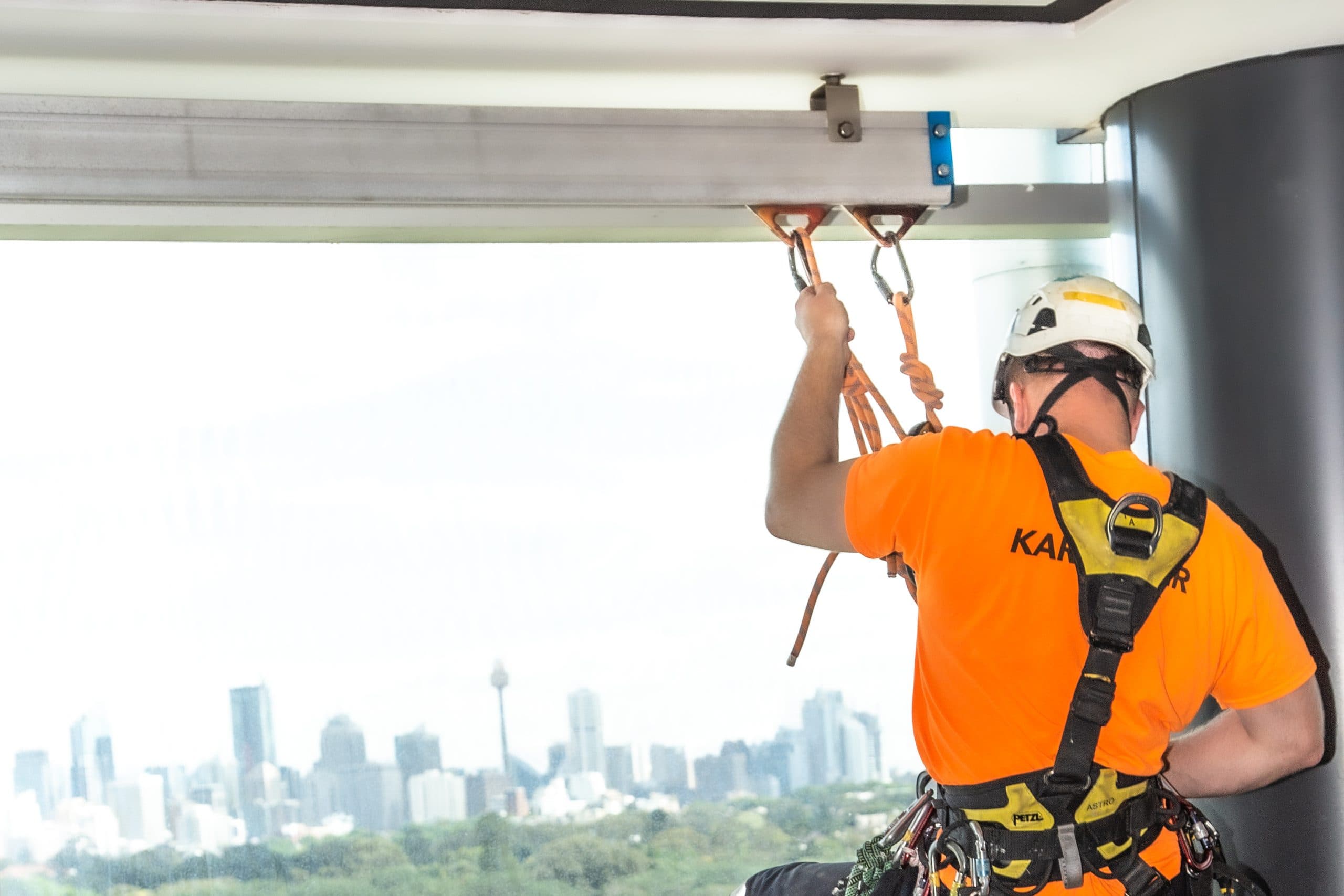
Anchor types we test
Different anchors fail differently, and the test method follows the manufacturer's documentation for that specific product rather than one blanket procedure applied to everything on the roof.
| Anchor type | How it is fixed | What we focus on |
|---|---|---|
| Surface mount, metal deck | Bolted or riveted through the roof sheet into the purlin below | The purlin is the weak point far more often than the anchor is. We check the fixing pattern and what it lands in. |
| Concrete mount | Chemically fixed or mechanically fixed into a concrete slab or upstand | Substrate condition, edge distance and spacing all matter here, and all three get recorded against the individual anchor. |
| Structural, welded | Welded to steel structure, usually on plant decks and lift overruns | Weld condition and coating breakdown, plus whatever the weld is attached to. |
| Membrane and tiled roof | Fixed through a waterproof membrane or tiled surface | The fixing and the waterproofing get checked together, because a sound anchor that leaks is still a defect you will pay for. |
| Post and davit bases | Sockets and bases for removable posts and davit arms | The socket, the base and the removable component are inspected as one system, not three separate items. |
How a test day actually runs
1
Before we arrive
Send us whatever paperwork exists: the original installation certification, previous test reports, roof plans and the asset register. If none of it exists, tell us. We will build the register from scratch on the day, it just takes longer and costs more.
2
Locating every anchor
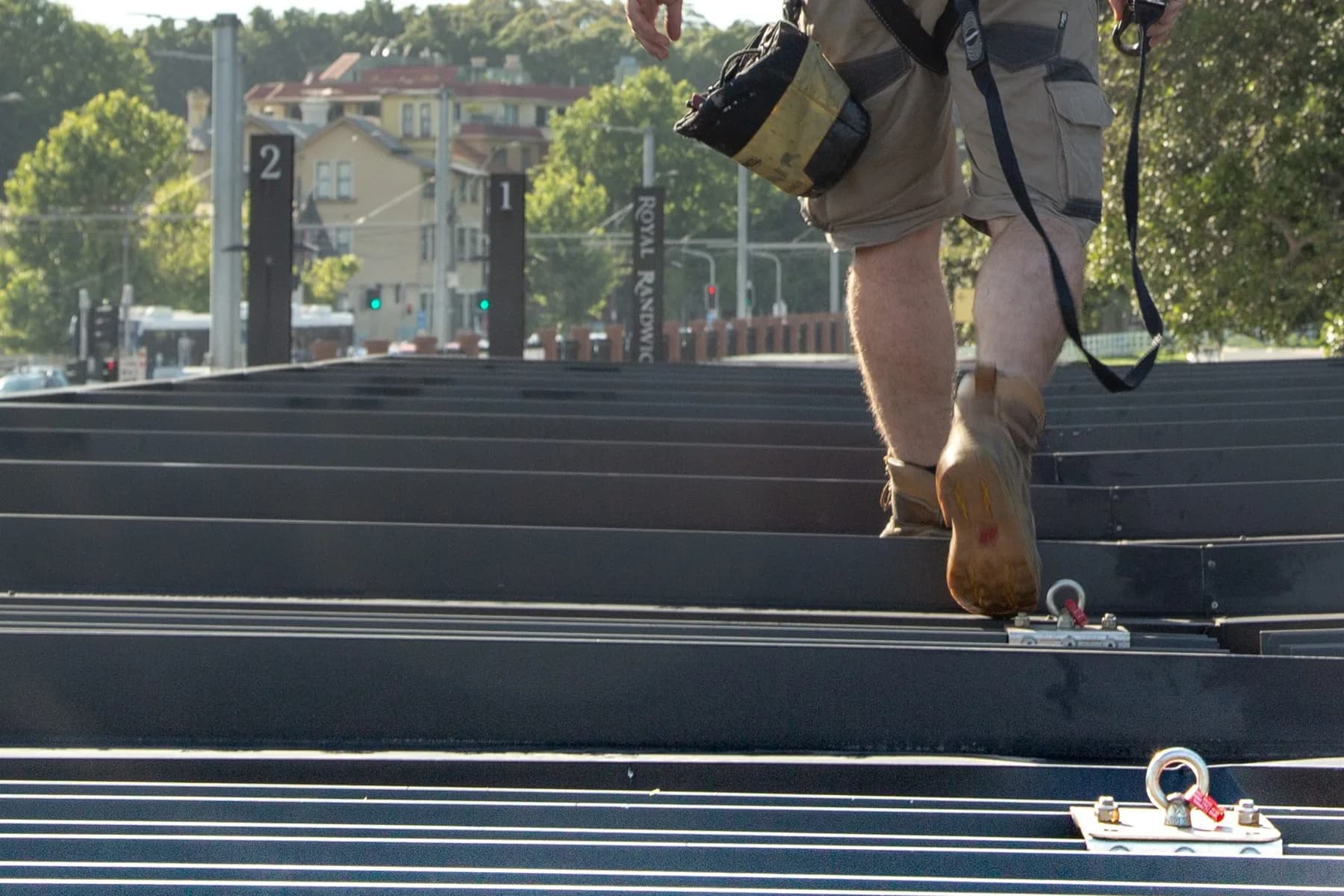
We walk the roof and find them all, including the ones that are not on any plan. Anchors get buried under new plant, painted over, or cut off entirely during a re-roof, and nobody tells the person holding the compliance file. The count at the end of the day is often not the count we were quoted from.
3
Testing, one at a time
Each anchor is tested to the manufacturer's method using calibrated equipment, and the reading is written against that individual anchor's tag number. Not against the roof, not against a batch. If a specific anchor is ever questioned later, there is a number attached to it.
4
Tagging on the spot
Anything that passes is tagged and logged. Anything that fails is tagged out where it sits, before we leave the roof, so nobody clips onto it in the gap between our visit and the report landing in your inbox.
5
The report
Every anchor with its tag, location, test result and status. Photographs of each defect with enough detail to price the repair. A plain list of what has to happen before anything that failed can be used again.
The question we are asked more than any other is how often anchors need testing. The honest answer is that it depends on the anchor, on the manufacturer's documentation for that specific product, and on the life the hardware has had. A plant deck in Cronulla is a harder environment for stainless than a car park roof in Homebush. We confirm the schedule for your anchors in writing before the programme starts, rather than quoting you a number that may not apply to your building.
What you get back
The point of a test is the record it leaves behind. Ours is a digital asset register: every anchor with its tag, its location on a roof plan, its test history and its current status, available on a phone while you are standing on the roof looking at it. When the next round comes due, or when a contractor asks whether a specific anchor is safe to use, the answer takes seconds rather than an afternoon in a filing cabinet.
Get your anchors tested
Leave your details and we will call you back to scope the job.
Products & accreditations
PARTNERS & ACCREDITATIONS




"Karabiner has been our go-to subcontractor, whether it's for BMUs, rope access or anything to do with heights and complex. Karabiner to date has never let us down."
Andrew Henebery, Construction Manager, Multiplex
@karabiner_access
From the field
Recent work from our crews on site, straight from our Instagram.


Trusted by Australia's leading builders
_logo.svg.png)







Related services
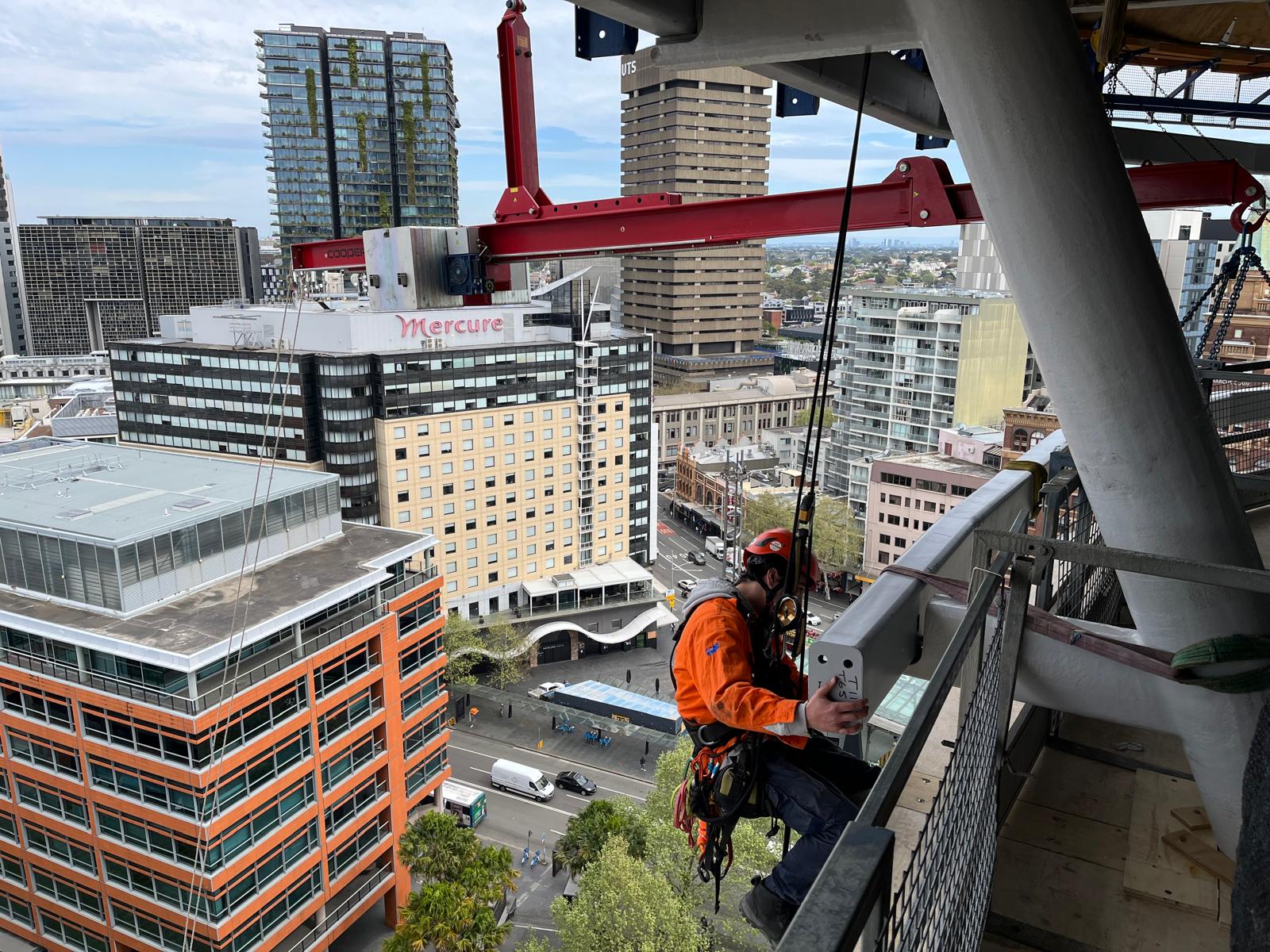
Rope Access Maintenance
Facade cleaning, inspection and repairs at height, without scaffolding or a crane.
Height Safety Installation
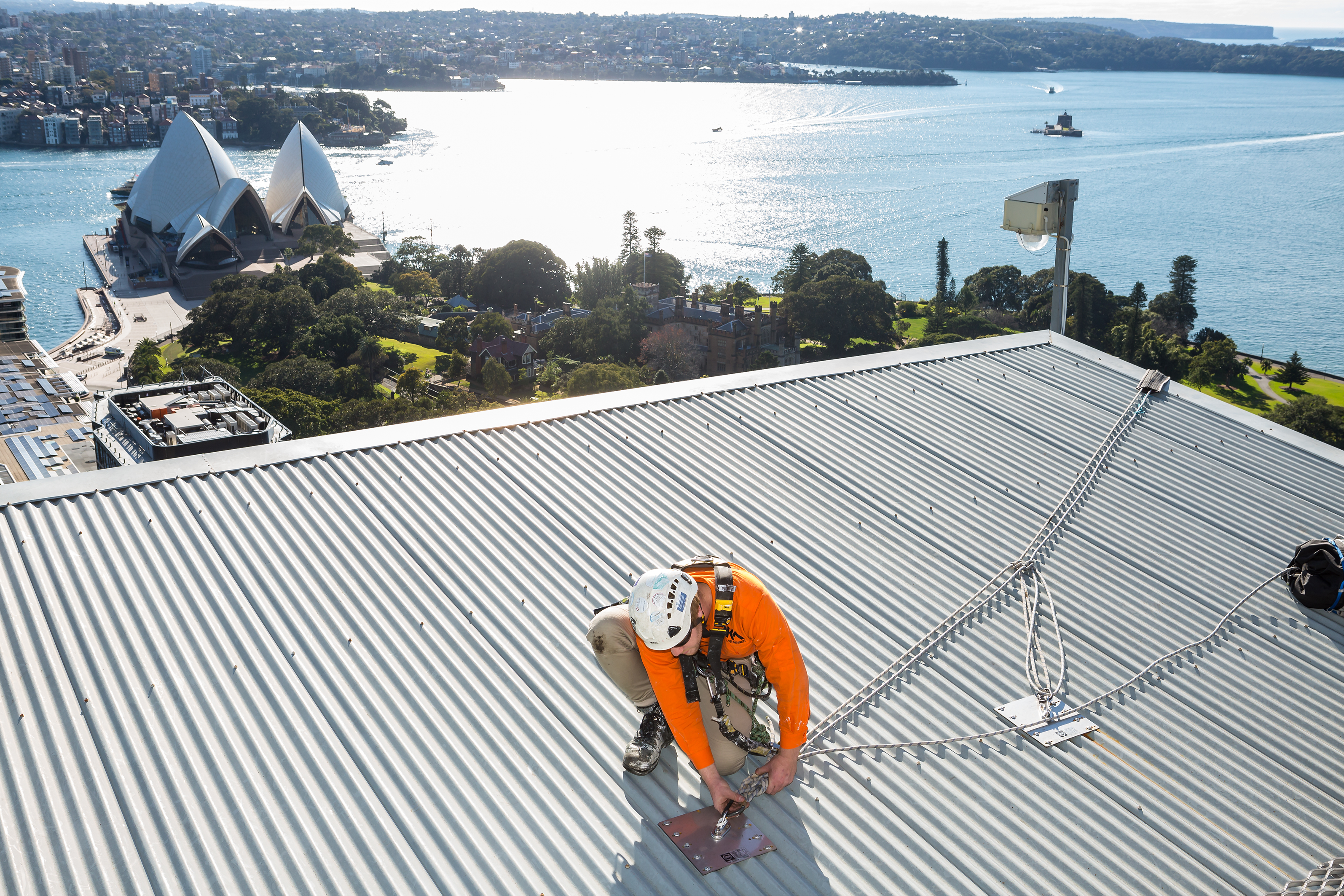
Roof anchors, static lines, walkways and guardrails, designed, installed and certified.
Building Maintenance Units
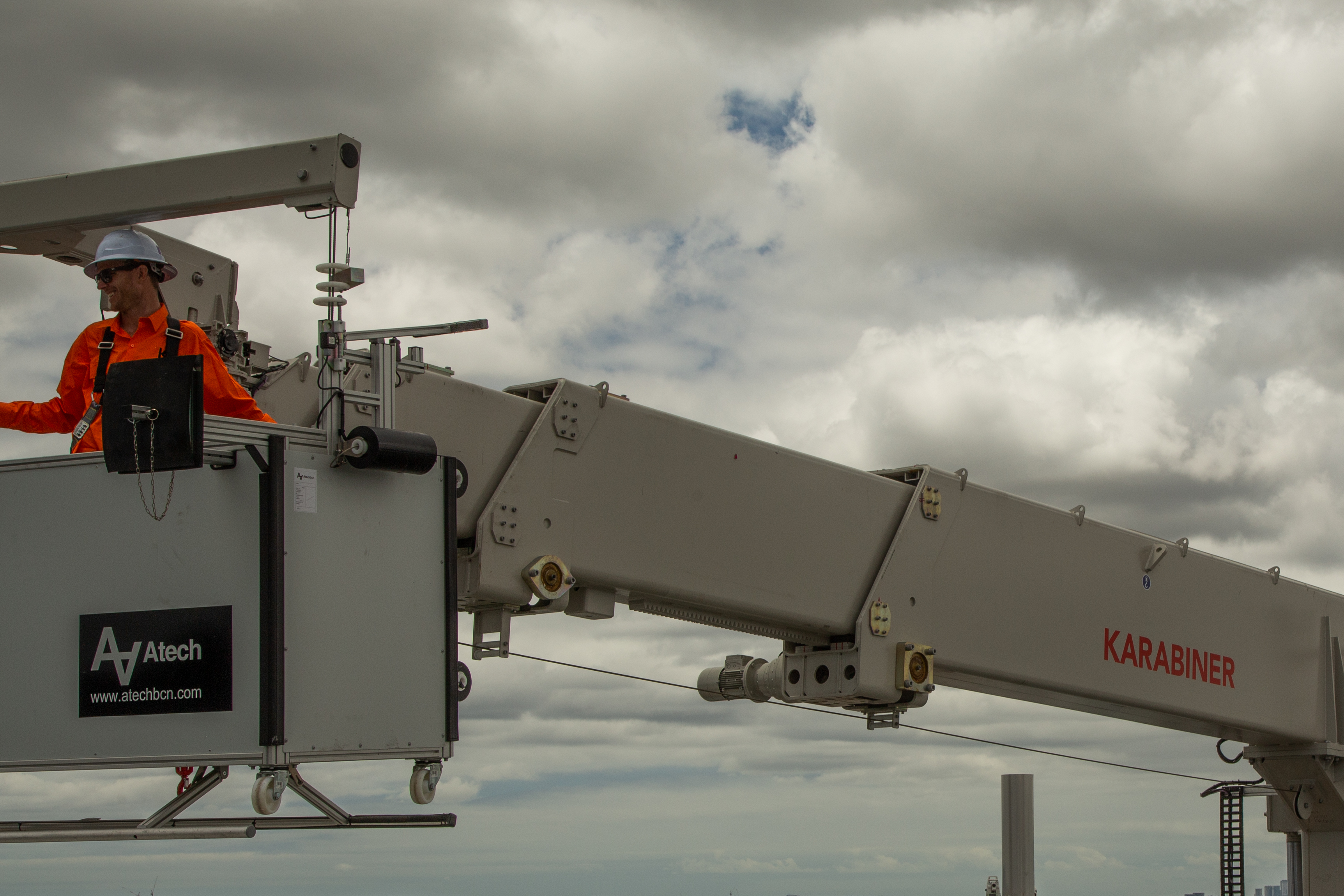
Design, installation and servicing of BMU and facade access systems for high-rise buildings.
The team behind the work
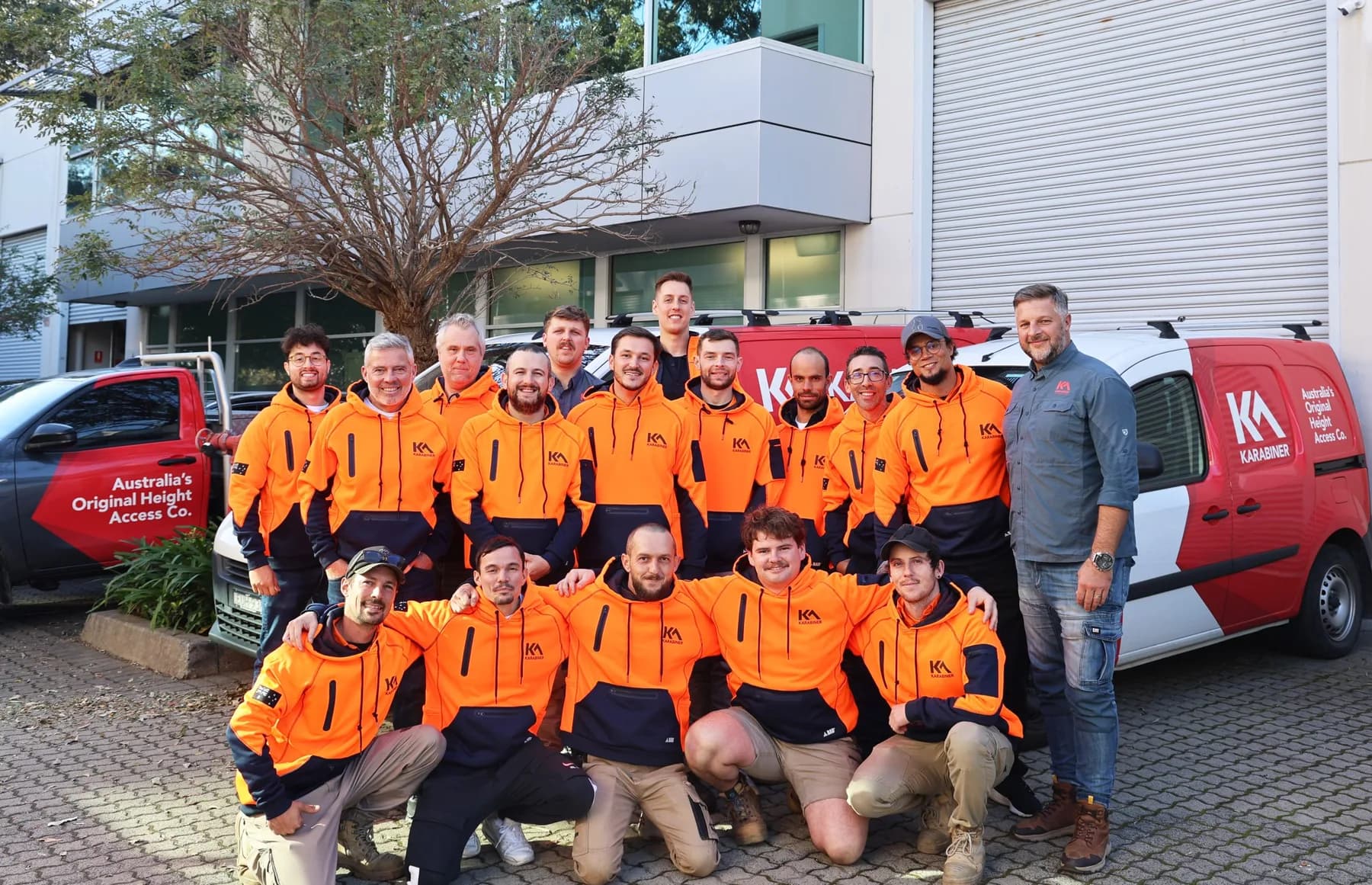
IRATA-qualified technicians and in-house engineers, led by people who have worked at height across Sydney for decades.
Meet our people


FREQUENTLY ASKED QUESTIONS
It is the process of testing an installed roof anchor, then issuing documentation that records what was tested, how, by whom, and the result for that specific anchor. Certification attaches to individual tagged anchors on a specific building, not to the building as a whole, which is why a certificate is close to useless without the register that sits behind it.
The anchor is examined by hand and by eye for corrosion, movement, weld and sealant condition and any deformation, then load tested using calibrated equipment to the method in the manufacturer's documentation for that product. The reading is recorded against that anchor's tag number rather than against the roof or the batch, so an individual anchor can be traced later.
It depends on the specific anchor, the manufacturer's documentation for that product, and the environment it lives in. Stainless on an exposed plant deck near the coast has a harder life than the same anchor on a sheltered car park roof inland. We confirm the schedule for your anchors in writing before a programme starts, rather than quoting a single number that may not apply to your building.
A competent person, meaning someone with the training, qualifications or experience to detect faults in height safety hardware and decide what has to be done about them. Ask any prospective inspector what their equipment calibration situation is and how results are recorded against individual anchors. If the answer is vague, the certificate will be too.
Yes, and most of what we test was installed by somebody else, often years ago and often by more than one contractor across different parts of the same roof. Where an anchor cannot be identified, or there is no documentation behind it at all, we record that in the report rather than certifying it.
It comes out of service immediately and is tagged out where it sits, before we leave the roof, so nobody clips onto it in the gap between the visit and the report. We tell you on the day, talk through interim controls so planned work can still go ahead safely, then quote the repair, replacement or redesign. Once the fix is done the anchor is retested and the register updated.
It depends on what failed. A corroded fixing on an otherwise sound anchor is usually a repair. An anchor fixed into a substrate that has degraded is a redesign, and that goes back through engineering rather than being patched. We tell you which one you are looking at before quoting.
Yes, and it is a common starting point. We locate every anchor on the roof, including the ones missing from the plans, build the asset register from scratch, and test and tag what is there. It takes longer than a repeat visit to a documented site, so it is worth flagging when you ask for a price.
Yes. Portfolio work is a large part of what we do for facility managers, strata managers and asset owners. Every site goes onto one register, visits are grouped by geography, and each building is reported in the same format so you can compare them and plan remediation spend across the portfolio.
Still have a question we haven't covered? Tell us about your project and our team will get back to you.
Andrew Ferguson
Founder / CEO
Tell us about your building or project and my team will get back to you with practical, no-obligation options.
Talk to our team
Tell us a bit about your building or project and our team will get back to you. No obligation.