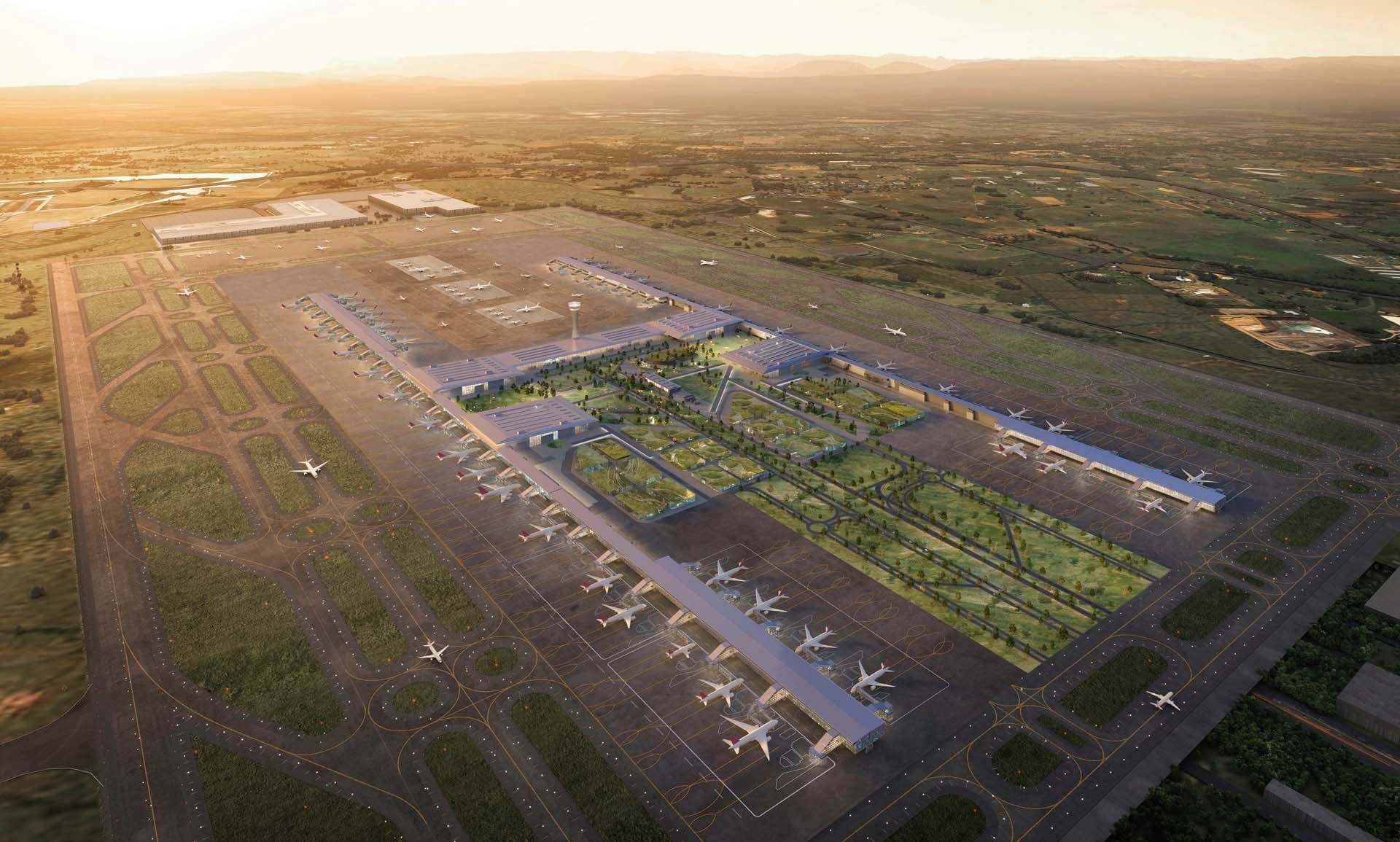
Multiplex appointed Karabiner to design, install and certify every external and internal fall protection and rope access system at the new Western Sydney International (Nancy-Bird Walton) Airport. That package is now complete.
An airport terminal is a hard building to make safe to maintain. The roof is enormous, the internal voids are high and awkward, and the people who will work on it in twenty years are not the people building it today.
National infrastructure, and the standards that come with it
We worked directly with Multiplex and Western Sydney Airport Corporation throughout, which mattered because the design did not stand still. As construction progressed we worked through multiple design revisions, most of them aimed at improving long term maintenance access rather than short term buildability.
That is the right trade to make. A system that is quick to install and painful to use hands the problem to the operations team for the life of the asset.
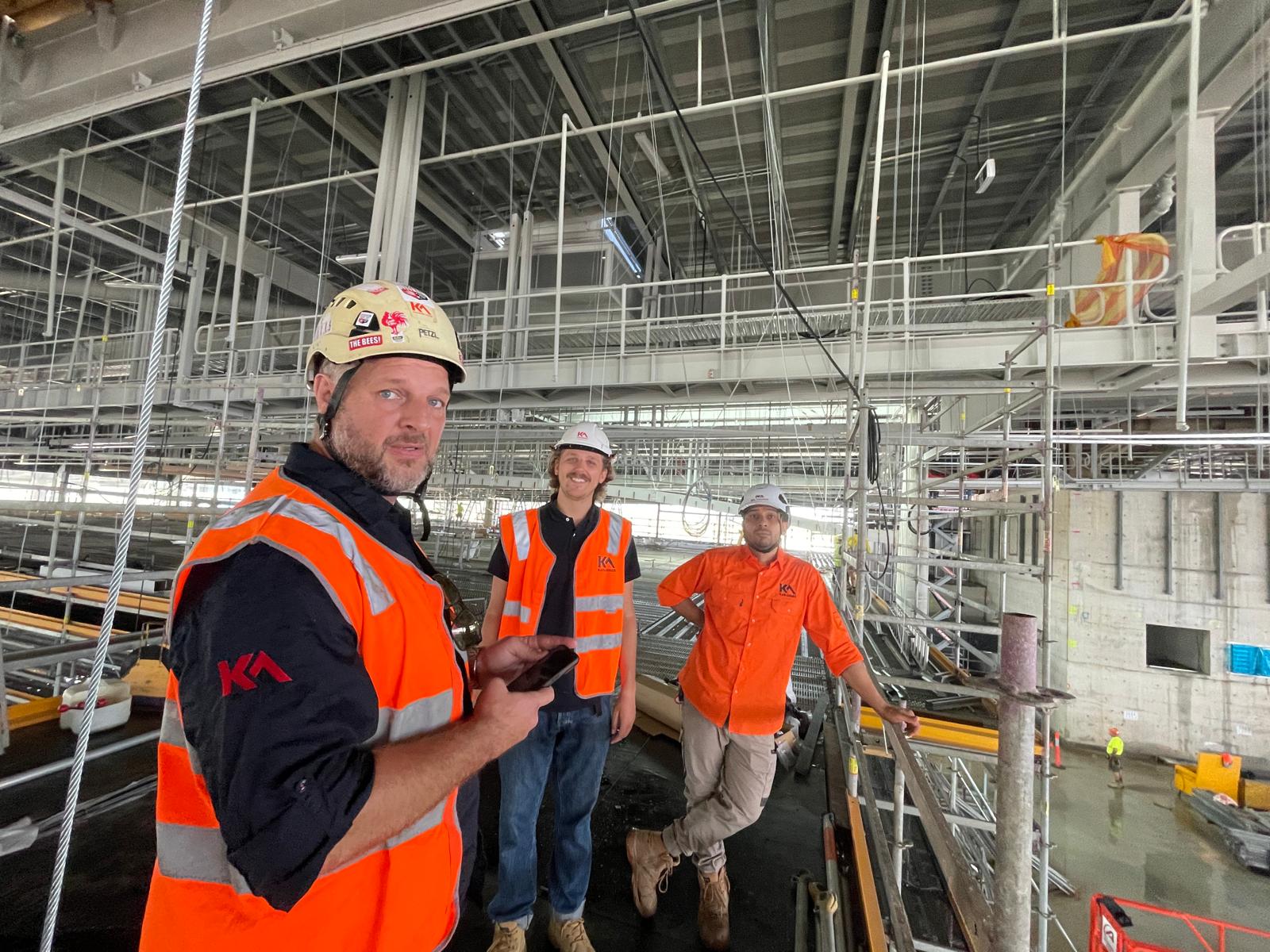
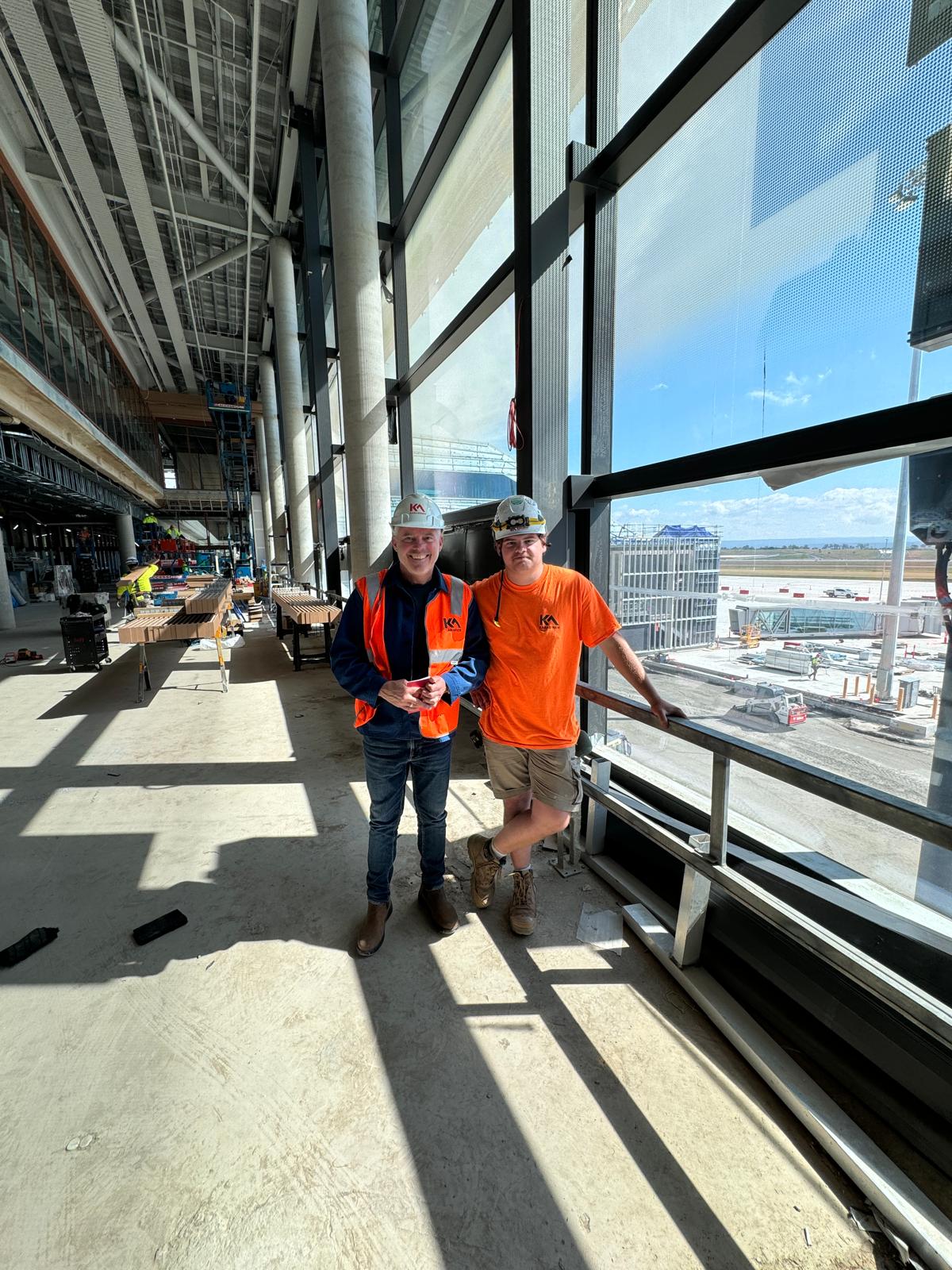
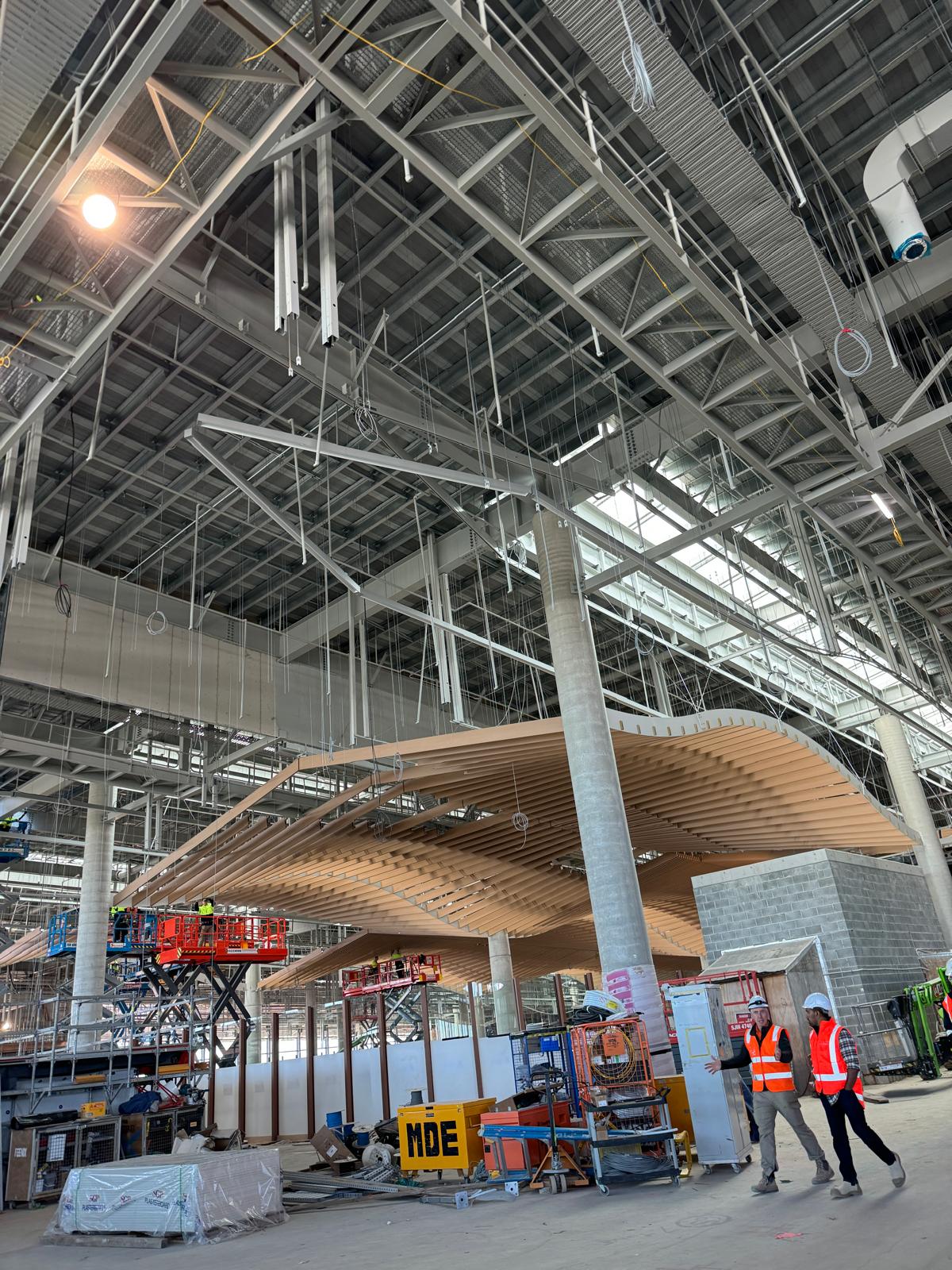
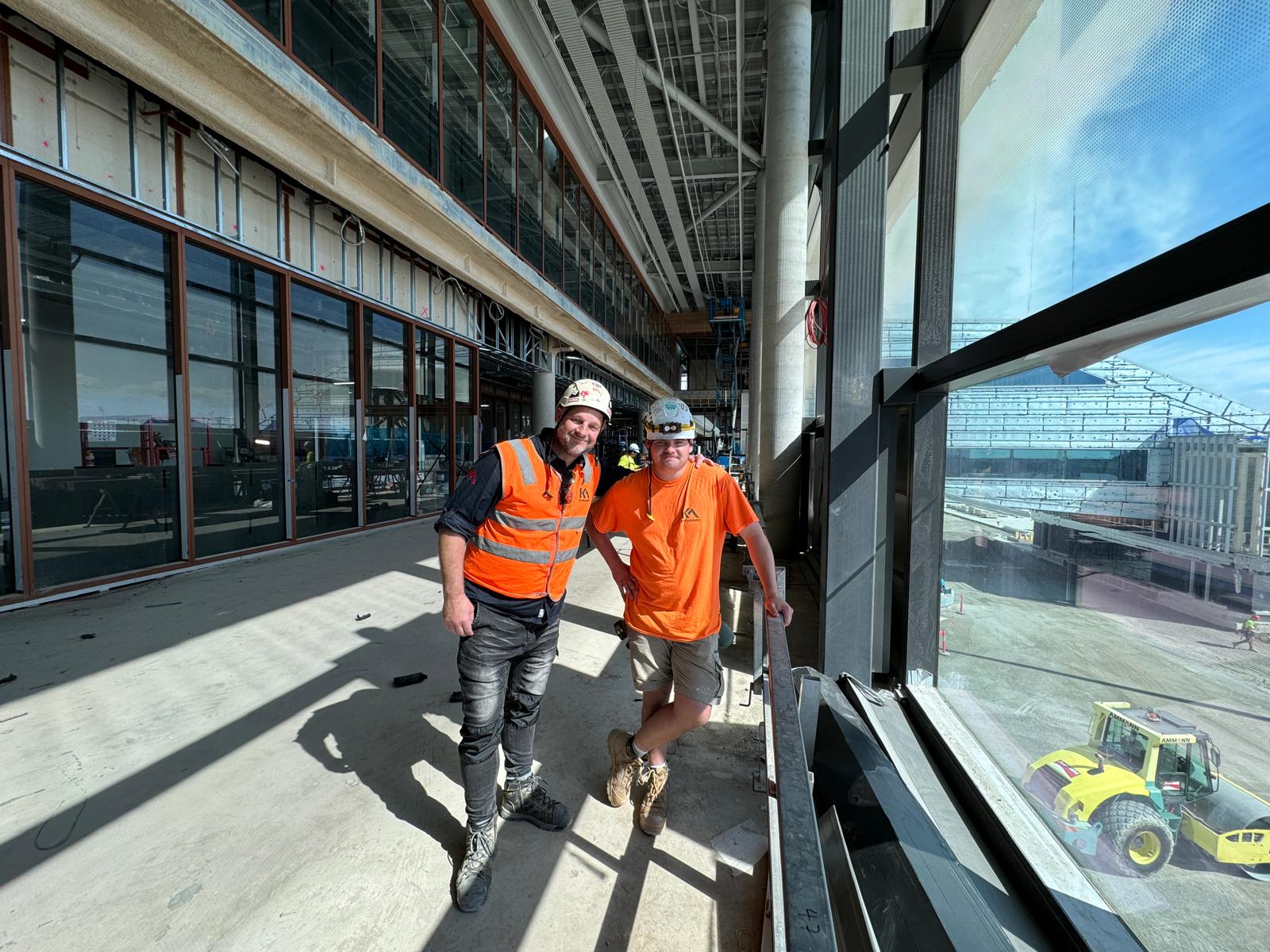 Karabiner technicians inside the terminal while the facade was still going in.
What went in
The package covered six system types:
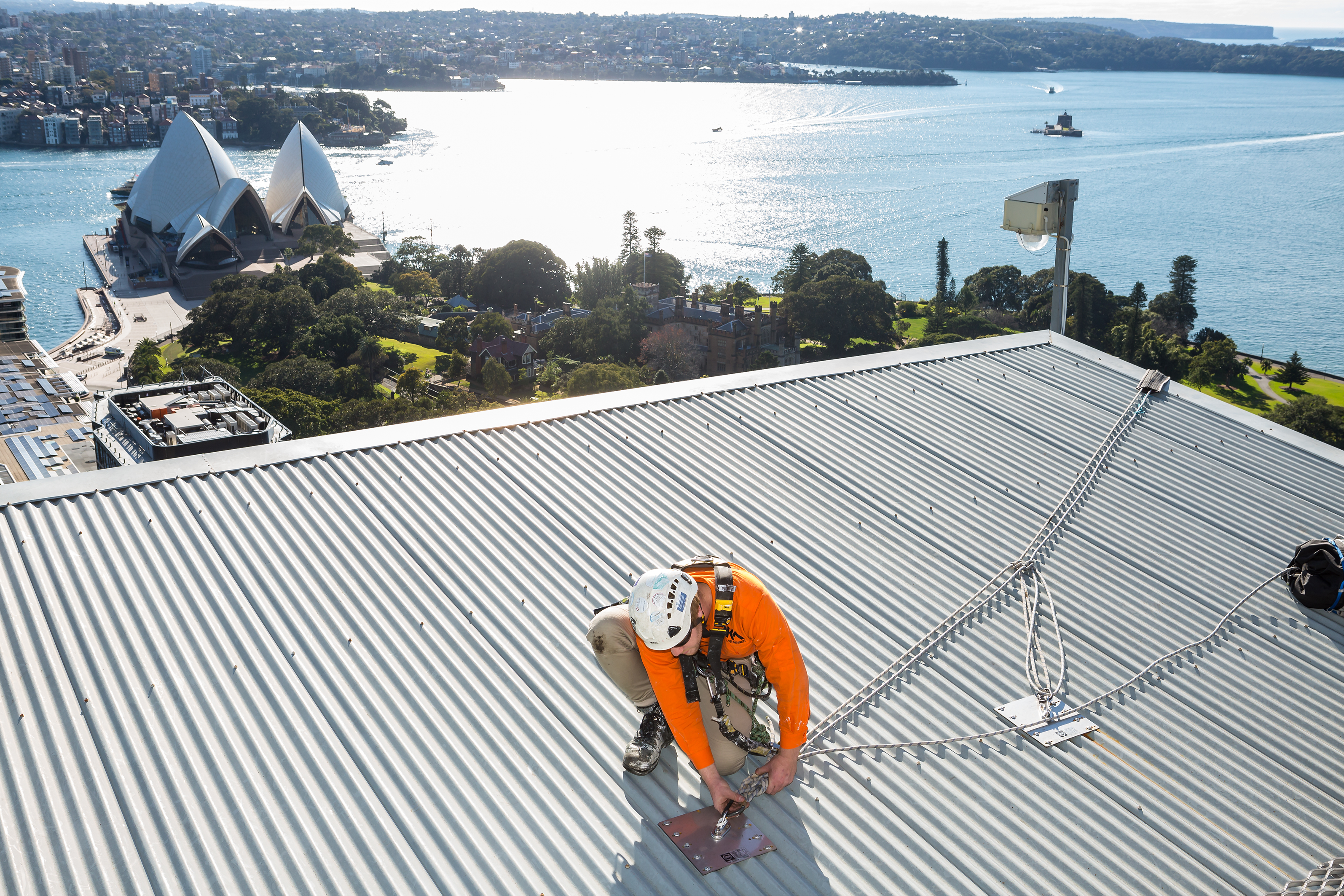
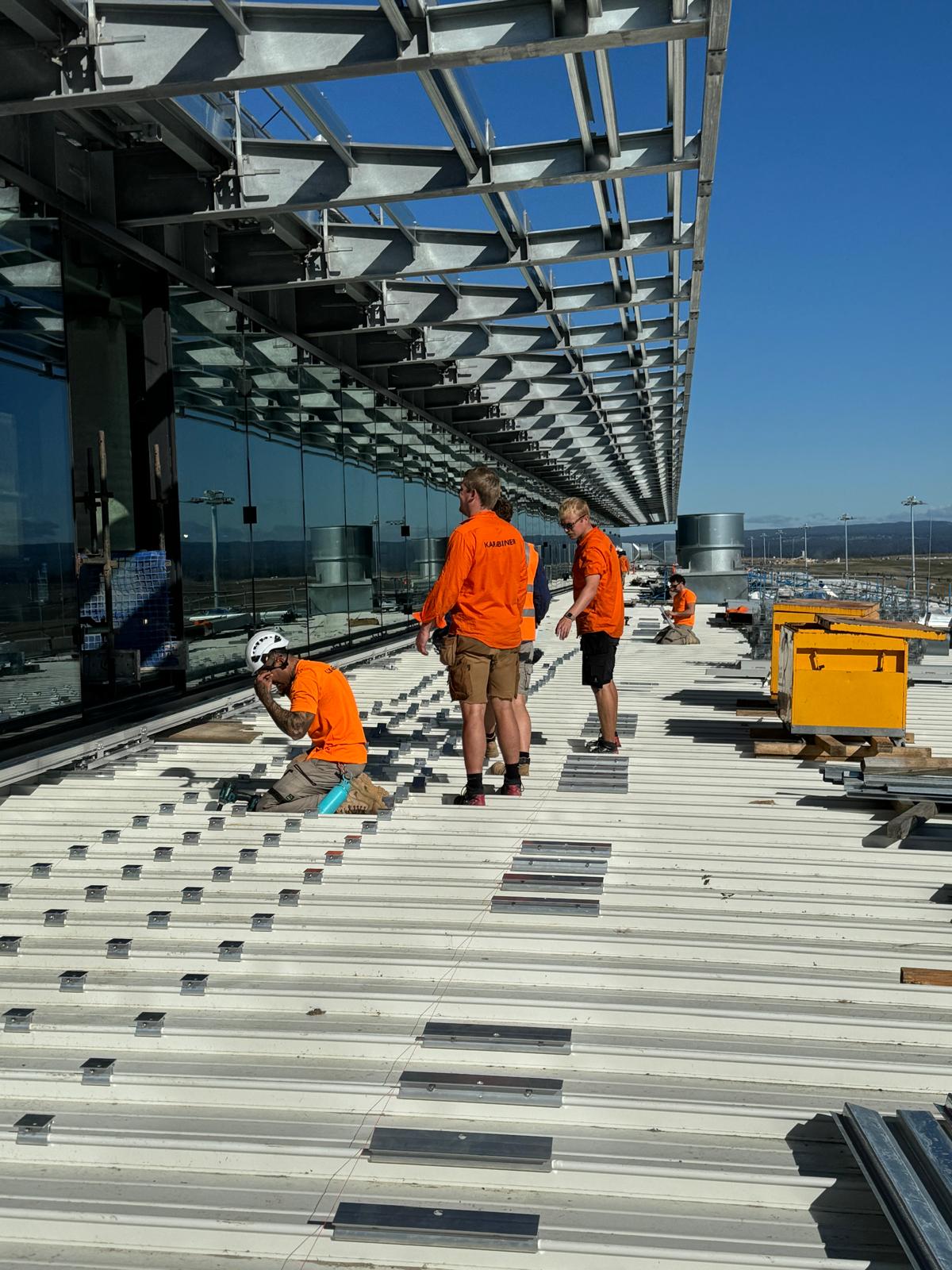
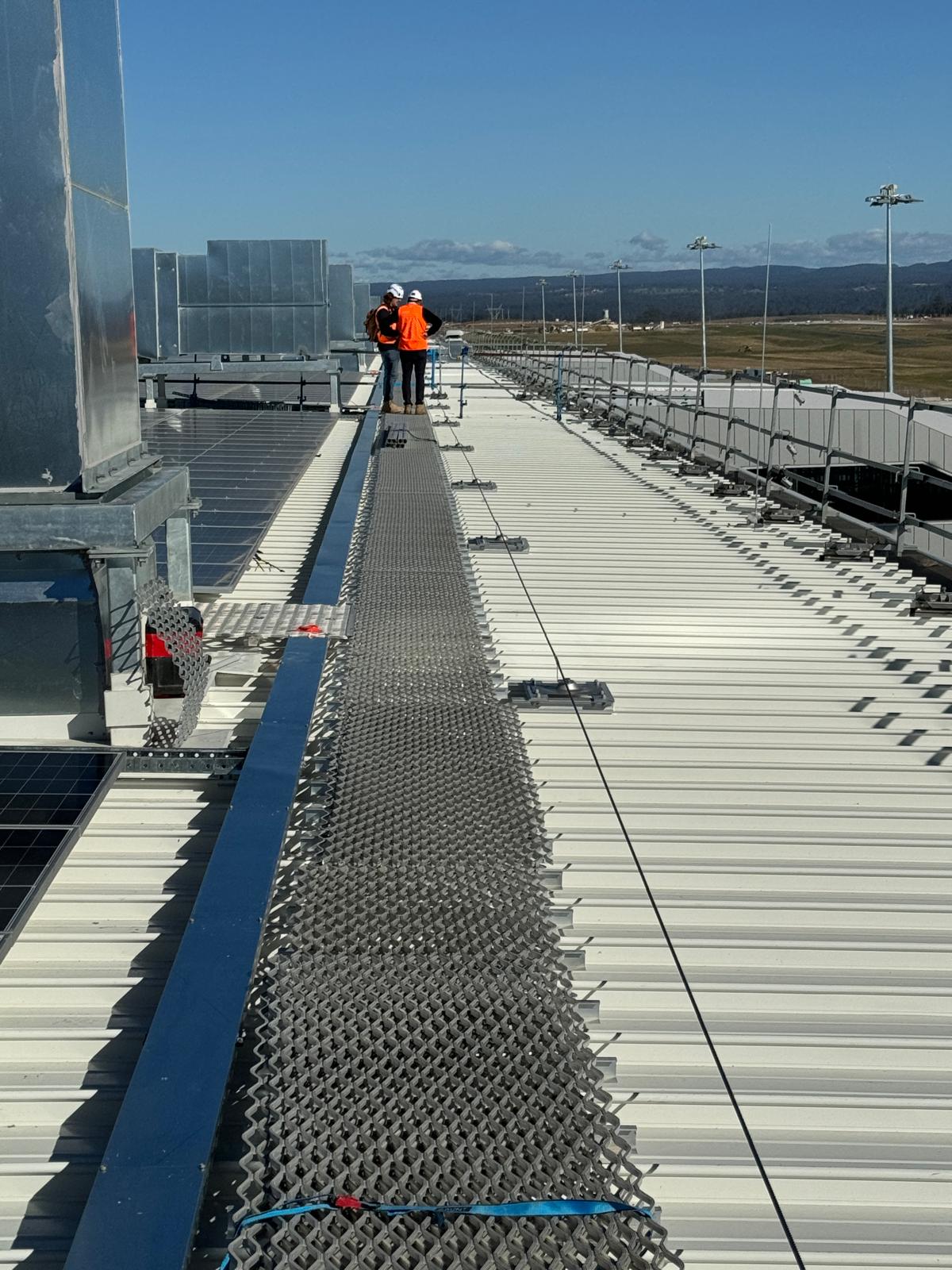
- roof mounted static line and anchor systems
- abseil rail systems across the facade zones
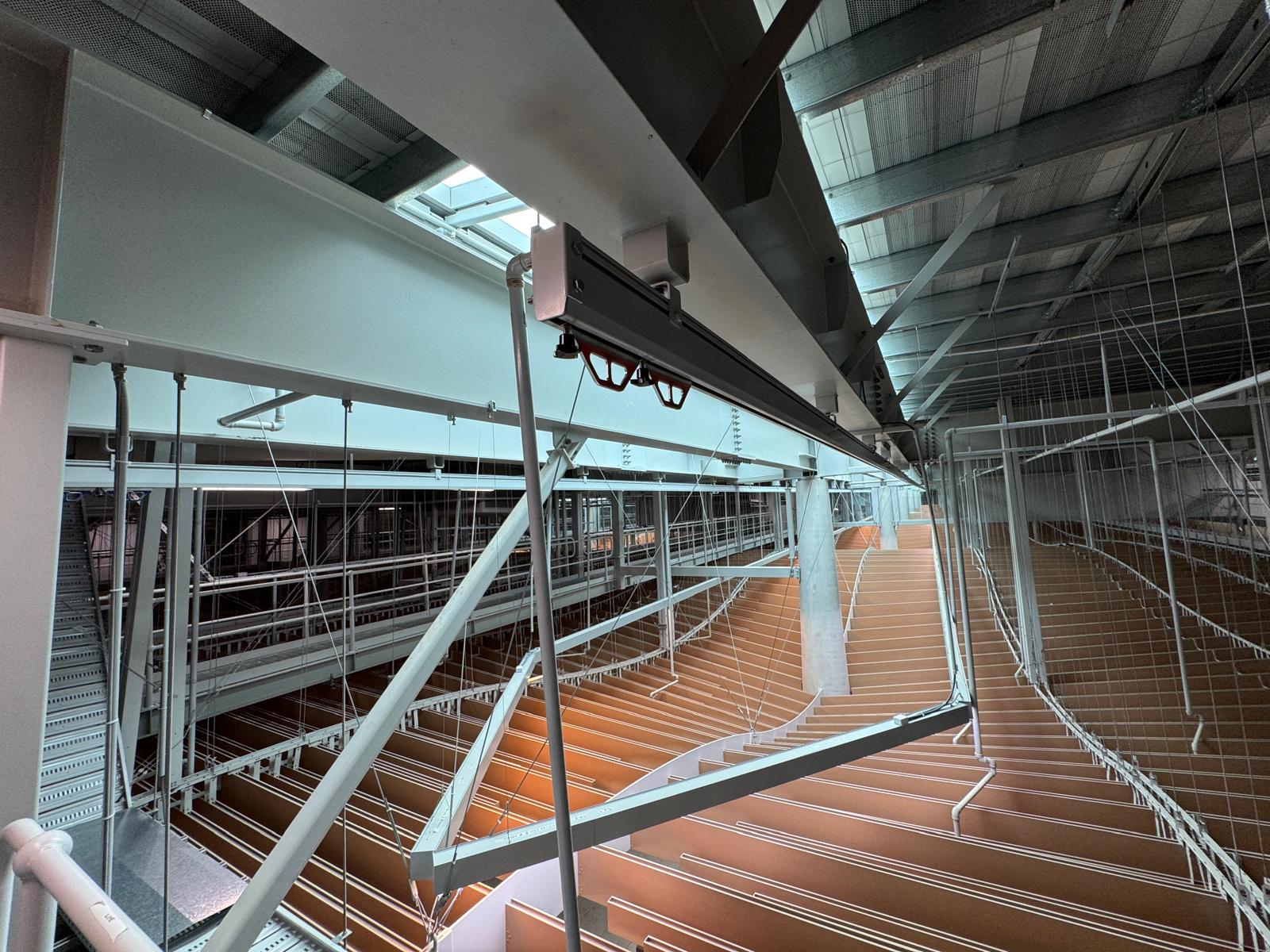
- internal fall arrest systems for ceiling void and plantroom access
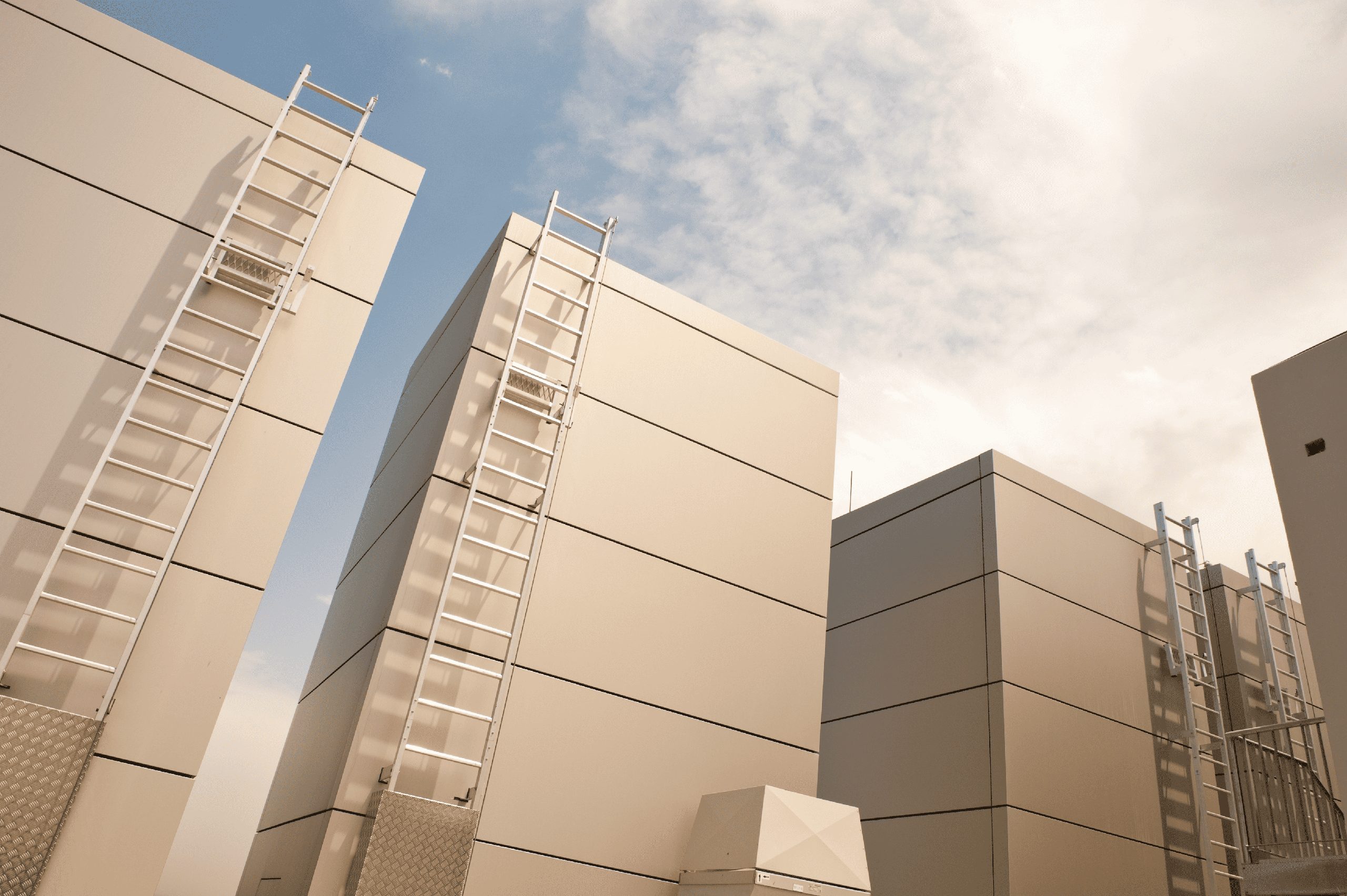
- ladder access systems with fall arrest
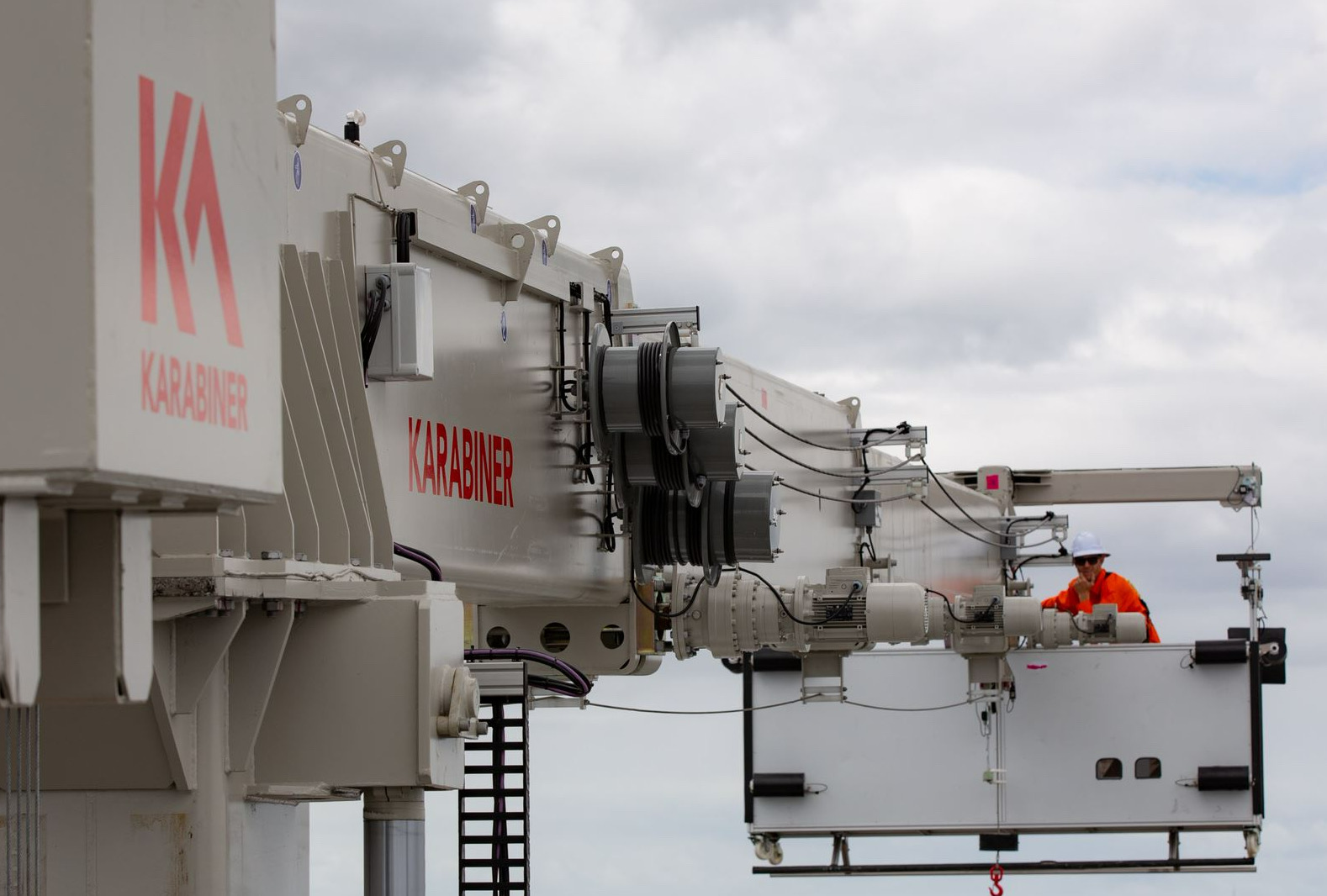
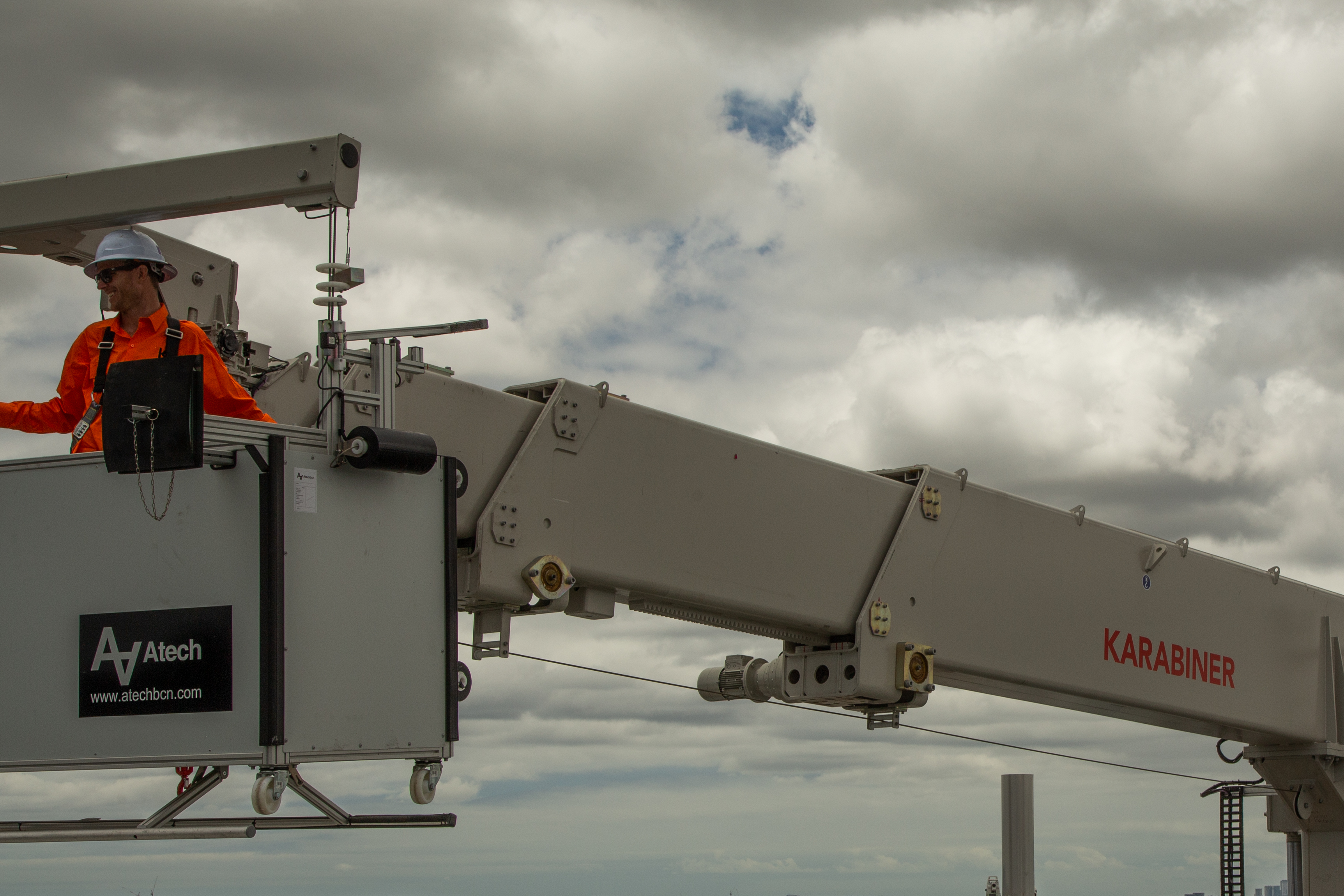
- custom davit arm bases for future external maintenance
- rope access anchors for glazing and facade maintenance
That spread is the point. Different parts of a terminal need genuinely different answers, and a single system type stretched across all of them ends up compromised somewhere.
Roof work needs continuous static line so a technician is attached from the access hatch to the work face. Ceiling voids need internal fall arrest, because the hazard is an open ceiling and a long drop to a public concourse. Glazing needs rope access anchors positioned for the specific panels that will need replacing. Davit bases go in now so that external maintenance in future does not need scaffold.
This is the full scope of height safety installation rather than a single product line, and it is the same approach we take on any asset that has to be maintained for decades.
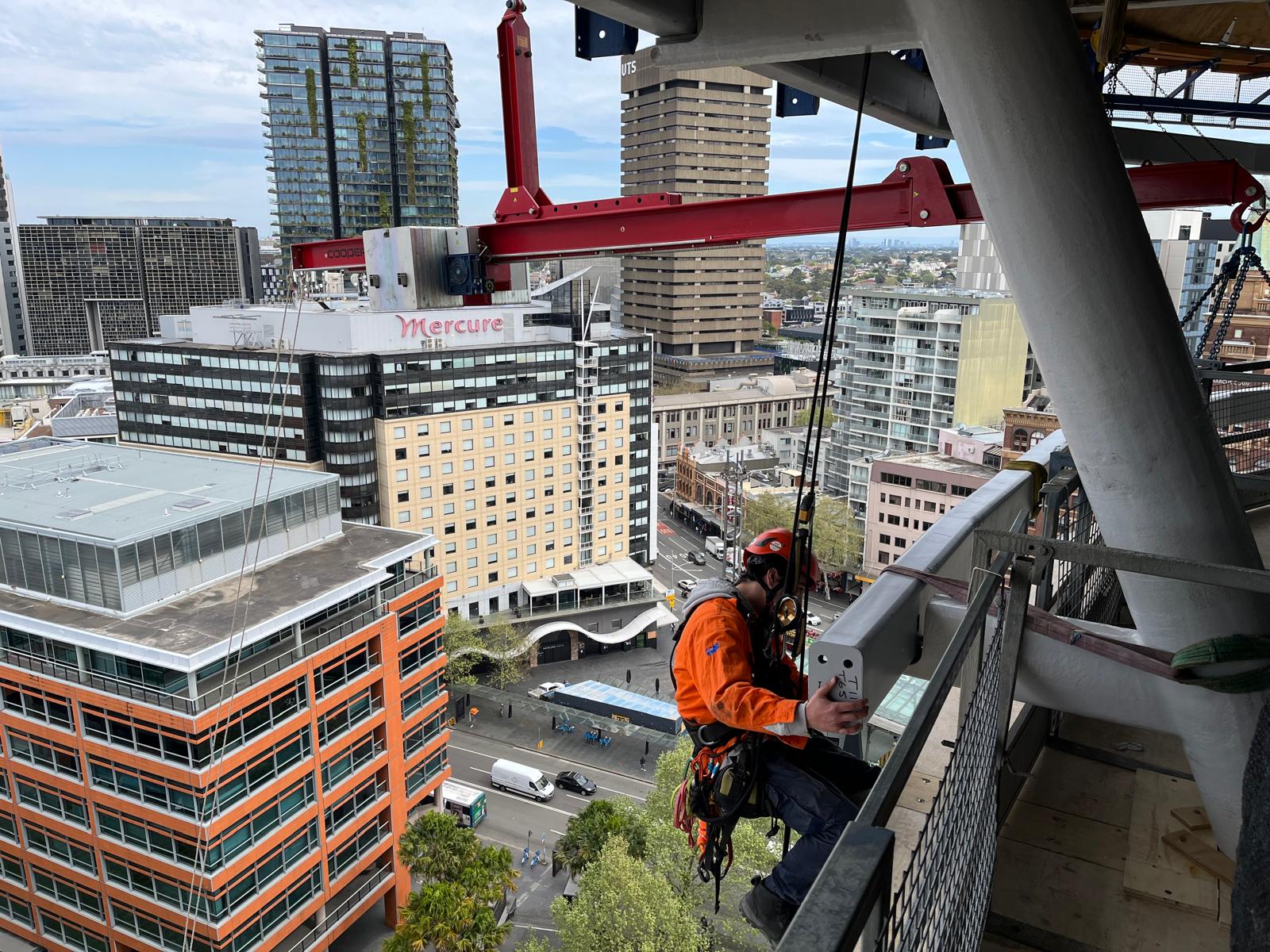
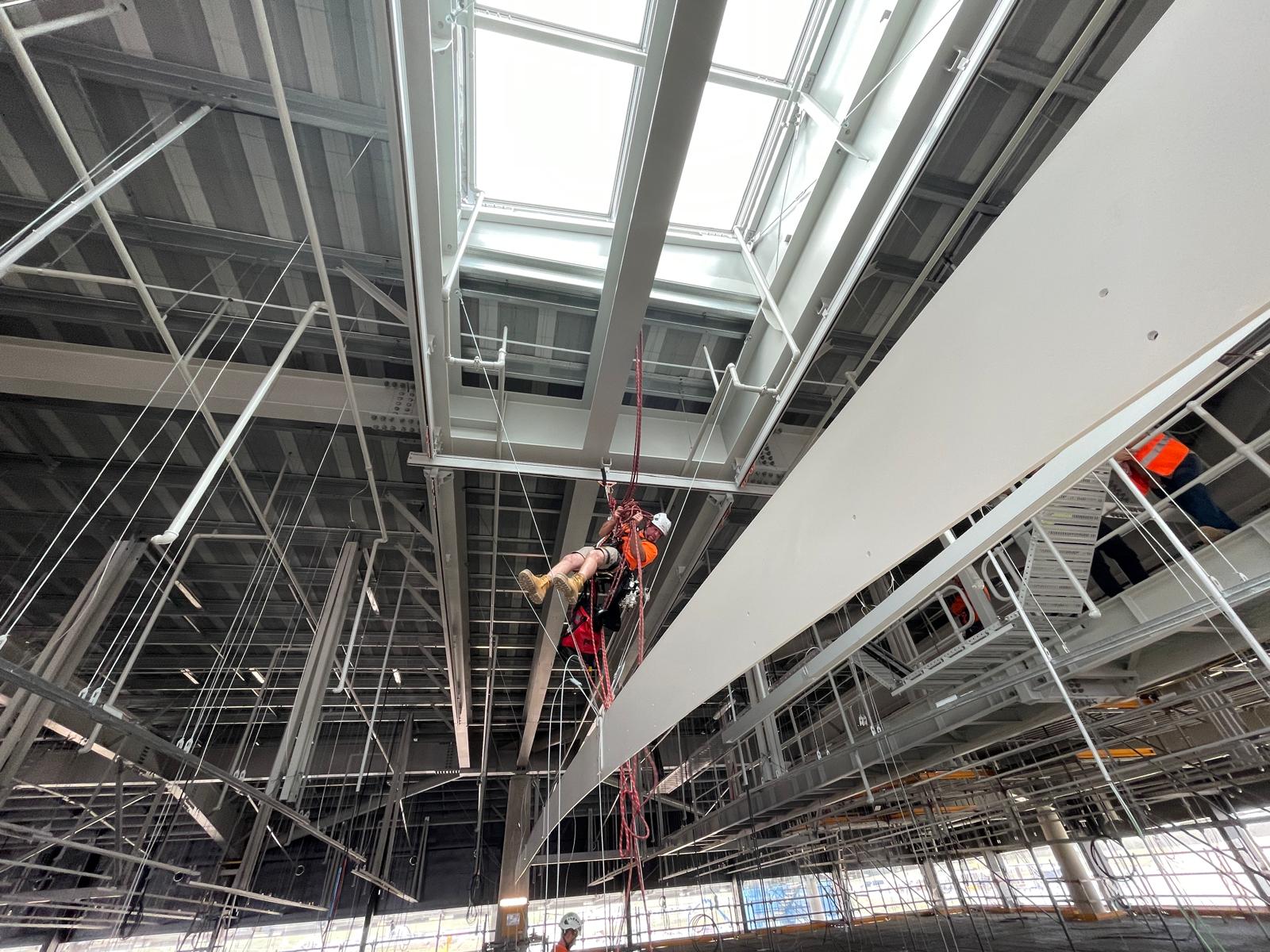
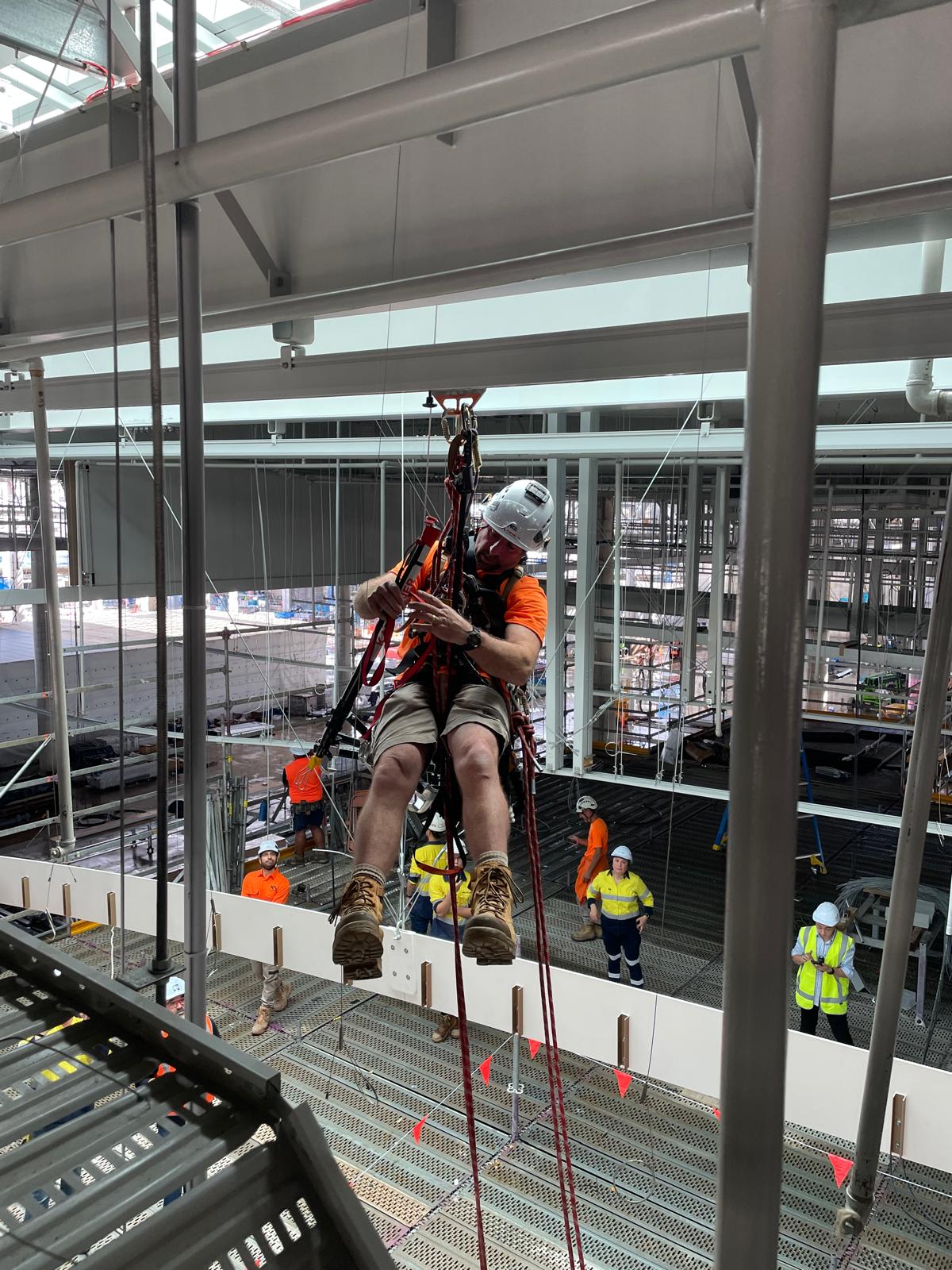
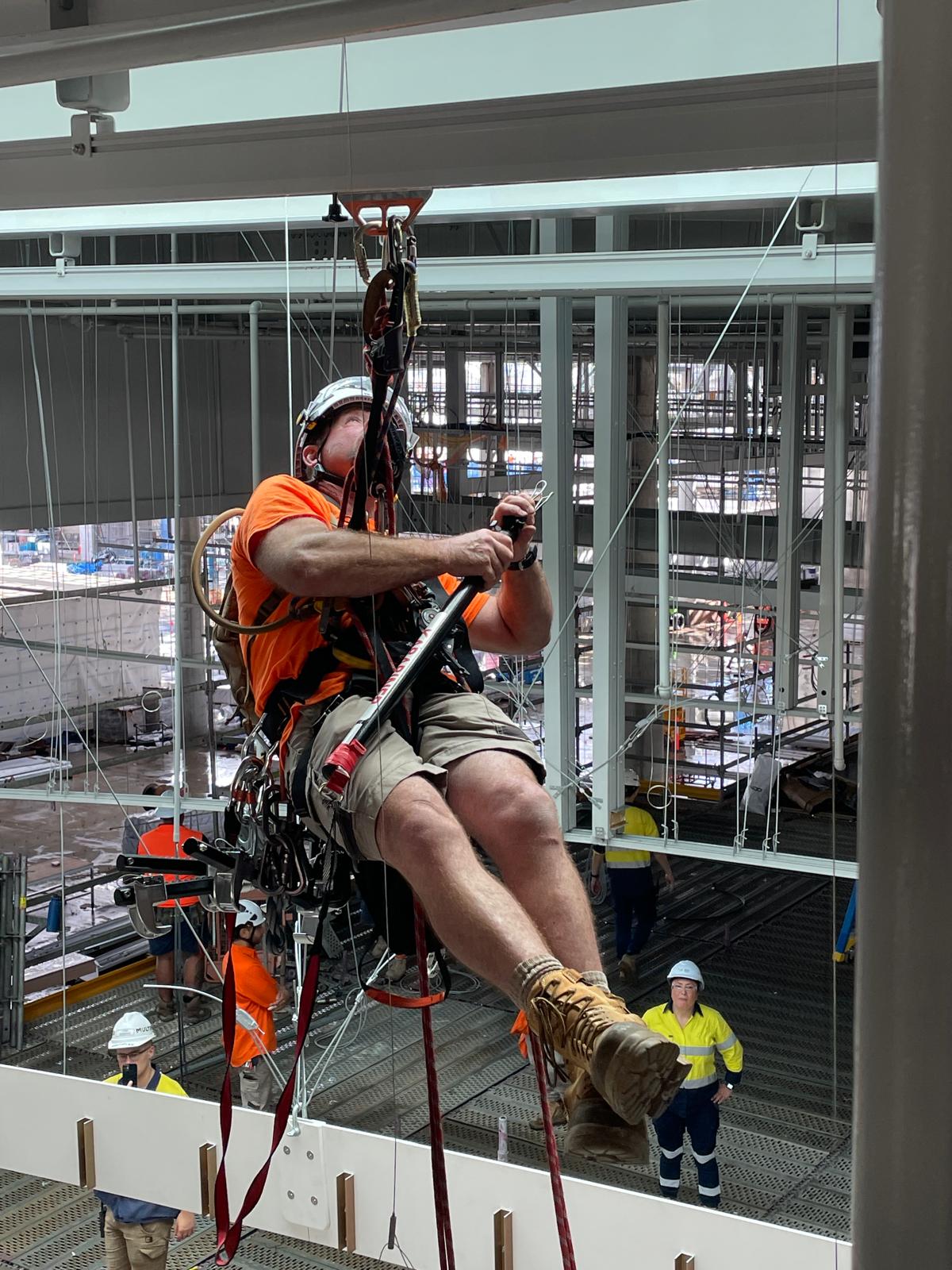 Internal rope access above the concourse. The ceiling void is the part of a terminal people forget about.
Working around everyone else
The scope required intensive coordination with a lot of other trades, and managing access logistics and safety integration across changing construction phases.
On a project this size, the constraint is rarely the installation itself. It is getting to the work face at a time when the area is available, with the right access, without stopping someone else. Being able to respond quickly to site conditions and design changes was what kept the package moving.
Our team also adapted to evolving project conditions and integrated design changes that improved long term serviceability and reduced operational risk, without delays to the construction programme.
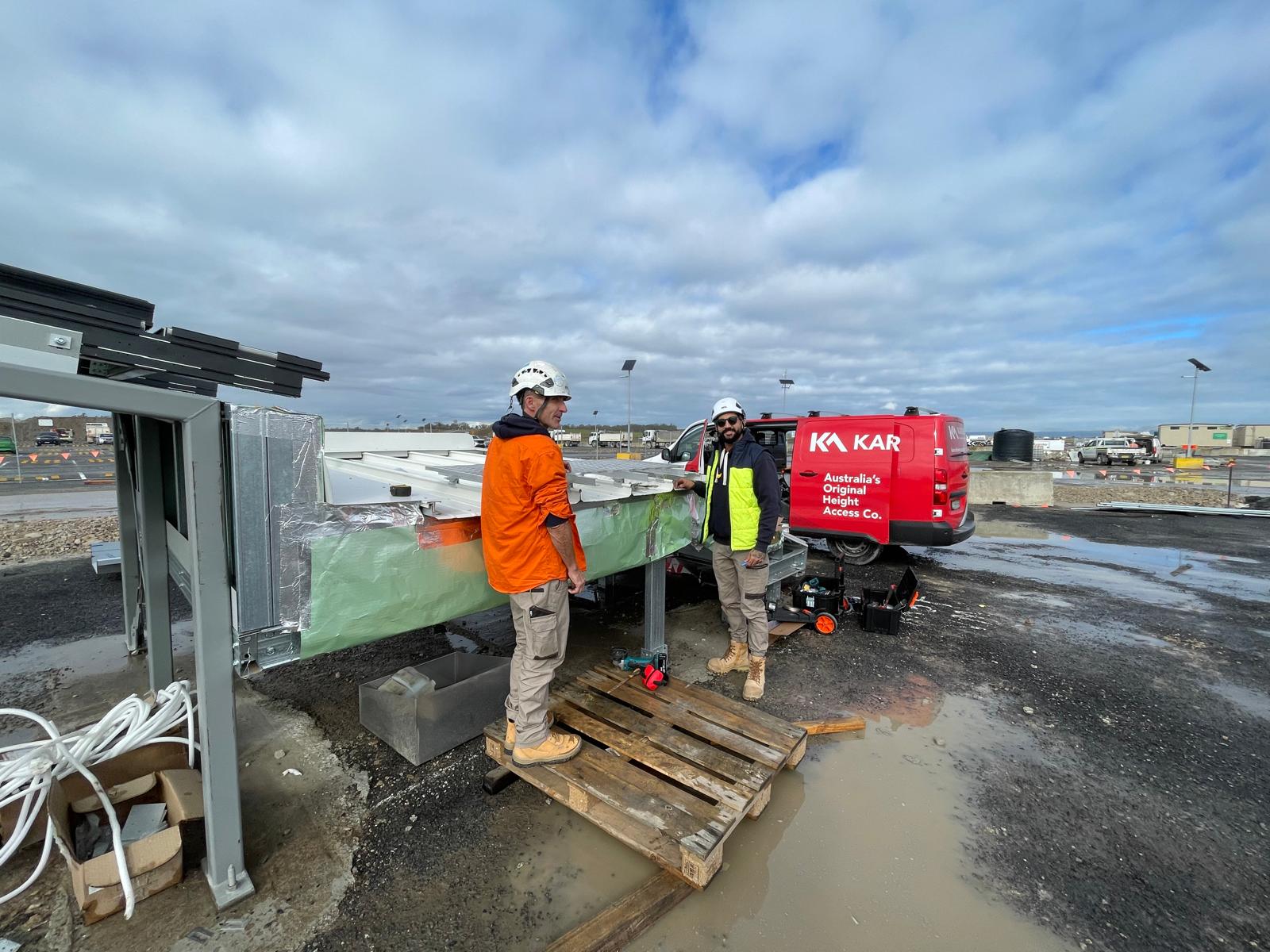
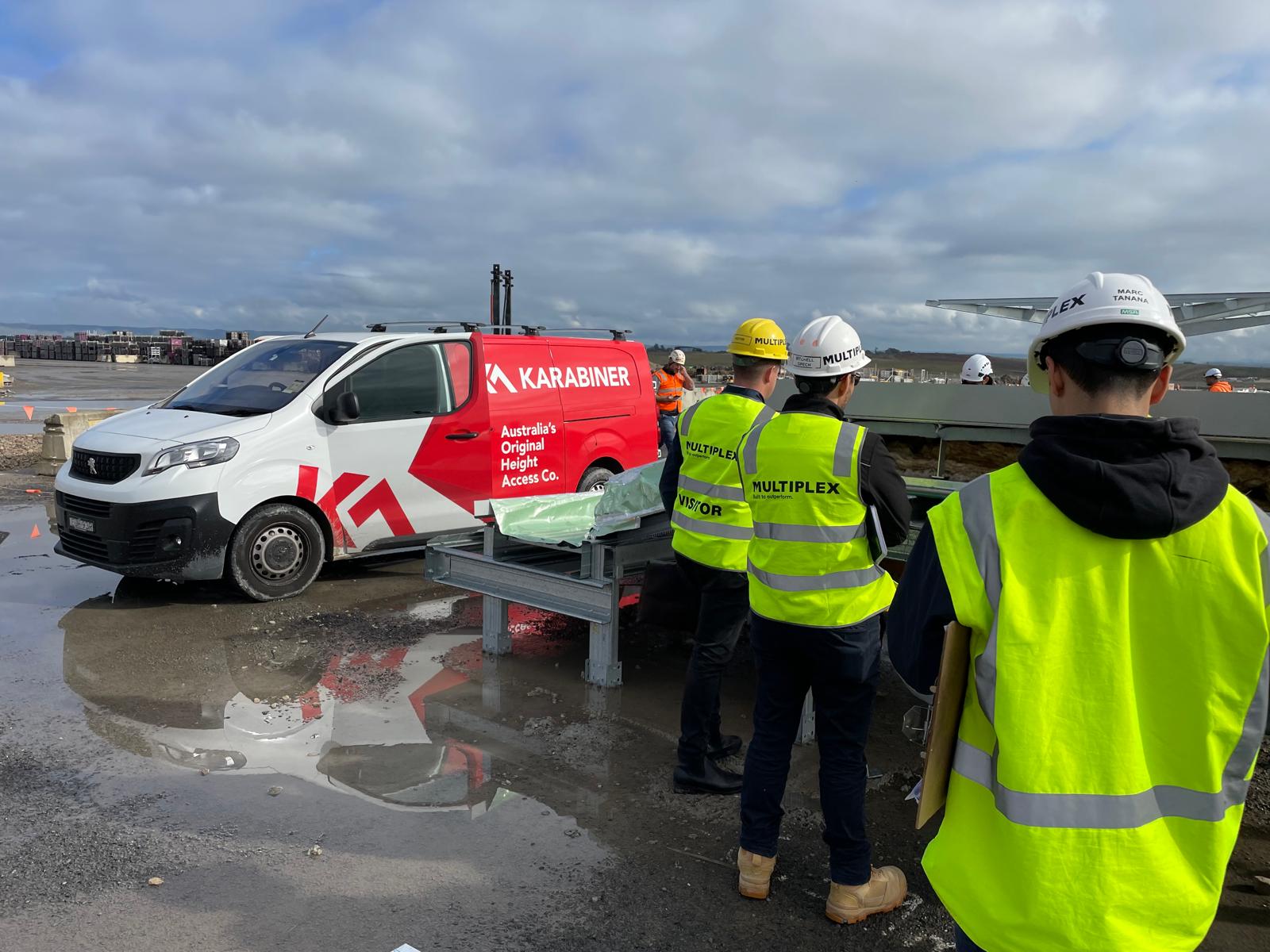
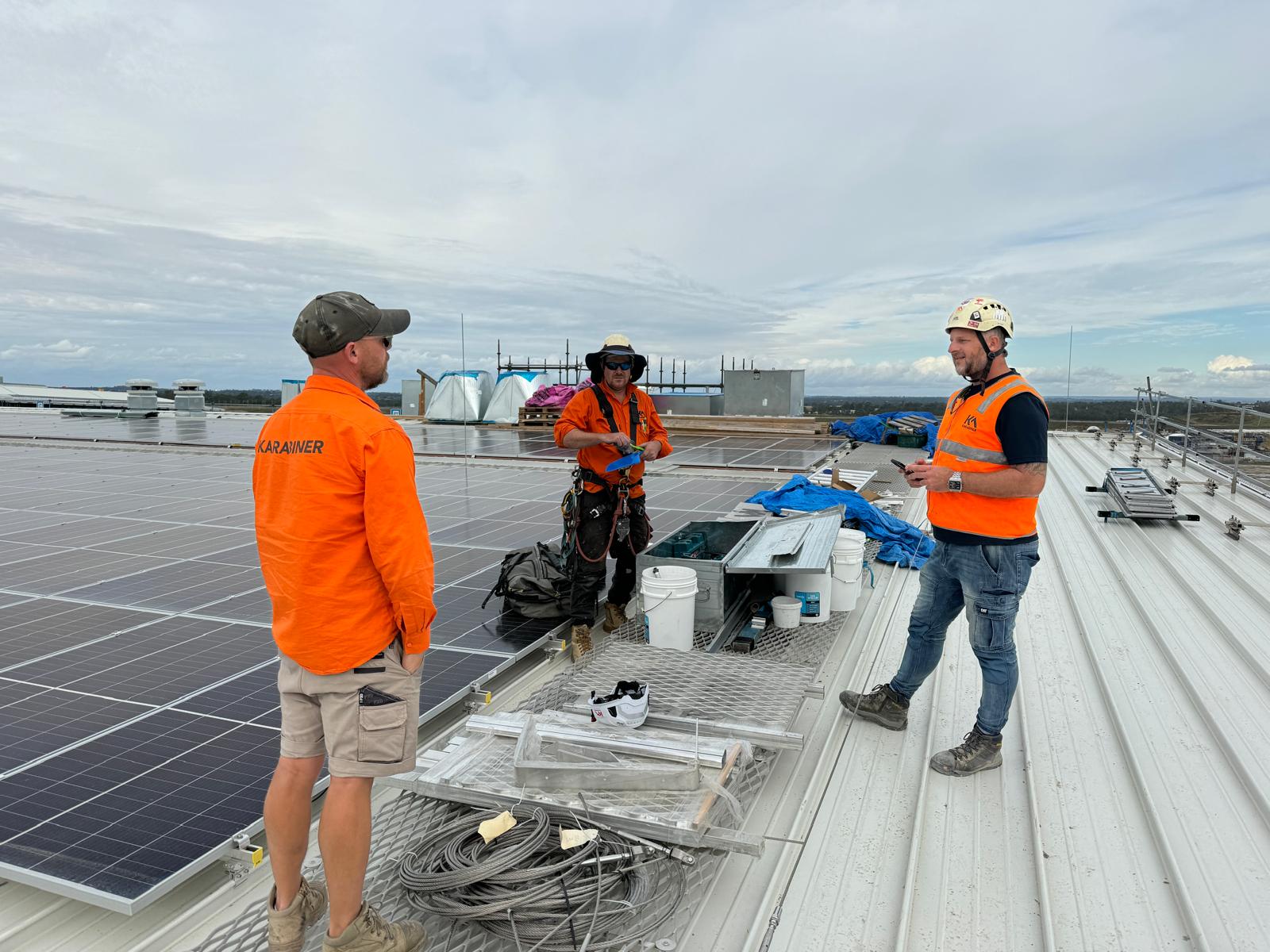
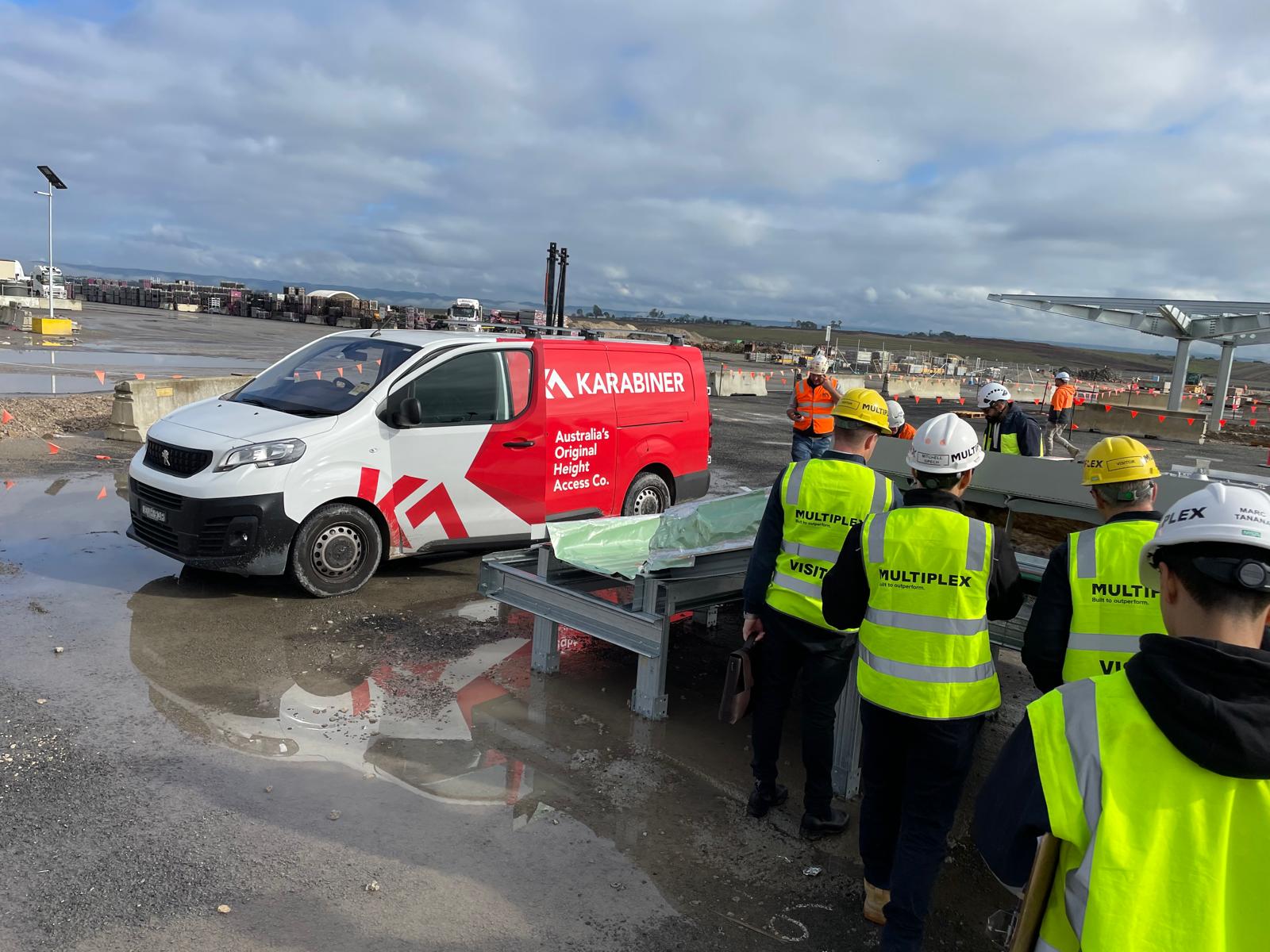
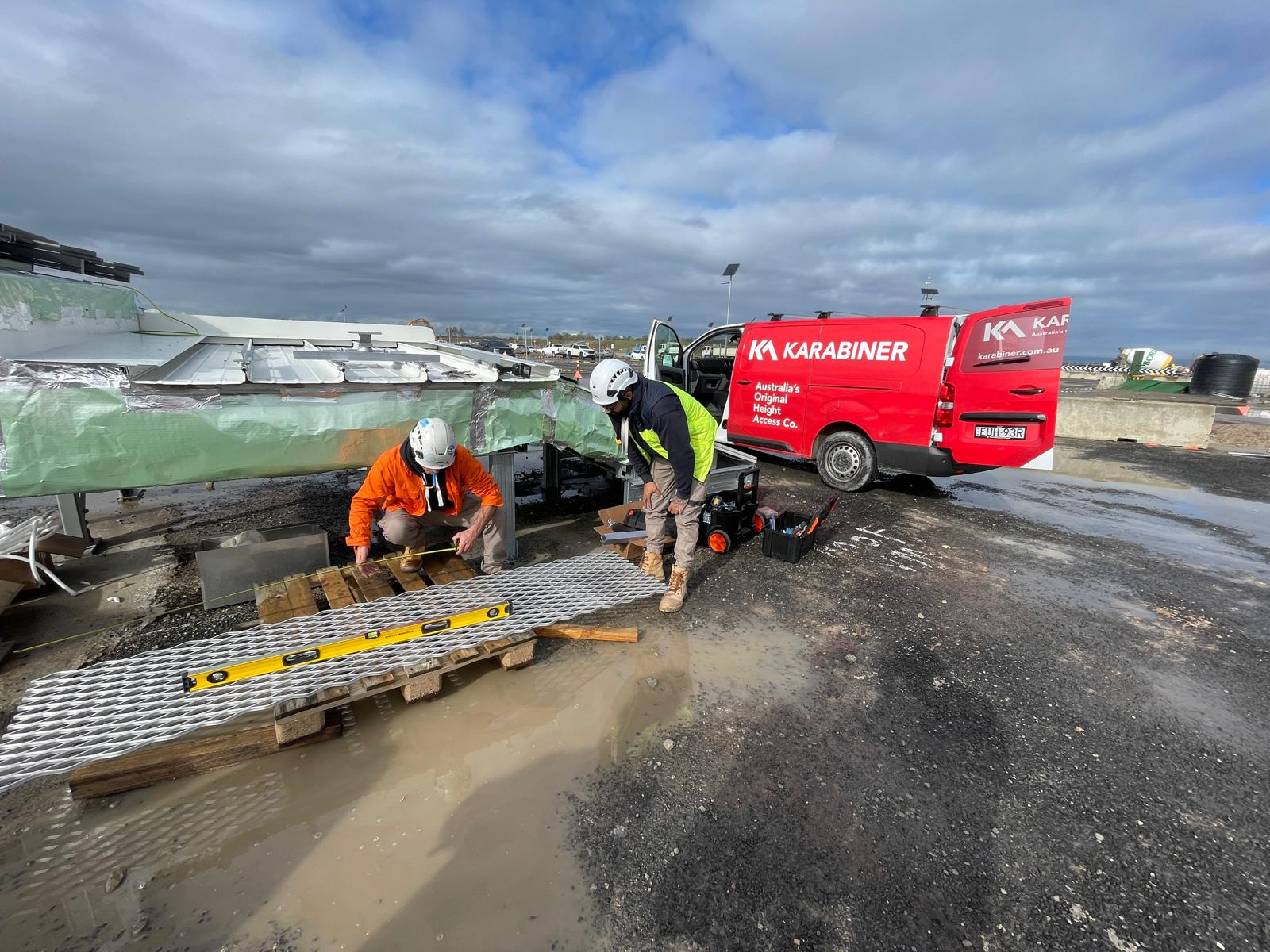
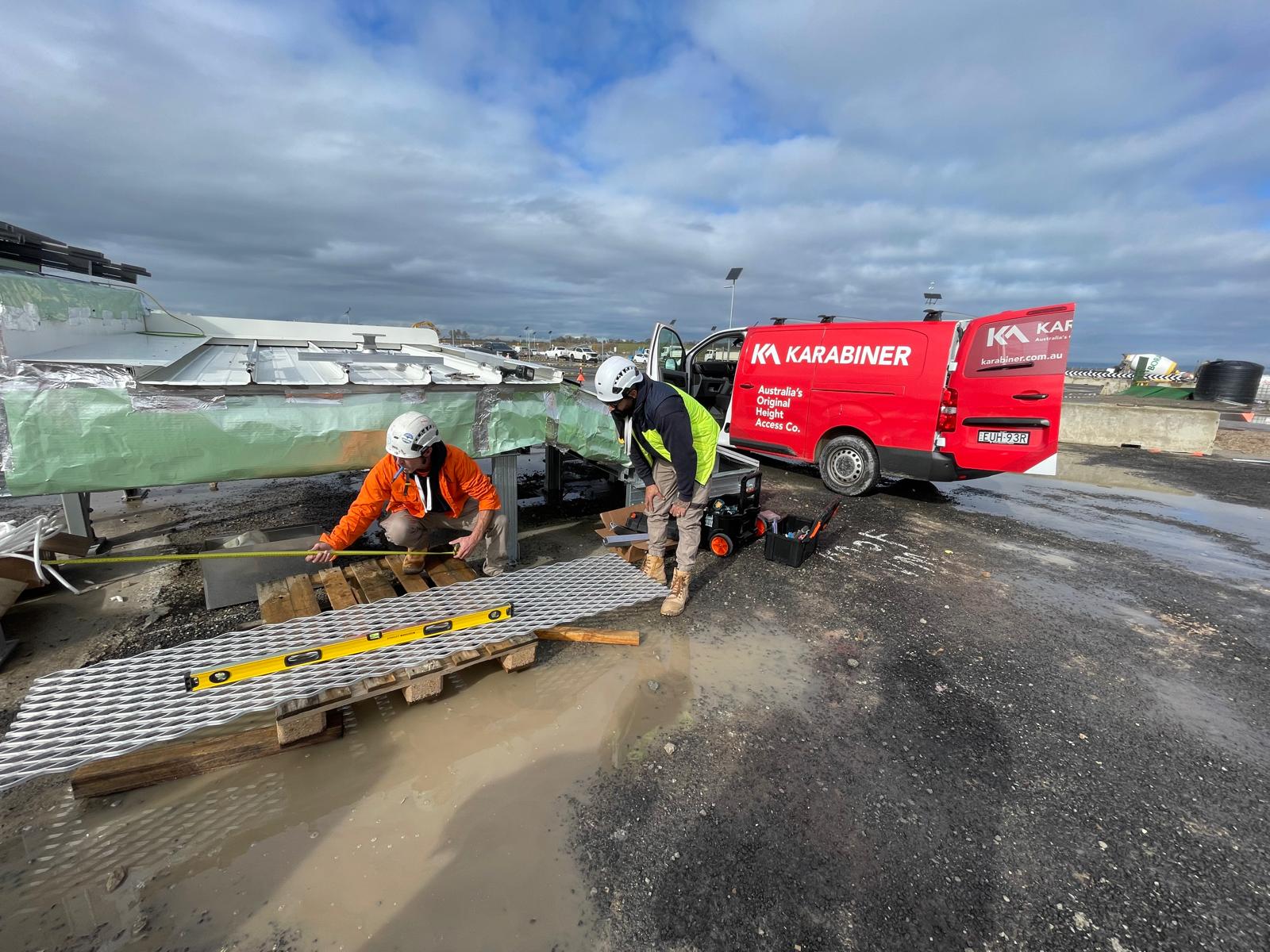 Prep work on the ground. Assembling at ground level is always safer than assembling at height.
Building it for the operators, not the builders
The systems on this project will be used by facilities and maintenance teams long after the last crane leaves. Two things follow from that.
The access has to make sense to someone who did not build it. Anchor positions, ladder routes and hatch locations should be obvious. If a technician has to work out the intended route, the route is wrong.
The documentation has to survive. Certification, as-builts and inspection records are what let the next audit be an inspection rather than an investigation. That falls under certification and audit, which is also where we come in on buildings where the paperwork went missing years ago.
Ongoing use of these systems sits under rope access maintenance, which is what a system like this exists to enable.
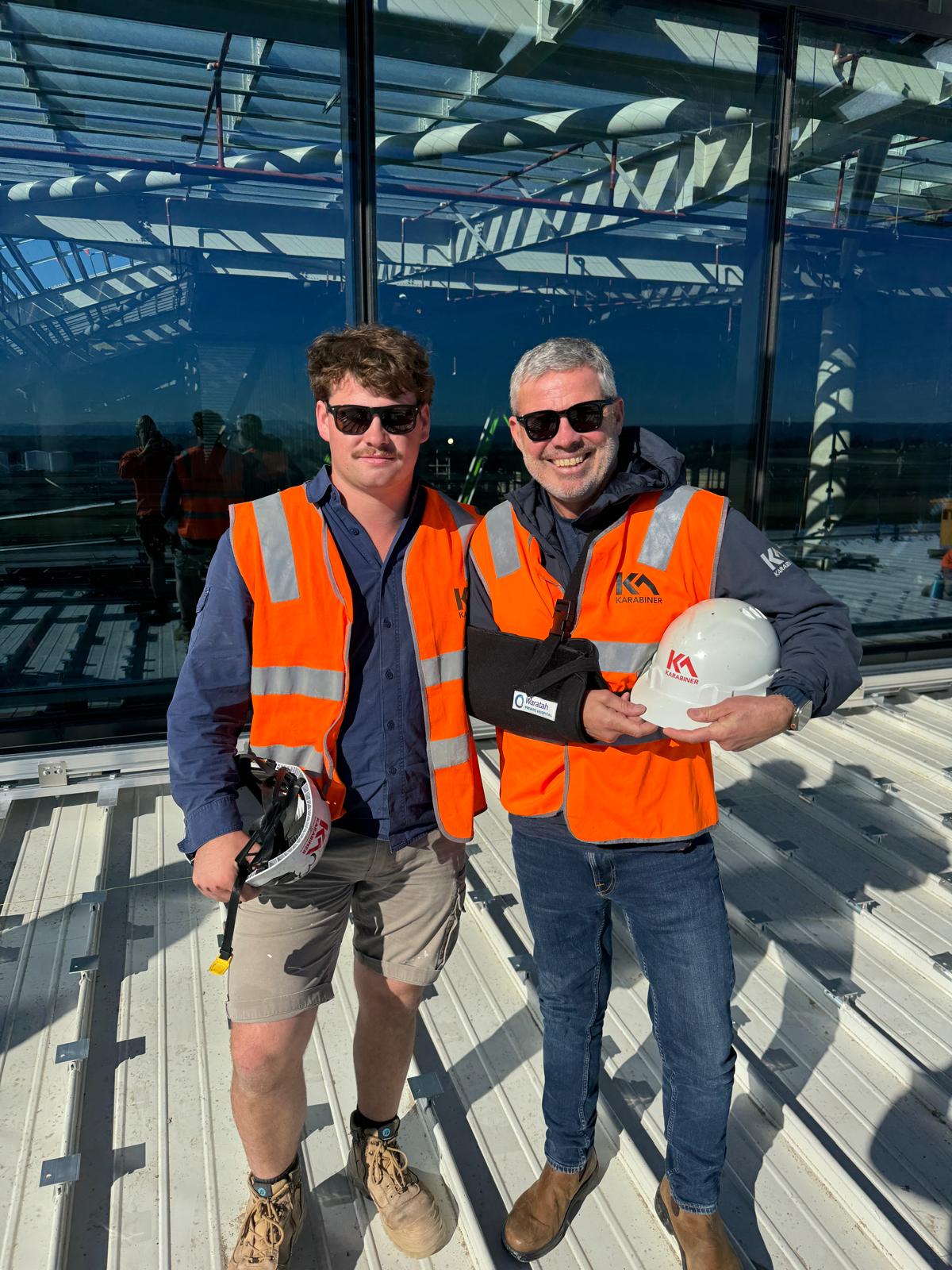
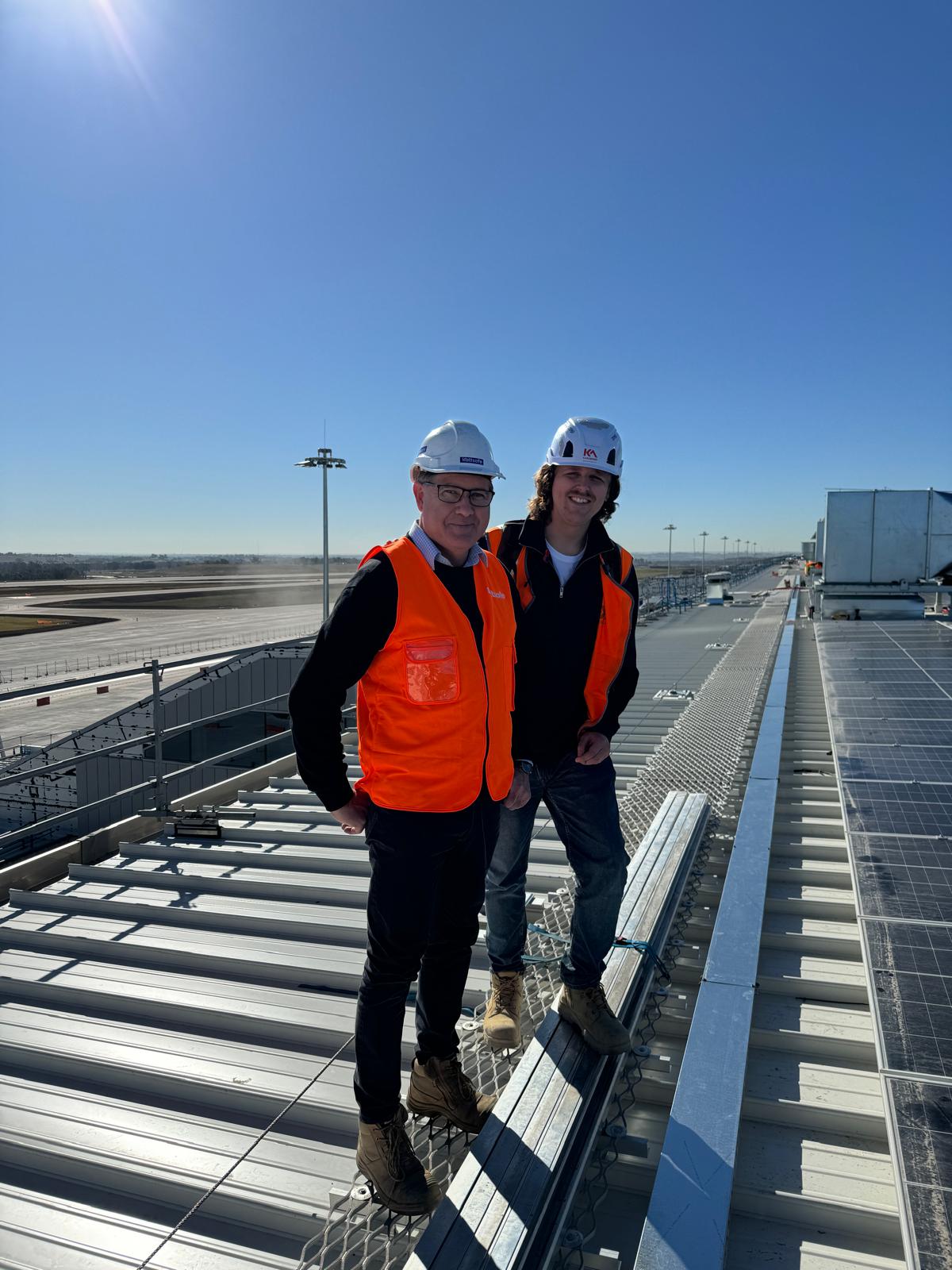 On the terminal roof. Everything up here needs continuous attachment from the hatch to the work face.
Where else this applies
Large transport and infrastructure assets share the same pattern: big roofs, high internal voids, glazing that will need replacing, and an operator who inherits all of it. The full scope on this job is written up on the Western Sydney Airport project page.
We took a comparable approach on the Bomac rail package at Powerhouse Parramatta, where the systems were different but the requirement to design for decades of operational use was identical.
Where the asset is a data centre, a defence site, a renewables installation or water infrastructure, the same thinking sits under construction and HVAC access.
Project gallery
Services this involves
Trusted by Australia's leading builders
_logo.svg.png)




Rope access and height safety installation at Western Sydney International Airport
Site photography from the Western Sydney International Airport installation.
Talk to us about your project
If you are responsible for a large asset that has to be maintained safely for the next thirty years, the useful conversation starts with the roof, the internal voids and the glazing. Tell us those three and we will tell you what the system needs to be. Contact Karabiner, or meet the team on our people page.