loading...
ROPE ACCESS MAINTENANCE SYDNEY
Certified rope access services in Sydney for facade cleaning, inspection, repairs and height safety work, reached on ropes without scaffolding or a crane.
- IRATA Level 1-3 technicians
- No scaffolding or crane needed
- Facade cleaning, inspection & repairs
- Works on occupied buildings

Talk to our team
Tell us a bit about your building or project and our team will get back to you. No obligation.
.jpg&w=3840&q=75&dpl=dpl_HQdc3TeVrh18yoEe9kmwmaitdThG)
500+
Projects completed
100%
Safety record
34+
Years, since 1991
 IRATA certifiedRope access technicians
 WAHA memberWorking at Height Association
 CM3 prequalifiedContractor safety prequalification
- Australian StandardsDesigned & certified to Standard
- In-house engineeringDesign, install & certify
Most Sydney towers were never built to be maintained from the ground. That is the job rope access does. Technicians descend the facade on ropes and work it drop by drop, with no scaffold in the car park and no crane on the street.
- What we do on the ropeFacade and window cleaning, inspection, glazing, cladding, sealant, painting, waterproofing and concrete repairs.
- Who is on the ropeIRATA certified technicians who are also glaziers, painters, concreters, riggers and sealant applicators.
- Buildings and structuresCommercial high-rise, strata, industrial plant, bridges and confined spaces across Sydney and regional NSW.
- What you get backDefects photographed and marked up against an elevation, in a report a strata committee or engineer can price from.
We run crews across Sydney and regional NSW on commercial high-rise, strata, industrial plant, bridges and confined spaces. Where a building needs permanent access built into it, we also handle height safety installation and building maintenance unit systems, and we certify the finished system to Australian Standards. If ropes are not the right method for your building, we will say so before you spend money on them.
Our rope access services include, but are not limited to:
The same trades turn up on both sides of a building's life. On a new build we are installing; on an existing one we are inspecting, repairing or replacing what is already there.
| Trade | Construction | Remediation |
|---|---|---|
| Facade | Facade Installation | Façade & Structure Inspection |
| Glazing | Glazing Installation | Glazing Replacement |
| Steel | Steel Installation & Fixing | Steel Remediation & Fixing Inspection |
| Cladding and roofing | Cladding & Roofing | Cladding Replacement & Repair |
| Caulking and sealant | Caulking & Sealant | Caulking & Sealant Repairs |
| Painting and coatings | Painting & Coatings | Painting & Coating Repairs & Re-coating |
| Waterproofing | Waterproofing & Flashing | Waterproofing |
| Safety netting | Safety Netting | Safety Netting |
| Access and height safety | Access & Height Safety System Installations | Access & Height Safety Certifications |
| Rigging | Rigging | |
| Temporary access | Temporary Access & Fall Protection Systems | |
| Rescue and confined space | Rescue Standby/Supervision & Confined Space Work | |
| Make safe and surveys | Make Safe Works & Dropped Object Surveys |
Rope access for building maintenance
Routine maintenance is where ropes earn their keep. A facade needs washing, the glass needs cleaning, the sealant needs a look over, and none of that justifies boxing a tower in scaffold for six weeks.
On a typical maintenance program we handle:
- Window and facade cleaning
- Sealant and caulking checks
- Box gutter clearing
- Cladding fixings
- External light and signage replacement
- Bird proofing and pressure washing
Anything mounted on the outside of a building can usually be reached on rope.
The advantage for a facility manager is that the building keeps working while you work on it. The crew rigs from the roof before tenants arrive, drops past the offices, and packs down at the end of the shift. There is no compound in the car park, no loading zone lost for a month, and no access tower bolted to the facade for the length of the program. On a serviced building with retail at the base, that is the whole argument.
Strata buildings tend to run their rope access work on a cycle, so the same crew comes back and learns the building: which anchors sit on the northern parapet, which balconies need notice, which unit has the dog that panics at a rope going past. That continuity is worth more than it sounds. The second visit is always quicker than the first.
We look after buildings for facility managers, strata committees and owners across the Sydney CBD, North Sydney, Parramatta, Chatswood and the eastern suburbs. If your tower already has a BMU or davit system, we will use it where it suits and rope the sections it cannot reach. For background on the method itself, read what industrial rope access actually involves.
Remedial and facade repair work
Remedial work is the harder half of the job. Something on the building has failed, and it has to be cut out, repaired and made good while the technician is hanging off a rope with only the tools and material they carried down with them.
The most common call is concrete spalling, or concrete cancer as most owners know it. Water reaches the reinforcing steel, the steel rusts and expands, and the concrete cover blows off the slab edge or the balcony soffit.
Rope access concrete repairs let us sound the whole facade to map how far the damage runs, break out the loose material, treat and prime the exposed bar, then patch and re-coat. Only the affected bays get touched, and nothing goes up around the building.
Past concrete, rope access remedial work covers more of the facade than most owners expect.
- Sealant and expansion joint replacement
- Cracked or blown glazing swaps
- Cladding repair and re-fixing
- Waterproofing to parapets and planter boxes
- Steel remediation and protective coatings
- Rope access paintingFull recoats on towers, spot repairs to render, anti-graffiti coatings at street level, and coating work on structures a boom will never reach. It is a large part of what we do in Sydney.
Most remedial jobs start with an inspection rather than a repair. We drop the facade, photograph and mark up every defect against an elevation, and hand back a report a consulting engineer or a strata committee can price work from. That document usually settles the argument about scope before it starts. If you want the background, we have written up what concrete cancer is and how it gets repaired and what that repair usually costs. To get a facade looked at, talk to our Sydney team.
Not sure if rope access suits your building?
Tell us a little about it and we'll point you in the right direction.
When rope access beats scaffolding or a swing stage
Four things separate the methods on a Sydney building: setup time, footprint, what the tenants live with, and the shape of the facade.
| What decides it | Scaffold or swing stage | Rope access |
|---|---|---|
| Setup time | Scaffolding a 20 storey tower is a project of its own, with a design, an engineering sign off, a delivery program and weeks of erection before anyone touches the facade. | A rope crew can be rigged and working within an hour of reaching the roof. |
| Footprint | Scaffold needs ground, and it takes the car park, the loading dock or a lane of footpath to get it. On a tight CBD site there may be nowhere to put it at all. | Ropes need an anchor point up top and a small exclusion zone below that moves along with the drop. |
| What the tenants live with | Scaffold sits against the windows for the length of the job, which means blocked light, security worries at ground level and a complaint from every occupant on that elevation. | A rope crew passes a given window once and moves on. |
| Geometry | Curved facades, raked glass, cantilevered balconies, atrium voids and plant sitting above a lower roof are all awkward or slow to scaffold. | The same shapes are straightforward to rope. |
Ropes are not always the answer, and we would rather say that up front. Heavy material, wet trades running for weeks, plant that cannot be carried down on a harness, or several trades needing the facade at once all point to scaffold or a swing stage instead. Full facade replacement is a scaffold job. So is anything where the crew needs a stable working platform for hours rather than a seat on a rope. If your building already has a permanent BMU, that is the first option we check before quoting rope.
For a full comparison, see rope access versus a building maintenance unit, or read how high-rise painting is done on ropes.
How a rope access job runs
Every building is rigged differently, but the shape of the job is much the same whether it is a clean, an inspection or a remedial repair.
- 1
Site assessment and rig plan
We walk the roof before we quote. What we are looking for is where the load can go, what the parapet is made of, how the ropes will run past balconies and awnings, where the wind funnels between towers, and what sits on the ground under each drop. That walk decides the method and the price.
- 2
Paperwork and notice
You get a site specific method statement, our insurances and technician certifications, and a plan for the exclusion zone below. If the building is occupied we agree the notice that goes out to tenants and the hours we work, which for a lot of Sydney buildings means starting early and being off the facade before lunch.
- 3
Rigging
Ropes are set from the roof anchors, edge protection goes on, and the ground below each drop is cordoned and spotted. Nothing goes over the edge until the rig is checked.
- 4
The work, drop by drop
The facade is worked top to bottom in vertical drops, each one marked off as it is finished. Defects, photos and progress are recorded as the crew goes, so you are not waiting until the end to hear what was found.
- 5
Handover and demob
The finish is checked, any defects picked up along the way are written into a report with photos and locations, the ropes come down and the site is left clear.
.jpg&w=3840&q=75&dpl=dpl_HQdc3TeVrh18yoEe9kmwmaitdThG)
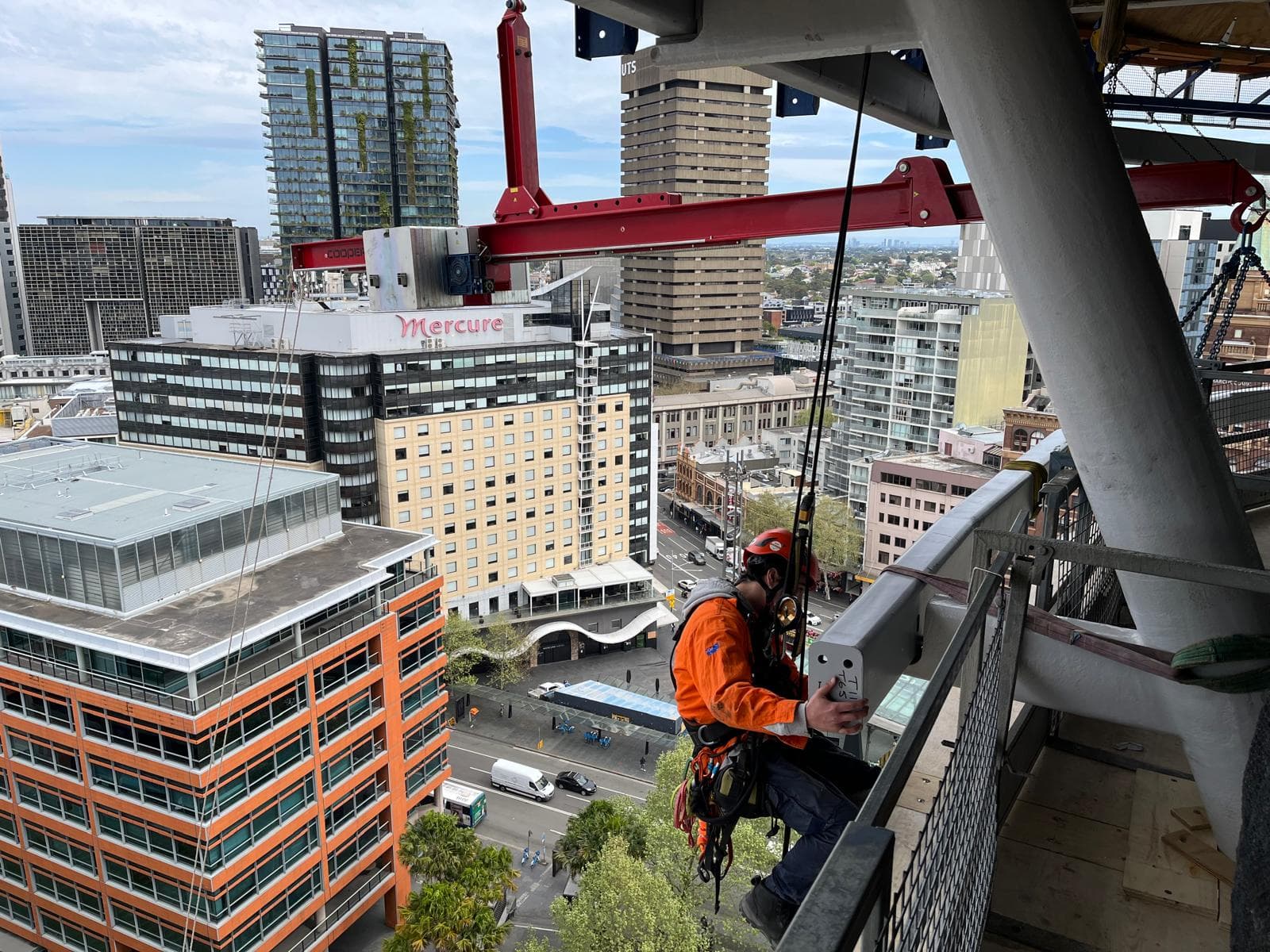
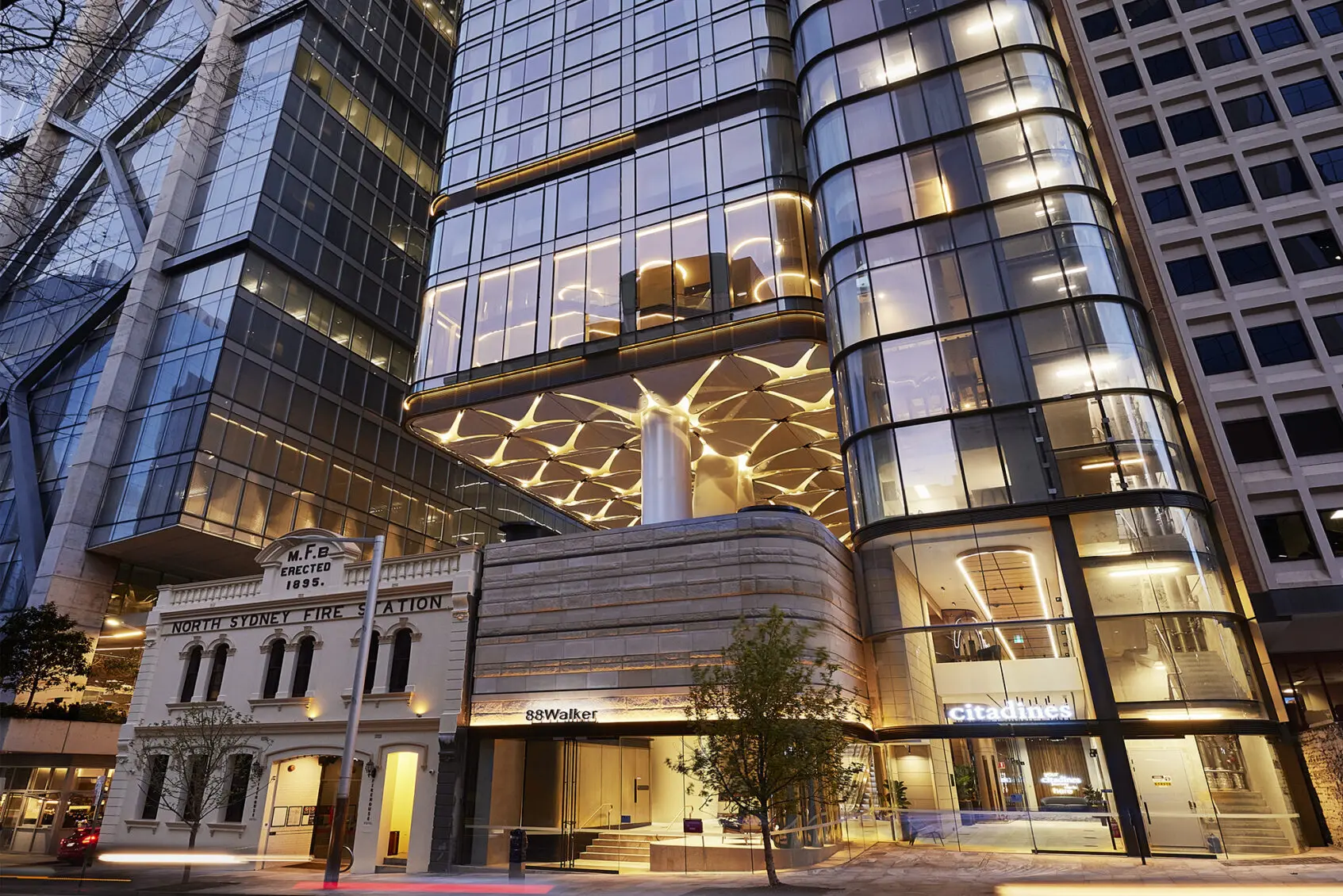
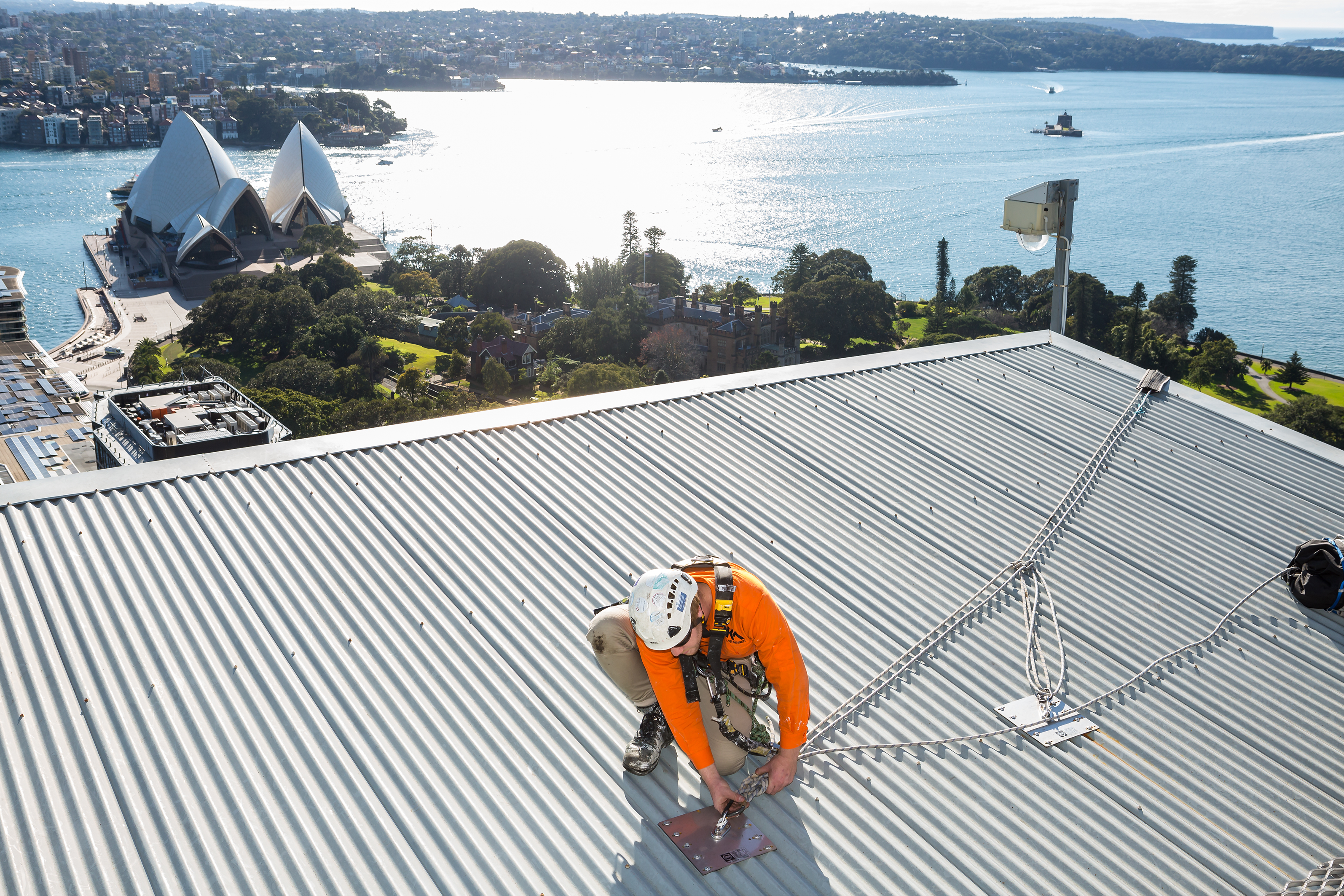
We work at height across Sydney, including facade access on towers like The Ribbon and 88 Walker Street.
Want to know how your building would be rigged?
Send us the address and the work, and we will walk the roof before we quote.
Who is on the rope
Rope access is a certified trade, not something you hand to whoever is free that week. Our technicians hold IRATA certification and bring a trade with them on top of it.
- Glaziers
- Painters
- Concreters
- Riggers
- Sealant applicators
They happen to work off a rope instead of a platform, and that combination is the point. A technician who can descend beautifully is no use to you if they cannot cut out a failed joint properly once they get there.
The Australian Standards that sit behind this work are AS/NZS ISO 22846.1:2020 and AS/NZS ISO 22846.2:2020 for industrial rope access, AS/NZS 1891.4:2025 for fall arrest systems, AS 5532:2025 for anchor devices, and AS 1657:2018 for fixed platforms, walkways and ladders. Our equipment, our methods and the systems we install are built around them, and our certification and audit team handles the documentation side for building owners who would rather not deal with it, including anchor point testing and certification on the anchors our crews rig from.
Crews are supervised on site, equipment is logged and checked in and out, and where we can we send the same faces back to the same building. You can meet the people who run our rope access teams before you put them on your roof.
Where we work
Commercial towers are the visible half of it. The other half is industrial rope access around Sydney.
- Water infrastructure
- Silos and tanks
- Telecommunications and transmission structures
- Wharves and bridges
- Stadium roofs and warehouse rooflines
- Confined spacesWhere the only way in is on a rope.
We also work with builders during construction rather than only after handover.
- Installing facade panels
- Running safety netting
- Rigging temporary fall protection
- Rescue standbyOn sites where the permanent access has not gone in yet.
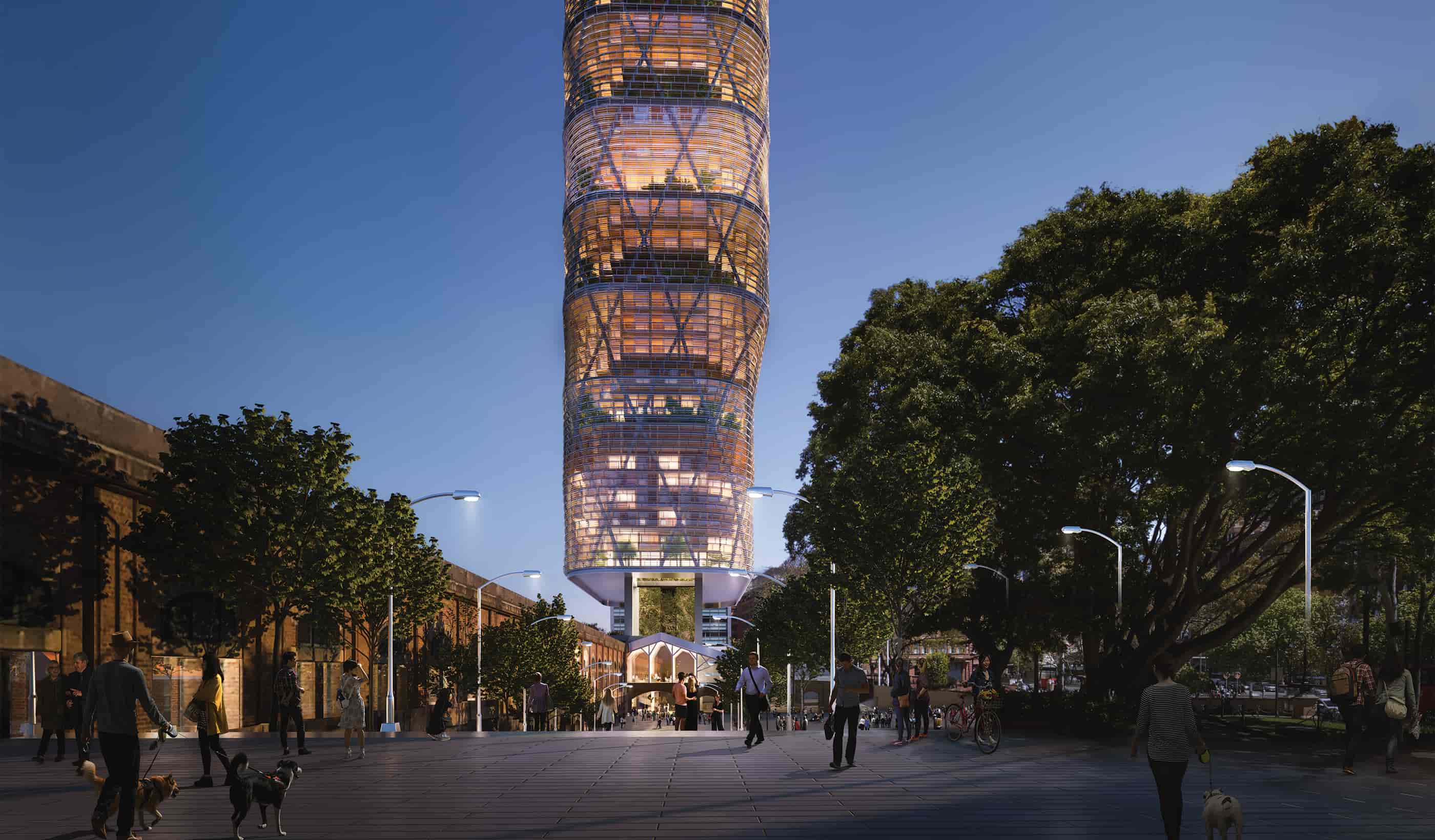
That work sits with our construction and HVAC access team. Projects like Atlassian Central give a sense of the scale we work at. We cover Sydney metro, the Central Coast, Wollongong, Newcastle and regional NSW, and we travel interstate for clients we already look after.
Trusted by Australia's leading builders
With more than 30 years in facade access, height safety and rope access, Karabiner is a go-to subcontractor for major builders and asset owners, including Built, Lendlease, Multiplex, Investa, Richard Crookes, John Holland and JLL. Our rope access teams are led by IRATA-qualified technicians and backed by in-house engineering, working across construction, remediation, infrastructure, facilities management and strata in Sydney, NSW and interstate.
30+
years at height
IRATA
qualified technicians
In-house
engineering & design
Products & accreditations
PARTNERS & ACCREDITATIONS


"Karabiner has been our go-to subcontractor, whether it's for BMUs, rope access or anything to do with heights and complex. Karabiner to date has never let us down."
Andrew Henebery, Construction Manager, Multiplex
@karabiner_access
From the field
Recent work from our crews on site, straight from our Instagram.


Trusted by Australia's leading builders
_logo.svg.png)






Related services
Height Safety Installation
Roof anchors, static lines, walkways and guardrails, designed, installed and certified.
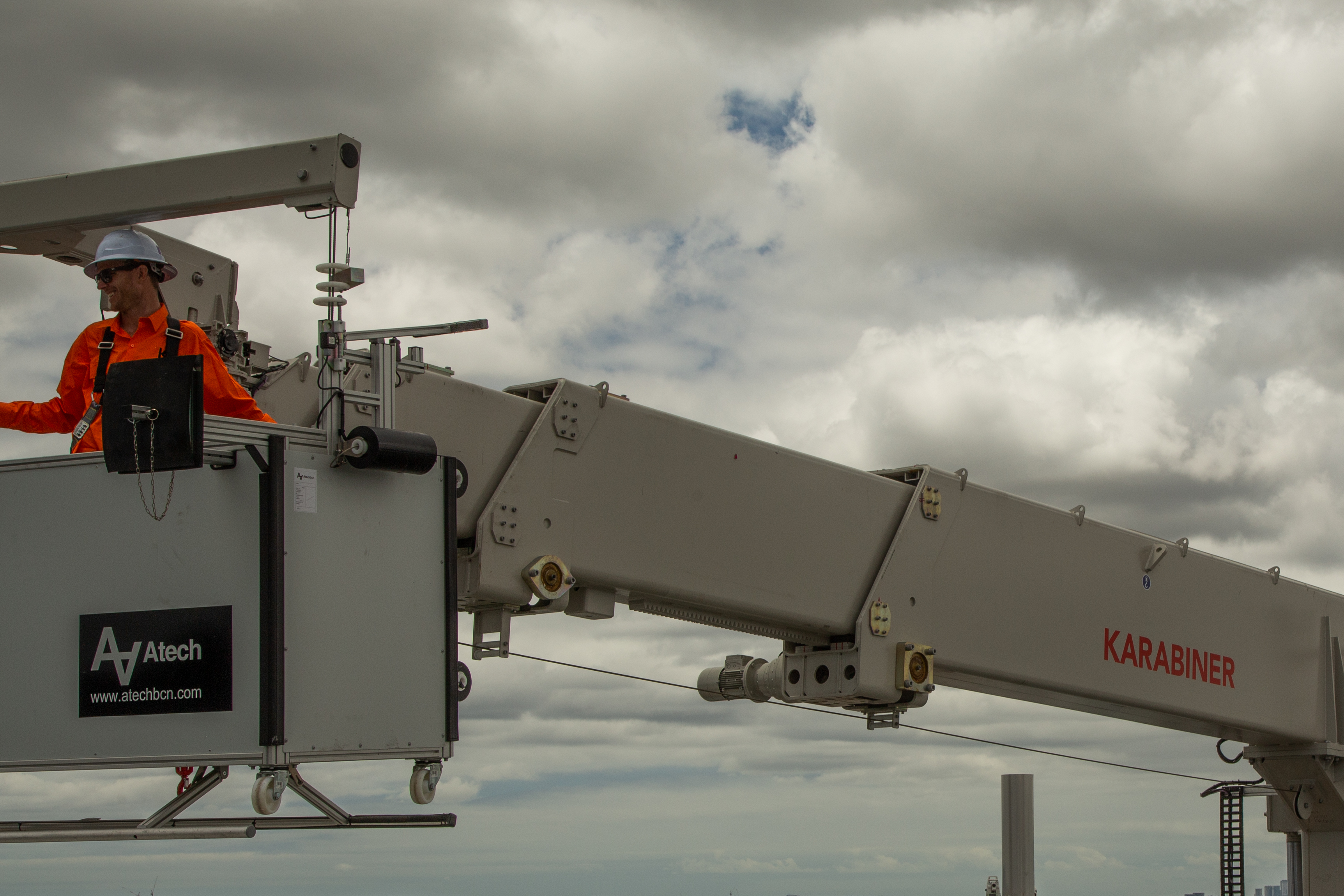
Building Maintenance Units
Design, installation and servicing of BMU and facade access systems for high-rise buildings.
Certification & Audit
Inspection, testing and recertification to keep your height safety systems compliant.
The team behind the work
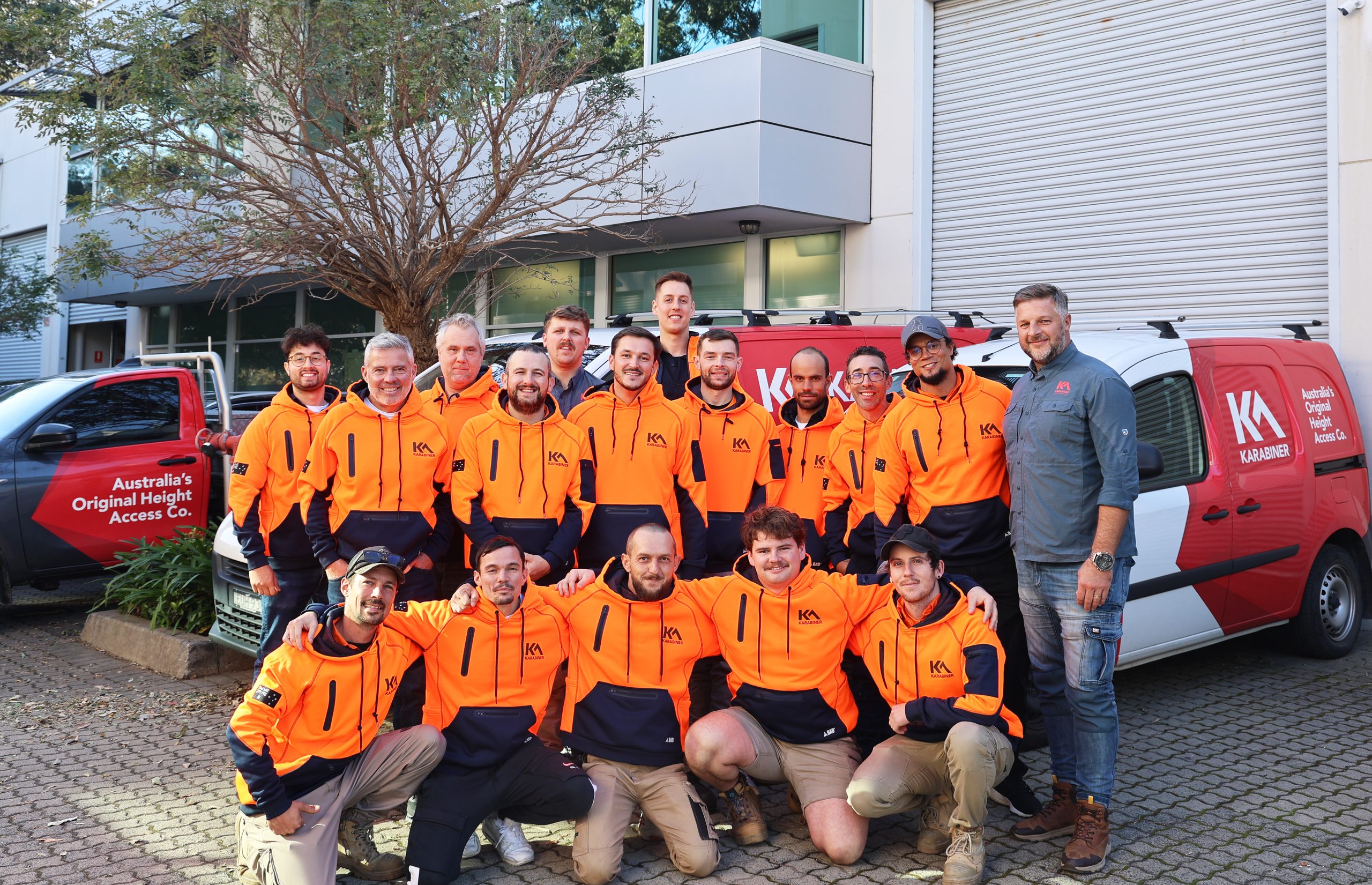
IRATA-qualified technicians and in-house engineers, led by people who have worked at height across Sydney for decades.
Meet our people


Download our capability statement
Learn more about our rope access maintenance services, certifications, and project experience.
Download the rope access capability statementFREQUENTLY ASKED QUESTIONS
Rope access maintenance is inspection, cleaning and repair work carried out by technicians who descend a building or structure on ropes rather than working from scaffold, a boom lift or a swing stage. The crew rigs from the roof, works the facade in vertical drops and packs down at the end of the shift. It suits tall buildings, awkward facades and sites that cannot afford to lose ground space for weeks.
Almost anything mounted on the outside of a building. We do facade and window cleaning, sealant and caulking replacement, glazing swaps, cladding repair and re-fixing, concrete repairs, waterproofing, painting and protective coatings, box gutter clearing, bird proofing, external lighting and signage, and facade inspections with photographic defect reporting.
Yes, and it is one of the main reasons owners choose it. There is no scaffold sitting against the windows for the length of the job and no compound in the car park. Crews usually start early and are off the facade before the middle of the day. We agree the tenant notice and the working hours with you before we rig.
When the job needs heavy material, wet trades running for weeks, plant that cannot be carried down on a harness, or several trades on the facade at the same time. Full facade replacement is a scaffold job. So is anything where the crew needs a stable working platform for hours rather than a seat on a rope. We will tell you at the assessment if that is your situation.
Yes. Our technicians hold IRATA certification and bring a trade with them on top of it, so the person on the rope is also a glazier, painter, concreter, rigger or sealant applicator. We provide technician certifications, our insurances and a site specific method statement before work starts.
Yes. Working off ropes we can sound the facade to map how far the spalling runs, break out the loose concrete, treat and prime the exposed reinforcing bar, then patch and re-coat. Only the affected bays get touched, so there is no need to scaffold a whole elevation to fix a handful of areas.
It depends on the height of the building, the number of drops, what the anchors on the roof look like, the scope of work and whether the site is occupied. We quote after a roof walk rather than over the phone, because what we find on the parapet usually decides the method. Send us the address and we will arrange an assessment.
Somewhere sound to take the load. During the assessment we check the existing anchor points, the parapet construction and how the ropes will run past balconies and awnings. If the building has no suitable system, our height safety installation team can design and install one, and our certification team can handle the documentation.
Still have a question we haven't covered? Tell us about your project and our team will get back to you.
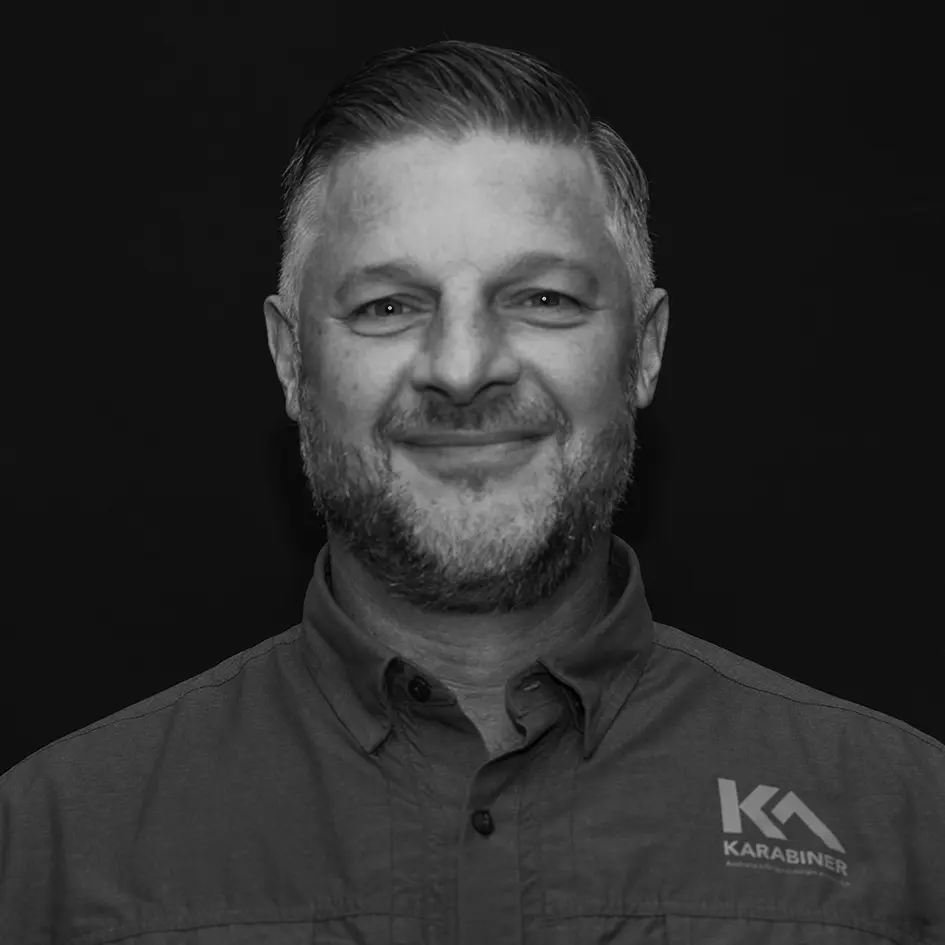
Andrew Ferguson
Founder / CEO
Tell us about your building or project and my team will get back to you with practical, no-obligation options.
Talk to our team
Tell us a bit about your building or project and our team will get back to you. No obligation.