.jpg)

Abseiling is the descent. Rope access is the system built around it: a working line, an independent backup line, and a planned method for getting a technician down the glass and back up again. When a Sydney building manager books abseil window cleaning, that is what turns up. Same job, two names, and the industry tends to use one while everyone else uses the other.
Most high-rise glass in Sydney gets cleaned this way because the alternatives do not fit. A boom lift will not reach level 24. Scaffold around an occupied tower costs more in tenant disruption than it does in hire. So the crew goes over the parapet instead.
Here is what actually happens on the day, what drives the price, and what goes wrong often enough to be worth knowing before you book.
Abseiling, rope access, and why you see both words
Search for abseil window cleaning in Sydney and you will find a dozen companies with abseiling in the business name. Search the standards and the regulators instead and the phrase never appears. They all say rope access.
Neither side is wrong. Abseiling is the physical act of descending a rope under control, and it is shared with climbing and recreation. Rope access is the working system: two ropes, a harness connected to both, a written method, and a crew that can get an injured technician down without waiting for anyone else. The Australian standards covering it are AS/NZS ISO 22846.1:2020 and AS/NZS ISO 22846.2:2020.
For a building manager the distinction matters in one practical way. Plenty of people can abseil. What you are buying is the system around it.
How a high-rise clean actually runs
Before anyone goes near the roof
Someone walks the building first. Height, facade shape, where the anchors are, what the roof is made of, and what sits underneath: footpaths, awnings, loading docks, traffic, power lines, neighbouring buildings.
That walk decides whether ropes are even the right method. It also finds the things that damage rope, which on a Sydney tower usually means sharp capping, parapet copings, sill edges and projecting sunshades.
Residents get notified before the day, balconies need clearing and pets need to be inside. Good contractors give you a couple of weeks and then remind people again closer to the date. Buildings that skip this step lose access to half the balconies on the morning.
Rigging from the roof
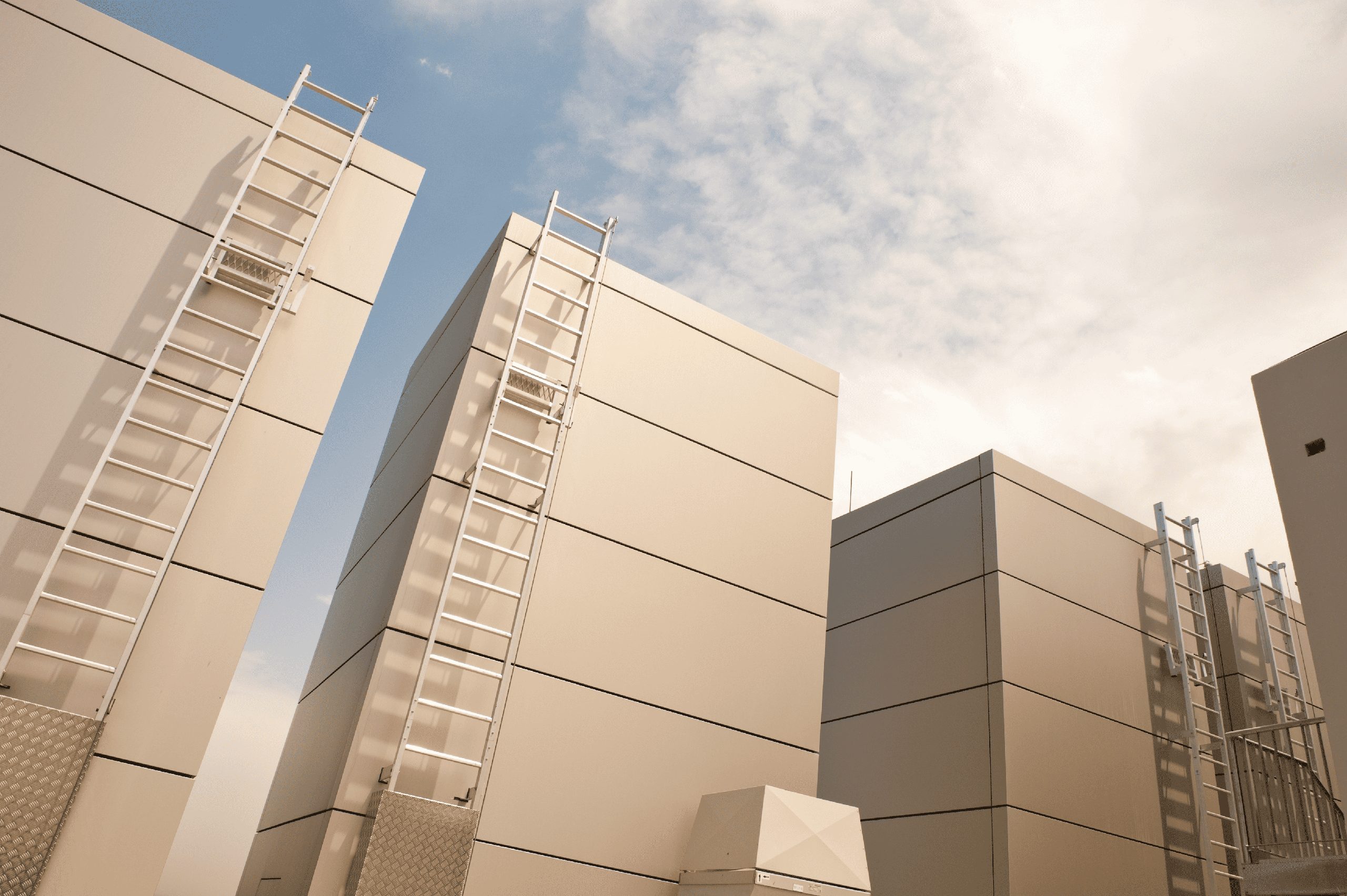
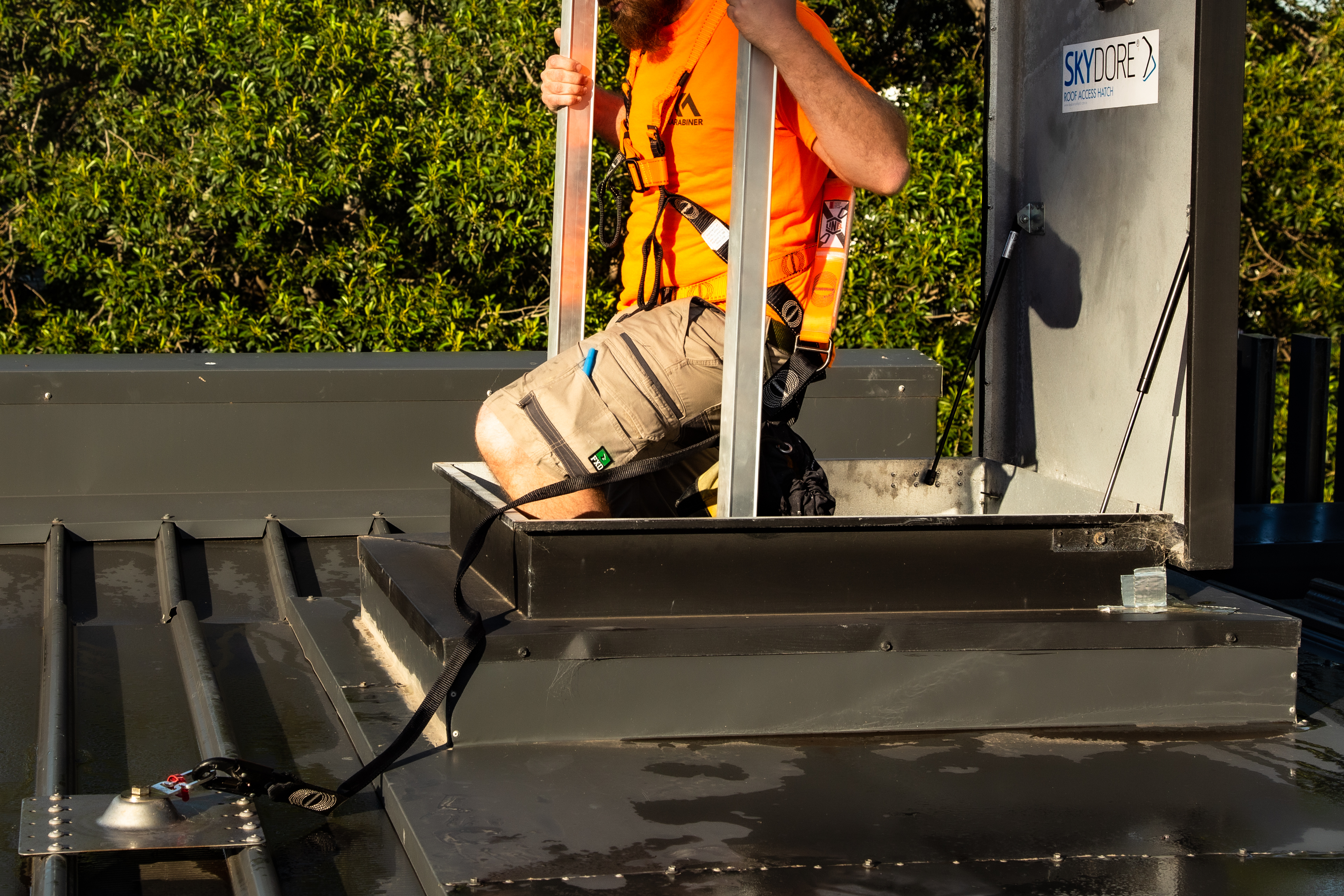
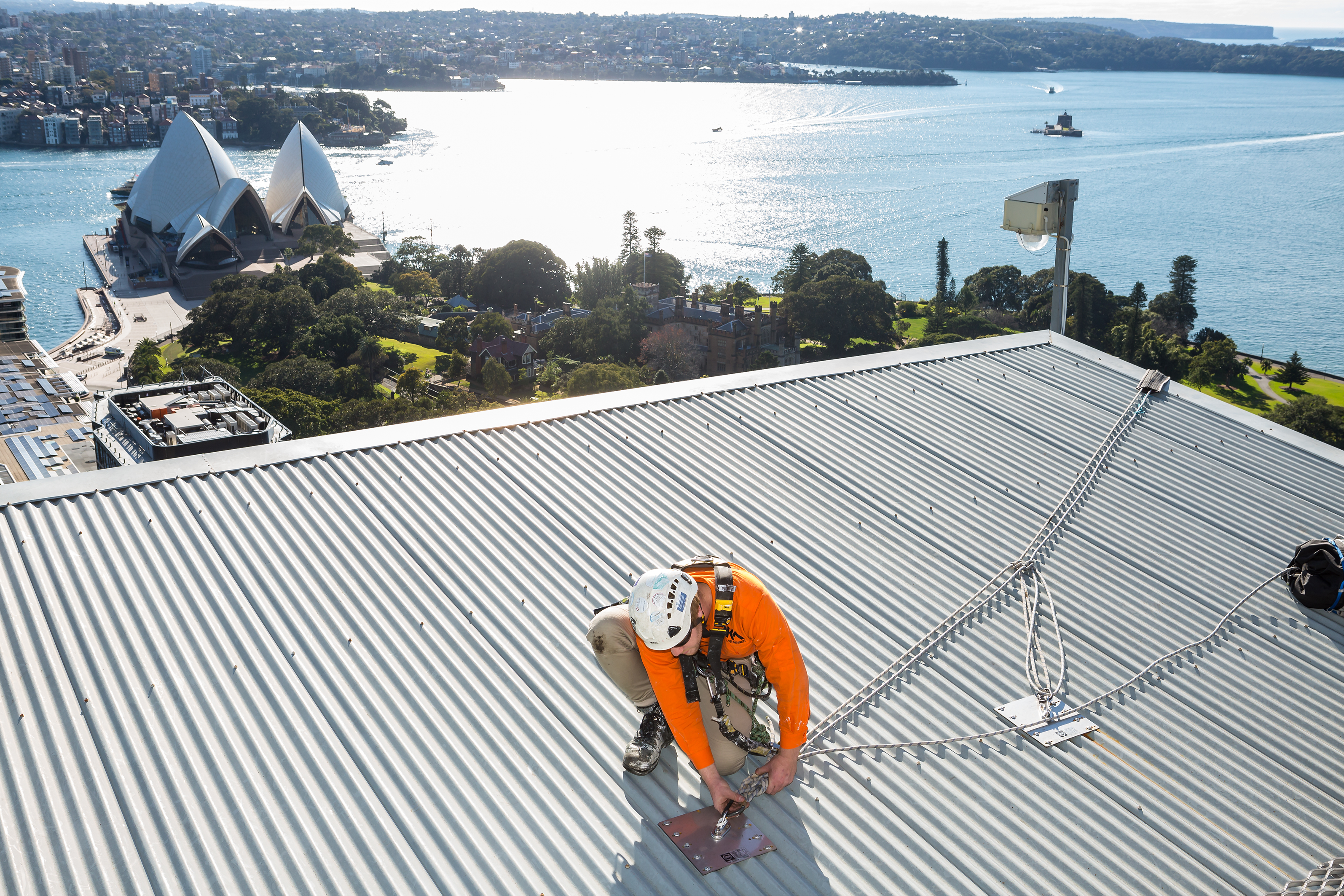
The crew finds the anchors, checks the tags and documentation, then checks them physically before anything is rigged. Sydney buildings carry a mix: davit arms cantilevered over the parapet, paired anchors on a single base, through anchors passing right through the structure, anchor rails running along the facade, surface mounts fixed into roof sheets, and temporary counterweight or deadweight systems on roofs with nothing installed.
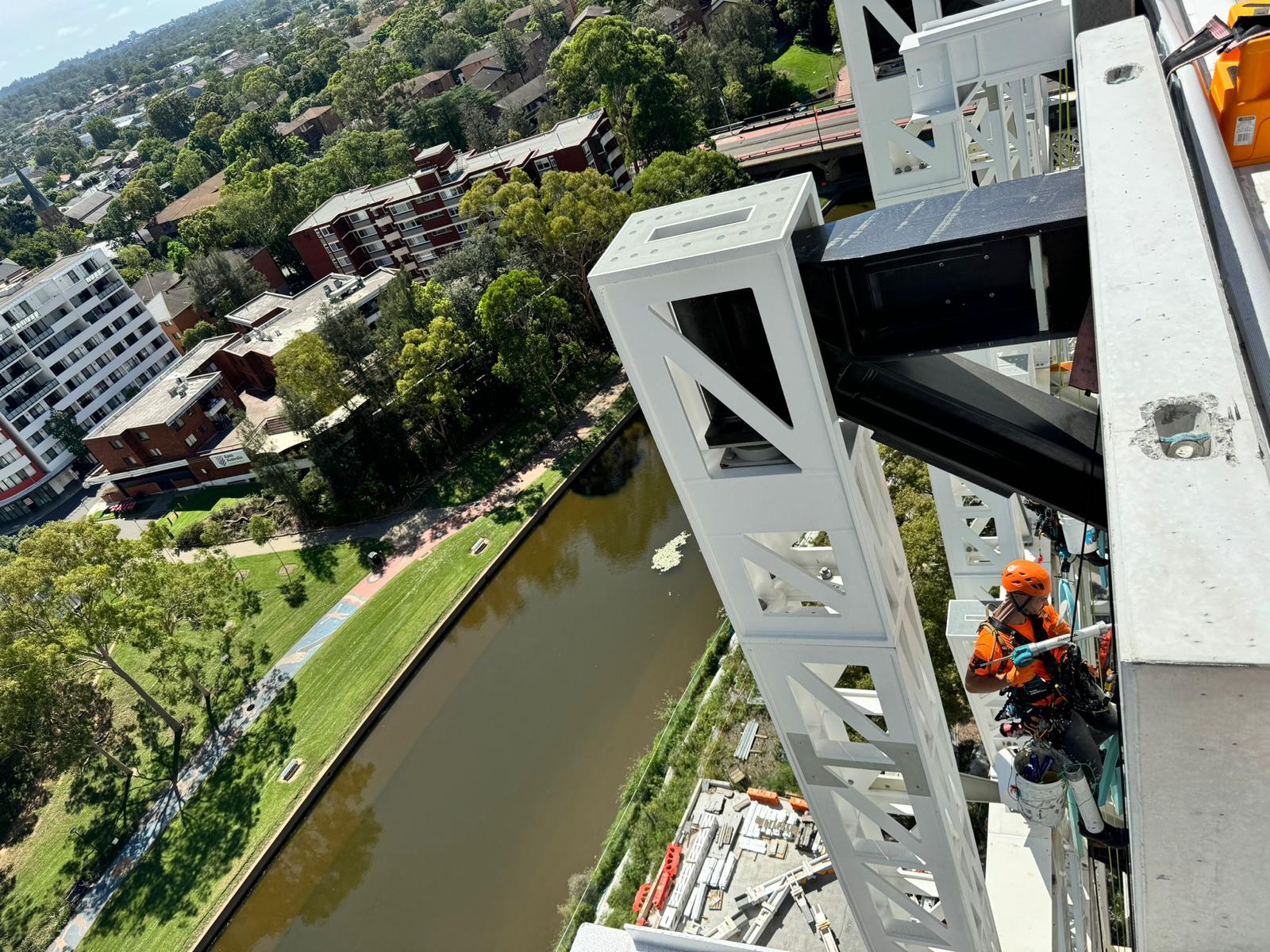
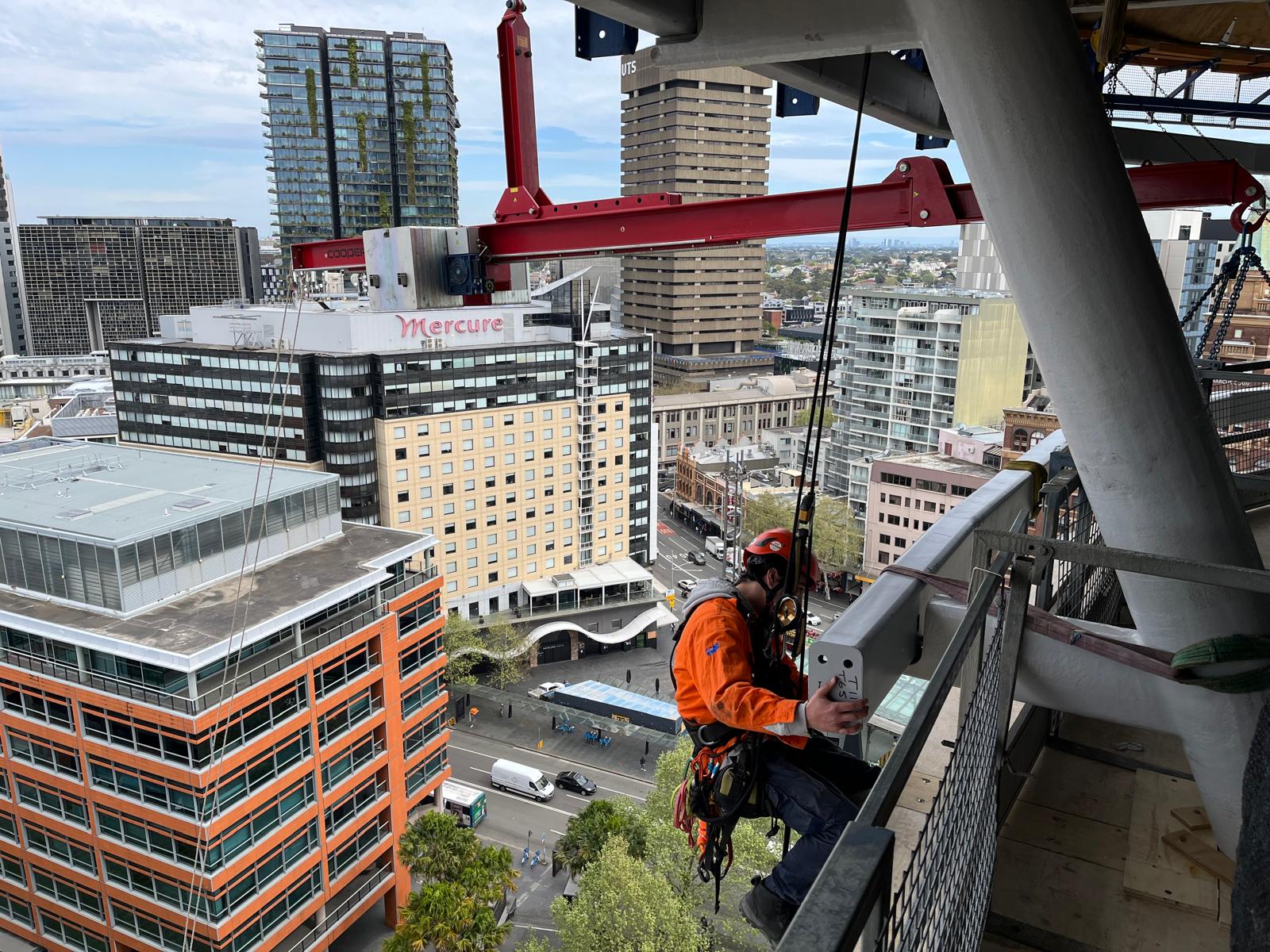
Lines are rigged from those anchors, commonly using a Y-hang so the load is shared across two points. Where a line cannot hang clear of the facade, a deviation anchor pulls it sideways around the obstruction.
Rope protection then goes on wherever a line crosses an edge. The order crews work through is simple: get the rope off the hazard first, make the edge itself safer second, pad or sleeve the rope last.
Why anchor position decides so much
Safe Work Australia describes the problem better than most contractors do. A suspended system behaves like a pendulum if the technician is positioned horizontally away from the anchor. Swing down and they hit a floor or the ground. Swing back and they hit an obstacle. Either way the line can be dragged across a sharp edge on the way through.
The wider apart the anchors, the worse an uncontrolled swing becomes. That is why technicians work more or less directly below their anchors, and it is why a building with a sparse or badly positioned anchor layout takes longer and costs more. Every drop has to start from somewhere sensible.
At ground level
An exclusion zone goes in below the work area to keep people out from under falling objects, and another goes in above so nobody walks into the ropes or the anchors. Balconies inside the drop zone often need their own.
Tools are tethered to the technician or carried in closed bags. Anything bulky is suspended on its own line from its own anchor. A spotter stays on the ground with clear sight of the crew.
Crews work top to bottom, and there is a reason
Every drop starts at the roof and works down. That is not habit. Run-off from dirty glass above lands on clean glass below, so cleaning upward means cleaning the same pane twice. Working down means you never wash dirt onto something you have already finished.
The same logic drives the sequence across the whole facade. Bay by bay, top to bottom, moving the lines laterally between drops.

Why pure water, and why it matters more on a rope
Most high-rise cleaning now runs on purified water. Mains water goes through filtration and deionising resin until there is nothing dissolved in it. Stripped water picks up dirt aggressively on contact, then dries without leaving anything behind.
That is the whole trick. It is not that pure water cleans better. It is that it dries clean, so there is no squeegee-and-detail step on every pane.
On ropes that buys you two things. No detergent means no soapy run-off down the facade, onto lower glass, onto awnings, onto planting and onto the footpath, which is a complaints problem you have removed rather than managed. And no detailing per pane means faster progress per drop, which is most of the economics of a high-rise clean.
Lower levels with clear ground access are often done from water-fed poles instead. Ropes handle everything above that.
What actually drives the price
Not square metres of glass, or not mainly.
- Drop count. Height and facade width decide how many descents the job takes, and that decides crew days.
- Facade complexity. A plain rectangular tower is far cheaper per square metre than one with setbacks, articulation, corner glazing and feature elements.
- Balconies. Every balcony is a reposition and often a conversation with a resident.
- Anchor layout. This is the hidden one. A building with a well-designed, documented anchor system quotes lower and gets scheduled sooner. A building with undocumented anchors carries a cost on every job for the rest of its life.
- Access and logistics. Roof access route, whether gear goes up in a lift or a stairwell, where the water comes from, where the crew can stage.
- Exposure. Harbour-front and coastal buildings pick up salt far faster than sheltered inland ones. Arterial road frontages collect traffic film. Sites beside construction collect fine dust.
- Deferral. Deposits that have had years to bond take more labour and harder method than deposits that have not.
If you want a number for your building, talk to our team with the address and roughly how many levels, and we can scope it properly.
What goes wrong
Nobody can find the anchors. The most common failure by a wide margin. Anchors were installed when the building went up, never documented, and twenty years later nobody knows where they are or whether they have ever been tested.
The crew arrives and will not start. That follows directly from the first one. The anchors fail the pre-use check, the job is abandoned, residents are annoyed and the building is still dirty. Getting the anchor points tested and certified before you book a clean avoids this entirely.
Weather. Wind is the main one. It tangles ropes, dislodges tools and moves a suspended technician around. Wet ropes behave differently through a descender and are less resistant to abrasion. A booked date on a rope job is a target rather than a certainty, so buildings scheduling to a hard AGM deadline tend to get burned.
Balcony access falls apart. Residents not home, residents saying no, balconies too cluttered to work from safely.
Deferred cleaning leaves permanent marks. Salt and mineral deposits left long enough will etch into the glass surface, and no amount of cleaning reverses that. At that point you are looking at glass replacement rather than a clean.
Where window cleaning stops
Window cleaning is the glass, the frames, the tracks and the balustrade glass. The render, precast, cladding, masonry and the rest of the building envelope is facade cleaning, which uses different methods on a much longer cycle. Both sit inside our rope access maintenance service.
The useful thing about cleaning on ropes is that a technician is at arm's length from the entire facade for days at a time. Good crews photograph defects as they go: cracked seals, damaged glass, failed sealant, frame corrosion. You get a close-range condition record out of a job you were paying for anyway.
Services this involves
Trusted by Australia's leading builders
_logo.svg.png)