
Roof anchor points in NSW should be inspected as often as the manufacturer's instructions say. In the product documents we checked, that's every 12 months or sooner, which is why roof anchor point certification usually runs on a yearly cycle. No NSW law says anchors must be tested every 12 months: the annual figure in the WHS Regulation is a fallback for inspection, and it only applies when following the manufacturer isn't reasonably practicable.
If you manage a strata scheme or a commercial building, that changes who holds the duty and what you need on file.
How often does roof anchor point certification need to happen?
Section 213 of the Work Health and Safety Regulation 2025 (NSW) says the person with management or control of plant at a workplace "must ensure that the maintenance, inspection and, if necessary, testing of the plant is carried out by a competent person."
It then sets the frequency in order:
- The manufacturer's recommendations come first.
- A competent person's recommendations apply only if there are no manufacturer's recommendations.
- Annually, and only "in relation to inspection, if it is not reasonably practicable to comply with" the first two.
So annual is a fallback, and it covers inspection, not load testing.
The Regulation never mentions anchors, so this next step is our reading of the definitions, not a quote. It defines a fall arrest system as "plant or material designed to arrest a fall", and the Work Health and Safety Act 2011 (NSW) says plant includes "any machinery, equipment, appliance, container, implement and tool" and "any component of any of those things". A fixed roof anchor is equipment in a fall arrest system, so we treat it as plant, and s 213 sends you to the manufacturer's paperwork.
That paperwork varies. Safe@Heights' HawkPro abseil anchor data sheet says its anchors "must be inspected" by an approved installer who is a competent person "every 12 months", that "in harsh environments inspections should be more frequent", and that inspections "must also include roof sheeting and structure". Austlift's steel edge anchor user manual asks for a formal inspection by a competent person other than the user "preferably every six months or at least annually". Both predate the 2025 Standards. Two products, two schedules, so the first job in a height safety certification and audit is working out exactly what's installed.
SafeWork NSW's Code of Practice: Managing the risk of falls at workplaces (August 2019, still cross-referencing the repealed 2017 Regulation) names no number either. It says fall arrest components should be inspected by a competent person "after it is installed but before it is used", "at regular intervals" and "immediately after it has been used to arrest a fall", in line with "the manufacturer's specifications and the relevant standards".
Load testing is a separate question: s 213 asks for it "if necessary". SafeWork NSW's fall arrest anchors fact sheet, updated August 2019, said inspection programs based on AS/NZS 1891.4, "including annual load testing of chemical and friction anchors", should continue for installed anchors. That rests on the 2009 edition of the Standard, since replaced, so ask your certifier what testing your anchor type needs now and on what basis.
On specifying and installing anchors, see our guide to roof anchor points, Australian Standards, installation and inspection.
Common myths about anchor point inspection in NSW
A lot of what's online about anchor certification is written to sell it. Here's what the primary sources say.
| Common claim | What the source actually says |
|---|---|
| "NSW law requires anchor points to be tested every 12 months." | The word "anchor" doesn't appear anywhere in the WHS Regulation 2025. Section 213 requires inspection per the manufacturer's recommendations, with annual inspection only where that isn't reasonably practicable. |
| "AS/NZS 1891.4 is the law." | SafeWork NSW's fall arrest anchors fact sheet says "Neither AS/NZS 1891.4 nor AS/NZS 5532 are mandatory standards in the legislation." But a court "may have regard to" a standard referenced in a code of practice when deciding what was reasonably practicable. |
| "Every strata owners corporation has a WHS duty to certify anchors annually." | SafeWork NSW says a body corporate "only responsible for common areas used only for residential purposes" is generally not a PCBU for those areas. That changes if it employs a worker, and usually changes if common areas are mixed residential and commercial. |
| "The new AS 5532 means your anchors must be replaced." | The Standards Australia catalogue describes AS 5532:2025 as covering "manufacturing performance requirements, test methods, marking and product instruction requirements" for single-point anchors. SafeWork NSW's fact sheet, written for the 2013 edition, said it "does not address ongoing inspection, testing and maintenance". If someone says everything must go, ask why in writing. |
You still certify. You just do it for the right reason, against the right document.
Which Australian Standards apply to anchor point inspection?
Both anchor Standards were revised in 2025.
- AS/NZS 1891.4:2025, Personal equipment for work at height, Part 4: Selection, use and maintenance. The Standards Australia Store lists it as current, published 19 September 2025, superseding AS/NZS 1891.4:2009 and its 2021 amendment. Standards Australia's summary of the 2025 edition promises "clearer periodic inspection frequencies and criteria" but publishes no figures.
- AS 5532:2025, Manufacturing requirements for single-point anchor device used for harness-based work at height. Listed as current, published 19 September 2025, superseding AS/NZS 5532:2013. Note: AS, not AS/NZS.
We won't quote clause numbers or load figures from either. The text is paywalled, and a figure copied off a competitor's site is no basis for a safety decision. Check that your certifier's report names the 2025 edition of AS/NZS 1891.4 and the manufacturer's current instructions.
If residential strata usually isn't a PCBU, why certify at all?
Because someone still clips on to those anchors, and they're running a business.
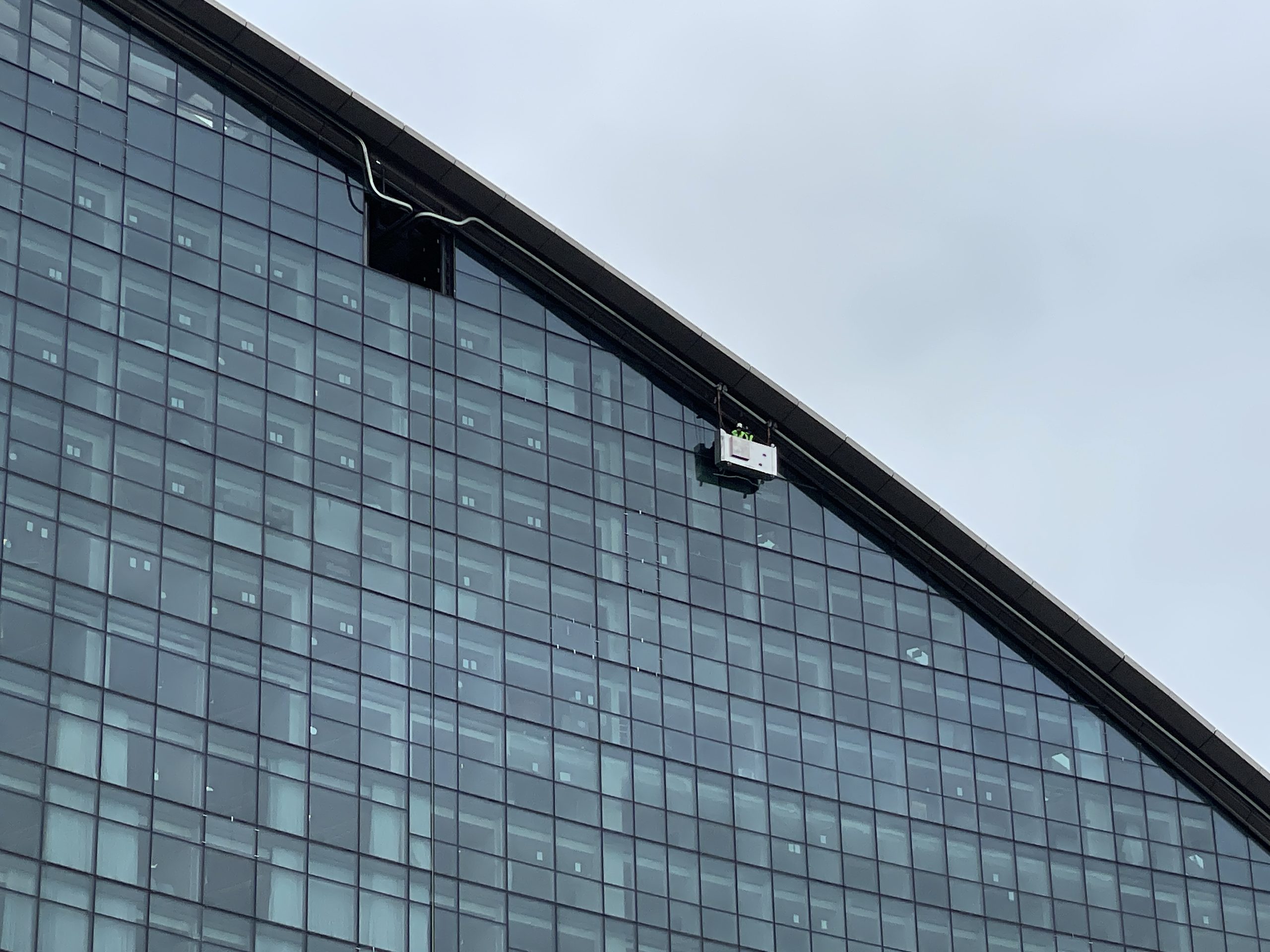
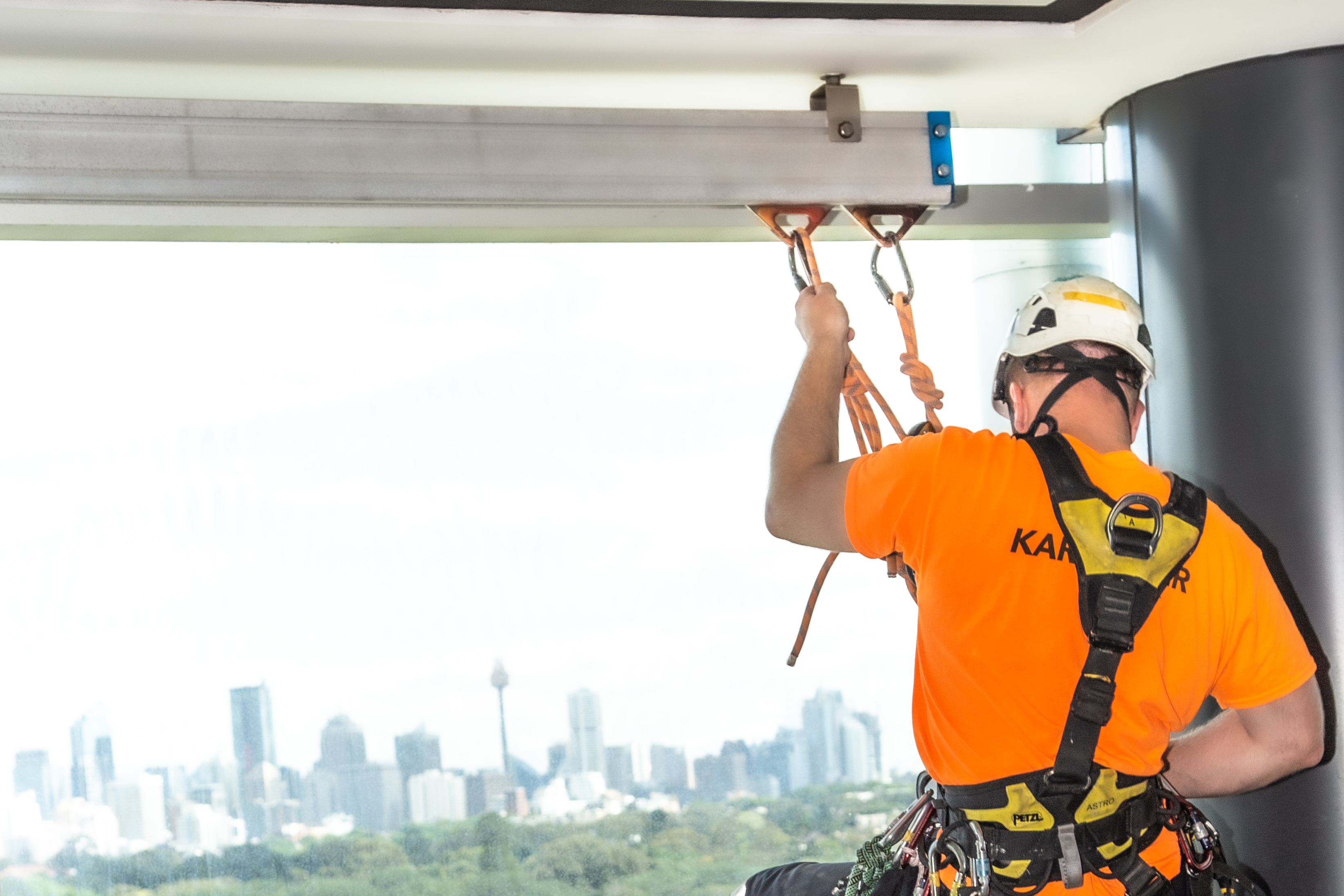
A window cleaner or abseil painter on your roof is the PCBU for that job. Section 79 requires them to minimise the risk of a fall, which they do by providing and maintaining "a safe system of work". Where they use a fall arrest system, s 80 requires emergency and rescue procedures. A careful contractor will ask for current certification and an anchor layout before rigging, and without them may decline the job or price in the time to assess the anchors. More on this in strata window cleaning and anchor point access.
Two more things to weigh:
- Commercial buildings sit differently. On an office, hospital or mixed-use asset, a business usually controls the roof. The note to s 213 says the person with management or control of plant is the PCBU whose business involves managing or controlling it. Whether that's the owner, managing agent or facility manager on your building is a question for your own advice.
- Warranties can depend on it. Safe@Heights says its 15 year anchor warranty comes "with our Certification & Safety Program". Check your own product documents.
What happens at an anchor point certification visit?
Expect this scope from any anchor point testing and certification service. There's more detail in what happens during a height safety inspection.
- Records first. The certifier pulls the previous certificate, the install documentation and the manufacturer's instructions for each anchor type on the roof.
- Find every anchor. Each one is located against the roof plan. Anything that isn't on the plan gets flagged.
- Visual and physical inspection. Corrosion, deformation, loose fixings, damaged sealant, and the condition of the roof sheeting and structure the anchor relies on.
- Testing where it's needed. The manufacturer's instructions set any periodic testing. For insert-type anchors (friction, chemical or screw anchors in concrete or masonry), the Code of Practice says testing before first use should include a pull-out test, because "the grip on the concrete below the surface cannot be assessed by a visual inspection".
- Tag, report and update the register. Pass or fail, every anchor is recorded.
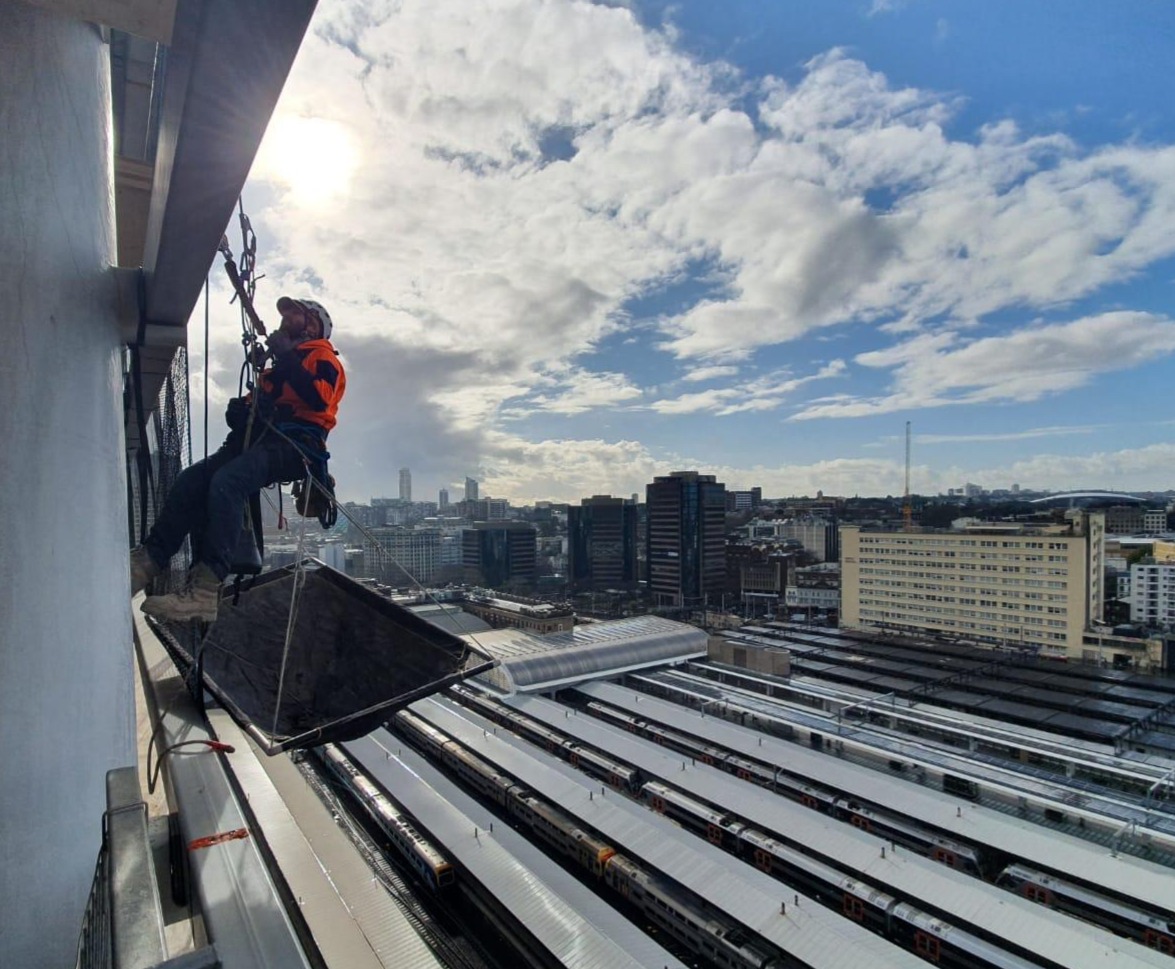
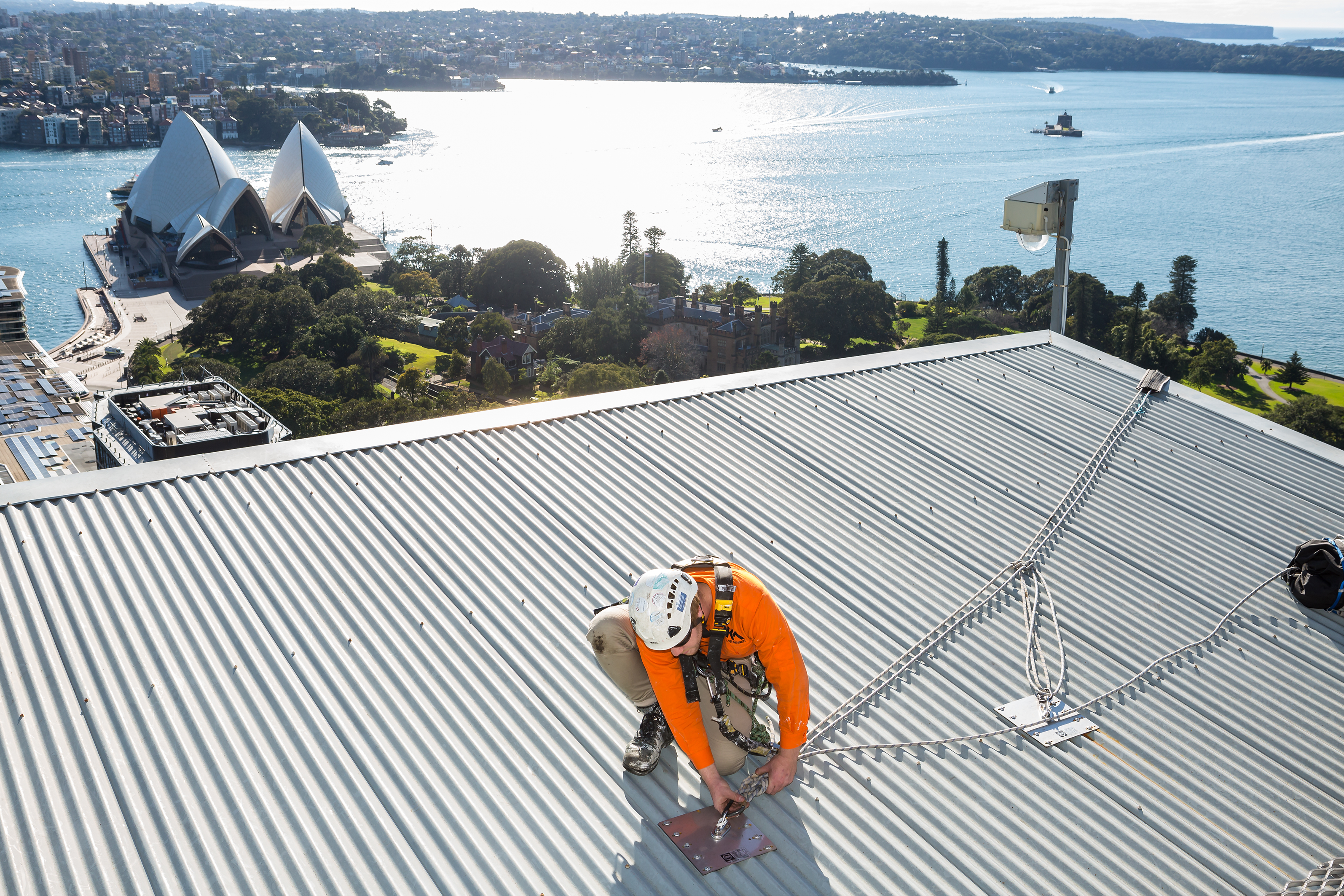
We walk the roof before we quote. Our team includes IRATA-certified rope access technicians who also hold trades, and we've installed fall protection and rope access systems on buildings such as Sirius in The Rocks.
What records should you keep for your anchors?
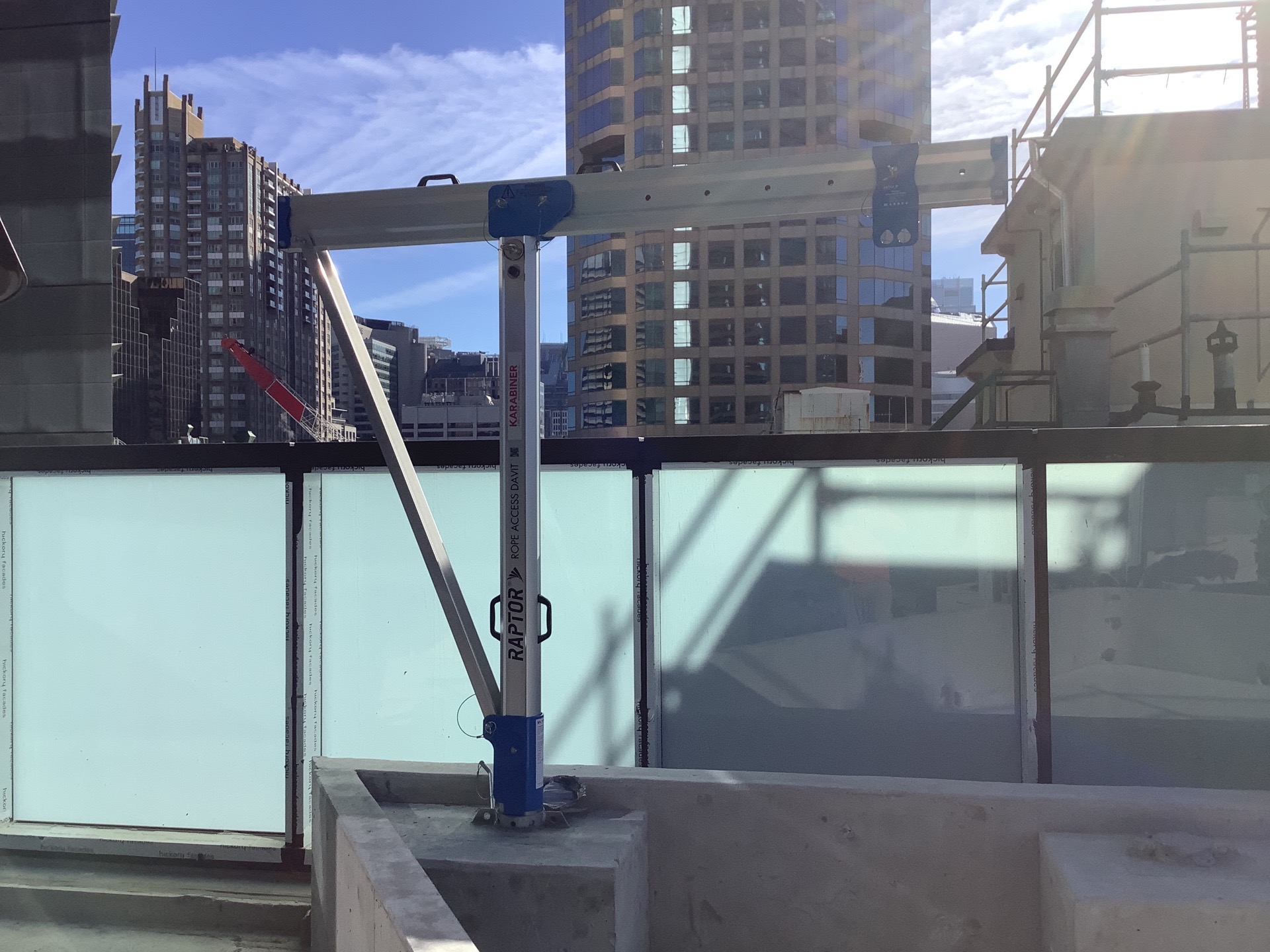
The Code of Practice says an inspection regime should cover each item's "unique identification", "the frequency and type of inspection" and the "means of recording the inspections". In practice, keep:
- An anchor register: every anchor's ID, product, location, install date, last inspection, result and next due date.
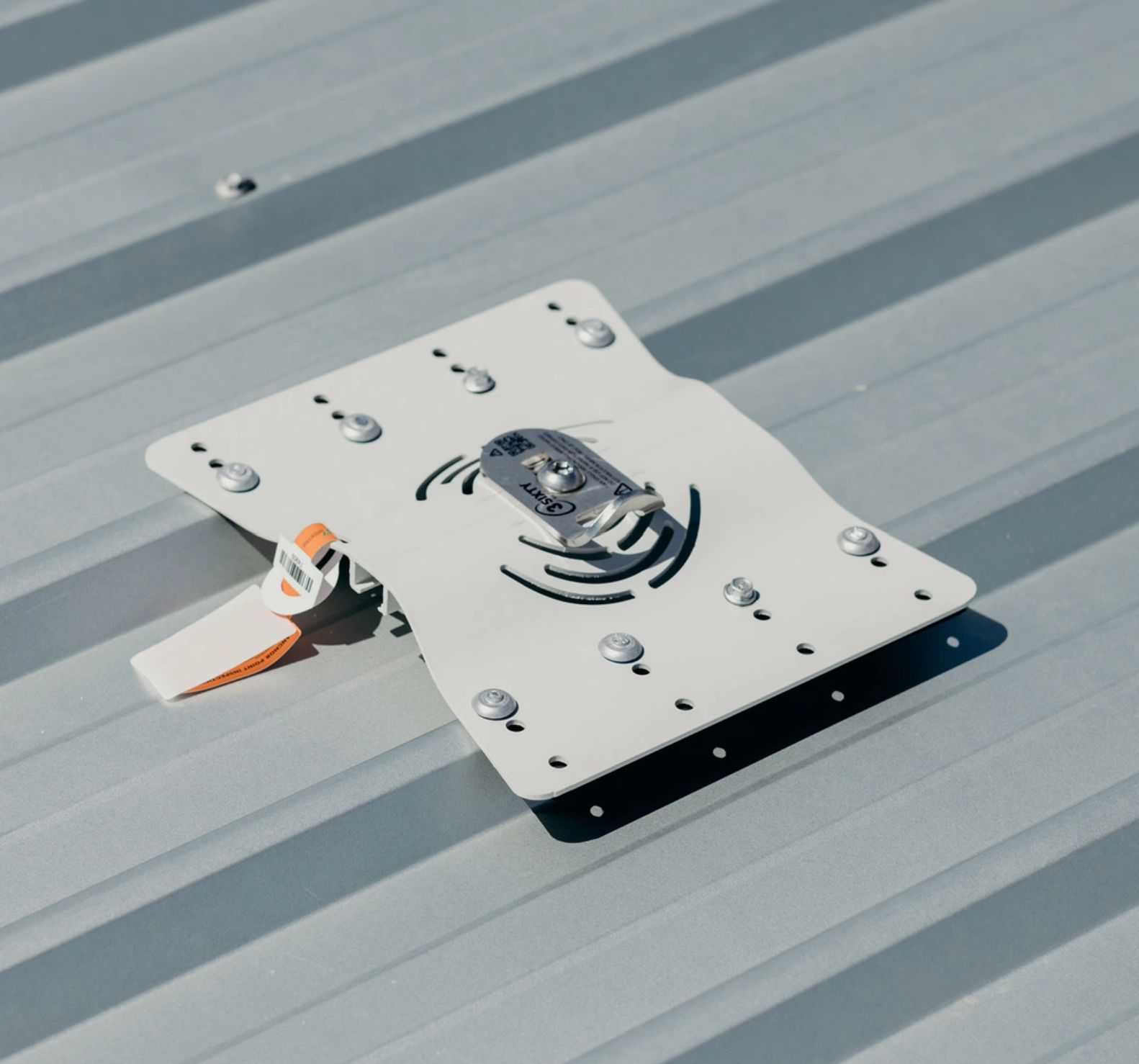
- Tags on the anchors showing the last inspection and due date.
- A roof plan with every anchor, static line and exclusion zone marked. Keep a copy at the roof access point.
File the install certificates and manufacturer instructions with them, so a new certifier can pick up cleanly.
What happens if an anchor fails or the paperwork is missing?
A failed anchor comes out of service straight away. The Code of Practice is blunt: defective equipment "must be withdrawn from use". Tag it out and warn any contractor booked to use it. SafeWork NSW's fact sheet adds that anchors found damaged, or not installed to the manufacturer's instructions, should be "made compliant with the manufacturer's instructions, or replaced". Our height safety installation team handles replacement, and if the problem is the roof itself, our remedial building works guide explains what comes next.
Missing paperwork is a different problem. If nobody knows an anchor's brand, fixing or last inspection, a certifier has nothing to inspect against. Expect the first visit to be a baseline: identify the products, check fixings and roof structure, and test or replace anchors that can't be verified.
If you're unsure where your building stands, book an anchor point certification and start from a baseline.
Services this involves
Trusted by Australia's leading builders
_logo.svg.png)