
Roof anchor points are fixed connection points on a roof that a worker clips a harness to, so they either can't reach a fall edge or are caught if they go over one. In Australia the anchor device is made to AS 5532:2025, the harness system it belongs to is selected, used and maintained under AS/NZS 1891.4:2025, and at a workplace, NSW law requires a competent person to inspect it in line with the manufacturer's recommendations. Most of what else you'll read is detail on top of those three things, and a fair bit of it online is wrong.
This guide is for strata managers, facility managers and building owners who end up responsible for anchors without ever having installed one.
What are roof anchor points?
An anchor point is the structural end of a fall protection system. The worker wears a full body harness and connects a lanyard or line, and that line runs back to the anchor. On a roof, anchors get used in two ways:
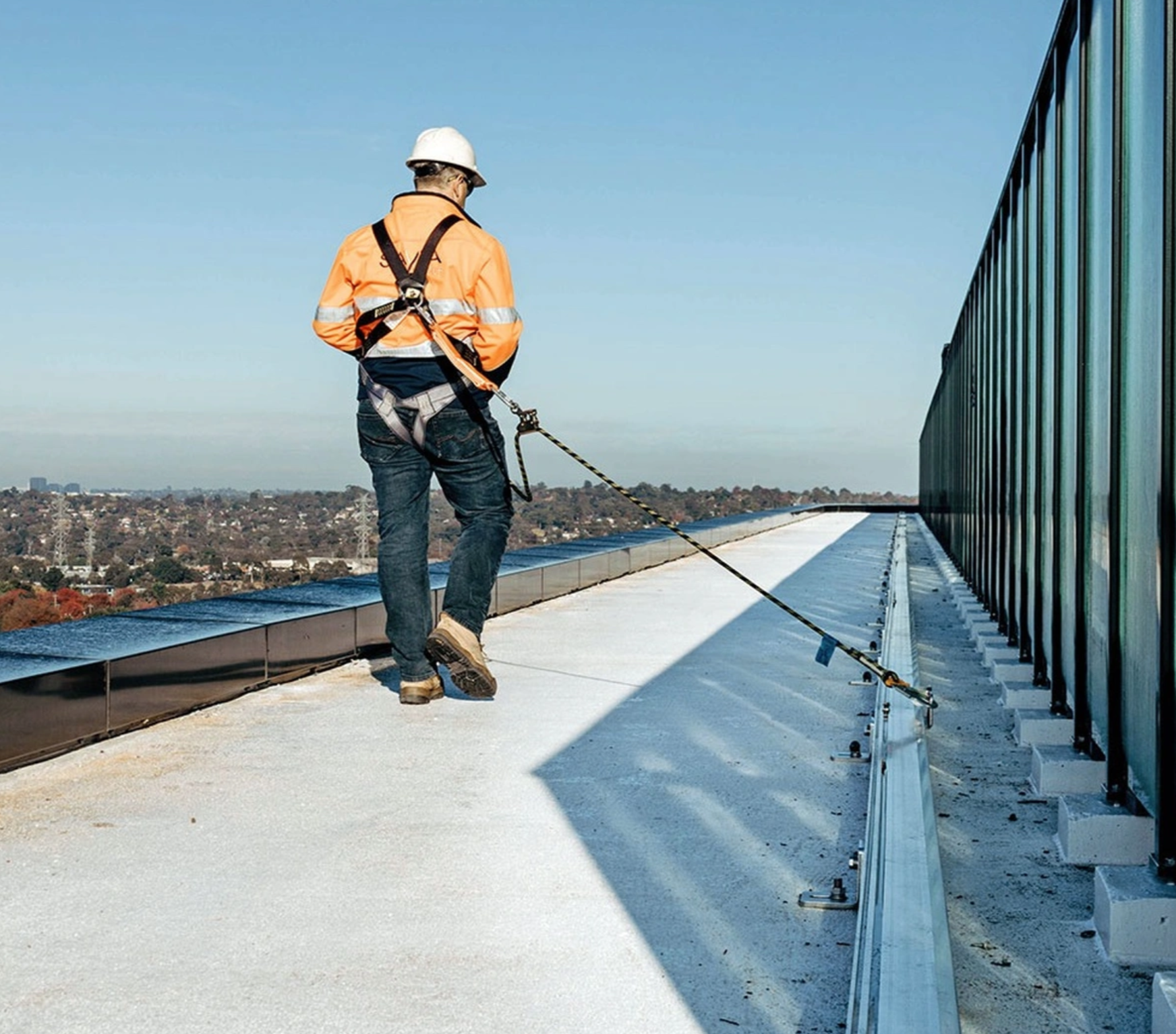
- Restraint. The line is set so the worker can't physically reach the edge. Set up properly, nobody falls.
- Fall arrest. The worker can reach a point where a fall is possible, and the harness, energy absorber and anchor together stop the fall.
Restraint sits higher in the order of controls, because it stops the fall before it starts. A good layout keeps people in restraint wherever the roof allows.
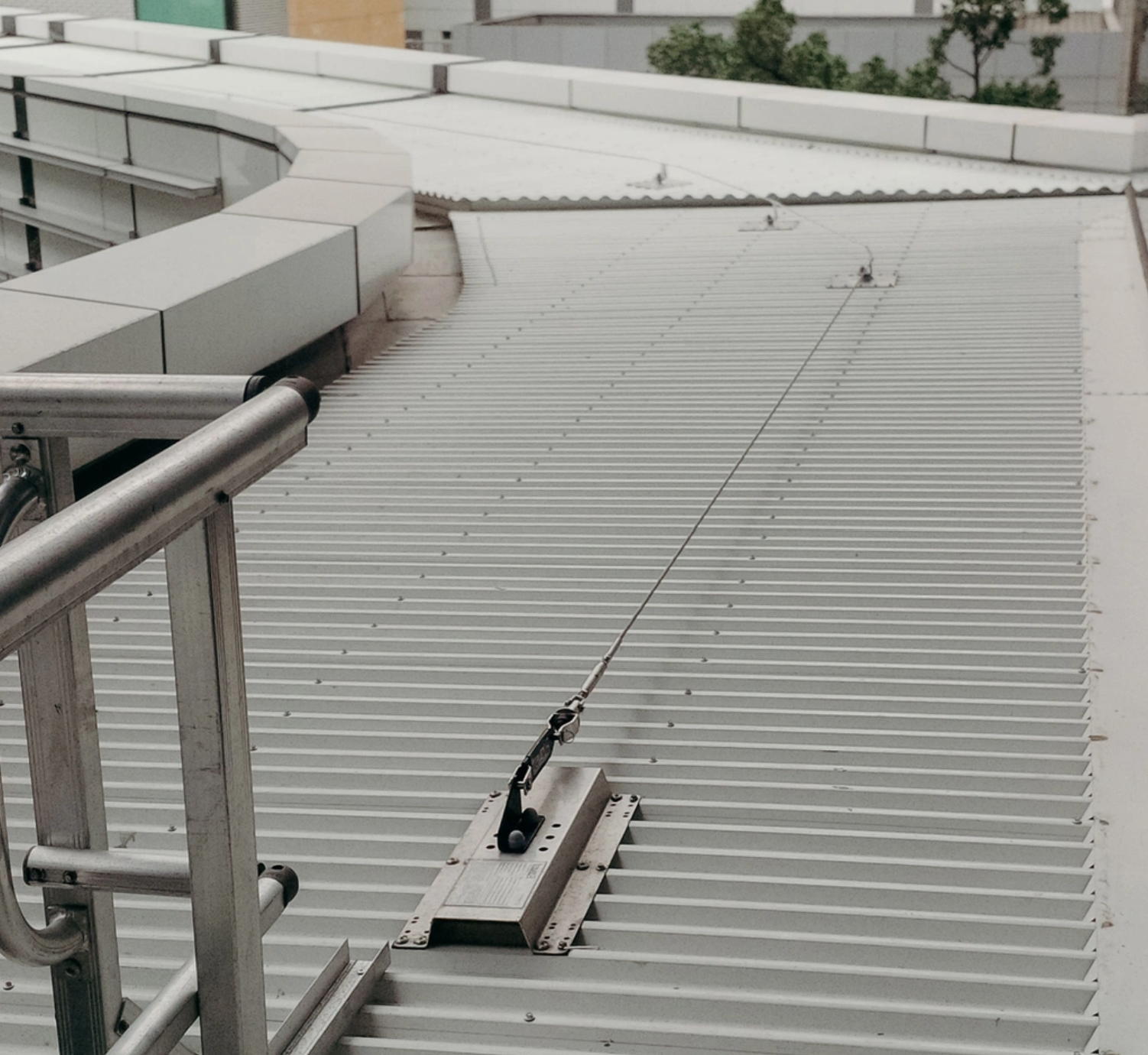
Anchors come as single points, or as several points joined by a horizontal cable (a static line) or a rail. A single anchor suits work in one spot, like servicing one exhaust fan. A line or rail suits work that moves, like a window cleaner travelling a parapet, because the worker never has to unclip. Most commercial roofs need a mix, designed together as one height safety installation rather than added one anchor at a time.
Where do roof anchor points sit in the hierarchy of control?
An anchor on a roof isn't the first answer. It's closer to the last one.
SafeWork NSW's Code of Practice, Managing the risk of falls at workplaces (August 2019), sets out the order in section 3.4. Do the work on the ground or on a solid construction first. If that isn't reasonably practicable, use a fall prevention device such as guardrail. Next comes a work positioning system (restraint is one), then a fall arrest system. Administrative controls cover whatever risk is left.
So a good design starts by asking whether the roof needs anchors at all. Where anchors are the right call, the Code says each one should be located so the worker can attach before moving into a position where they could fall.
Which Australian Standards apply to roof anchor points?
Three documents do the work. We checked each against its current catalogue record and describe it the way that record does.
| Document | What it covers | Status |
|---|---|---|
| AS 5532:2025 | Manufacturing performance requirements, test methods, marking and product instructions for single-point anchor devices used for harness-based work at height | Current, published 19 September 2025. Supersedes AS/NZS 5532:2013 |
| AS/NZS 1891.4:2025 | Selection, use and maintenance of personal equipment for work at height. The 2009 edition was titled Industrial fall-arrest systems and devices | Current, 2025 edition |
| AS 1657:2018 | Design, construction and installation of fixed platforms, walkways, stairways and ladders, including permanently installed roof access | Current, published 18 April 2018. Supersedes AS 1657-2013 |
AS 5532 is a manufacturing standard. It tells the manufacturer how to make, test and mark the anchor, and what instructions to supply with it. It doesn't set your inspection routine. SafeWork NSW's guidance on fall arrest anchors, written about the 2013 edition, says the same: it does not address ongoing inspection, testing and maintenance.
Note the designation dropped its NZ prefix. A specification that still says AS/NZS 5532:2013 is citing the superseded edition.
Standards Australia says the 2025 edition of AS/NZS 1891.4 clarified periodic inspection frequencies. It doesn't publish them, so we don't quote numbers from it.
Common claims about roof anchors vs what the source says
Each claim below appears on Australian height safety websites. Here's what the primary source says.
| Common claim | What the source actually says |
|---|---|
| "You only need fall protection above 2 metres." | SafeWork NSW says workers must be protected from falling from one level to another "no matter the height". Two metres is the trigger for a safe work method statement on construction work. |
| "Restraint anchors can be rated lower than fall arrest anchors." | The falls Code of Practice, section 6.1: "Restraint anchorage should be designed for fall arrest loading." |
| "The Australian Standard says anchors must be inspected once a year." | The NSW requirement is in the WHS Regulation, not a Standard. See the inspection section below. |
| "If it looks fine, it is fine." | The Code, section 7.3, says that for insert-type anchors "the grip on the concrete below the surface cannot be assessed by a visual inspection". |
| "The 2025 Standards make existing anchors non-compliant." | Manufacturer Anchor Safe writes that they do "not mean that previously compliant systems are suddenly unsafe", and that a transition period applies. |
You'll also see load figures quoted for anchors. We've left them out on purpose: they sit in paywalled standards, the versions online contradict each other, and a wrong number on a safety page is worse than none. Your anchor's rating is on its marking and in the manufacturer's documents.
How does the roof surface change the fixing?
This is where installs go right or wrong. Manufacturers Kattsafe and Anchor Safe both say that under AS 5532:2025, anchors must now be tested on the actual substrate they're meant to be installed into. So the question isn't only "is it a good anchor?" It's "is it the right anchor for this roof, fixed the way its manufacturer says?" The manufacturer's instructions beat general advice every time, ours included.
Concrete. The anchor is cast in, or drilled and fixed later with a chemical or mechanical fixing. The weak point is the bond you can't see. That's why the Code says insert-type anchors shouldn't be used for fall arrest where the load is a direct pull-out, and why it wants pull-out testing for them rather than a look-over. Cracking or spalling around a base plate is a reason to stop using that anchor until someone competent has checked it. If the slab has concrete cancer, the anchor is only as good as the repair.
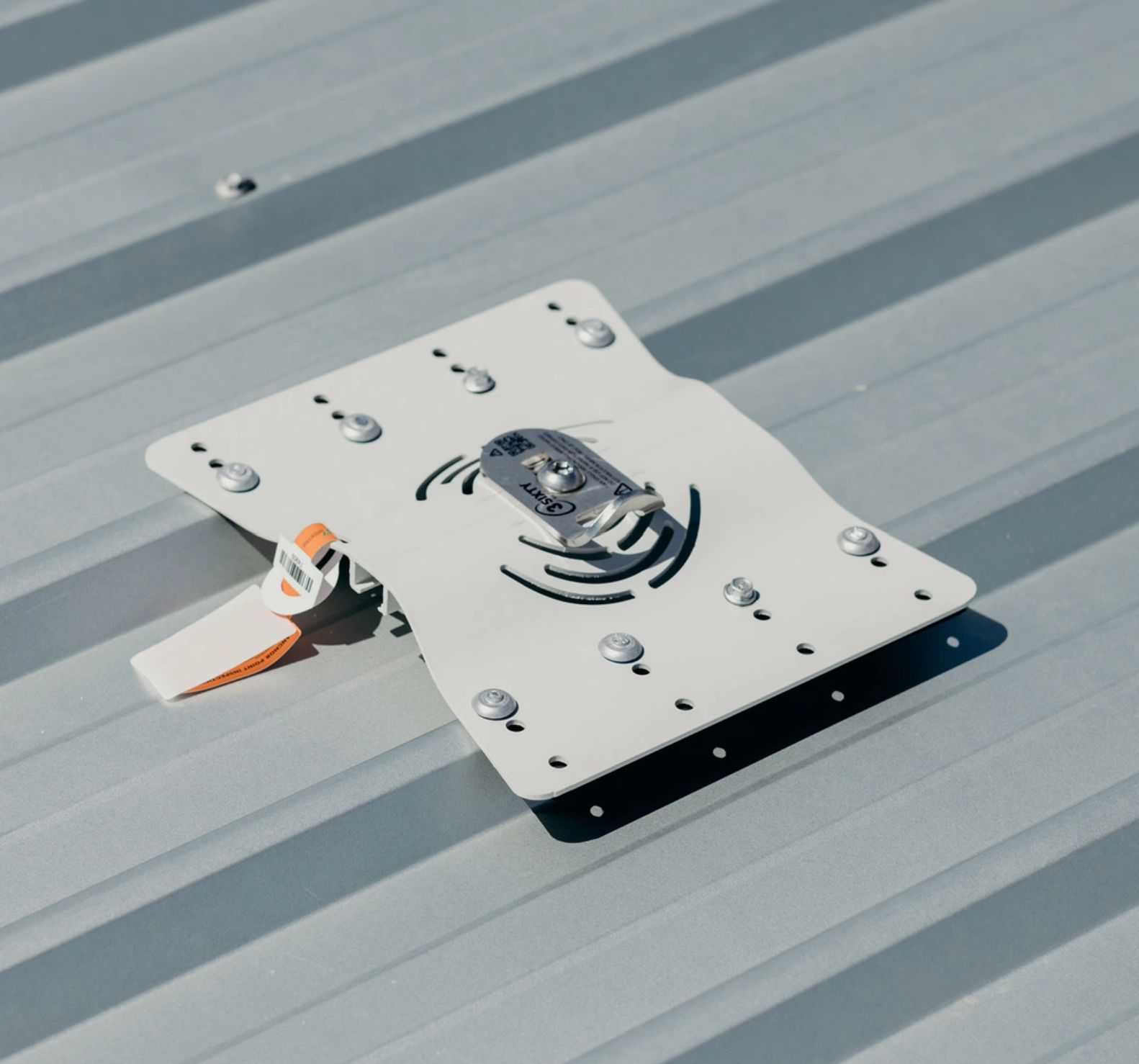
Metal deck. Anchors either fix to the sheeting with a set fastener pattern or go through to the purlins. SafeWork NSW's anchor guidance gives two examples of anchors not installed to the manufacturer's instructions: too few fasteners, and sheeting thinner than specified. It says those anchors must be made compliant or replaced. Neither fault shows up in a photo, so the sheet profile, thickness and fastener count get checked against the manufacturer's table.
Tile. You can't anchor to a tile. The anchor has to reach the structure underneath, with the tiles cut and flashed around it so the roof stays dry. The Code says a "purpose-designed roof anchor" may be used for restraint on metal deck or tiled roofs, used to its designer's or manufacturer's instructions. Purpose-designed is the operative word. A generic plate screwed into a batten isn't that.
Membrane. Every penetration through waterproofing is a future leak if it's detailed badly, so the waterproofing and the fall protection should be designed together. Non-penetrating systems exist, but only within that product's stated limits.
Timber. The member has to be the size and condition the manufacturer specifies. Older roofs turn up undersized rafters, notched members and rot around old penetrations, so the structure gets checked before anything is fixed to it.
None of this can be judged from a satellite photo. That's why we walk the roof before we quote.
Roof anchor point installation: what a sound job looks like
- Work out what happens on the roof. Who goes up, how often, to do what, and where the edges, skylights and fragile surfaces are.
- Apply the hierarchy. Remove the risk if you can. Use guardrail or walkways where they fit. Then lay out anchors, preferring restraint.
- Confirm the substrate. Match the anchor to the roof type it was tested on, and check the structure behind it.
- Install to the manufacturer's instructions. Correct fixings, correct number, correct sealing.
- Test and approve. The Code says anchorages should be tested and approved by a competent person before use.
- Hand over the paperwork. A roof plan showing every anchor and line and what each is for, plus the test results and the manufacturer's instructions. Without the plan, the next contractor is guessing.
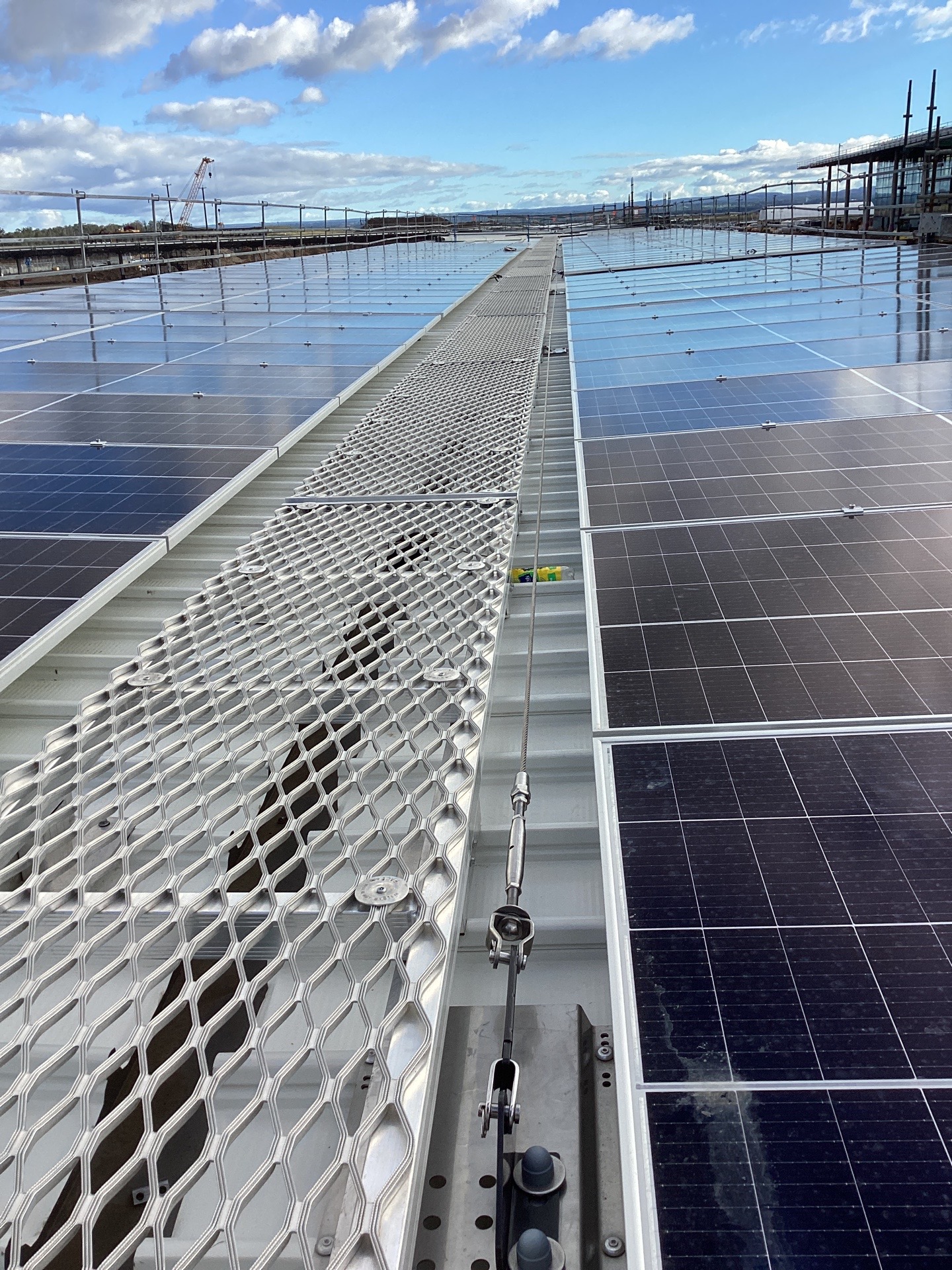
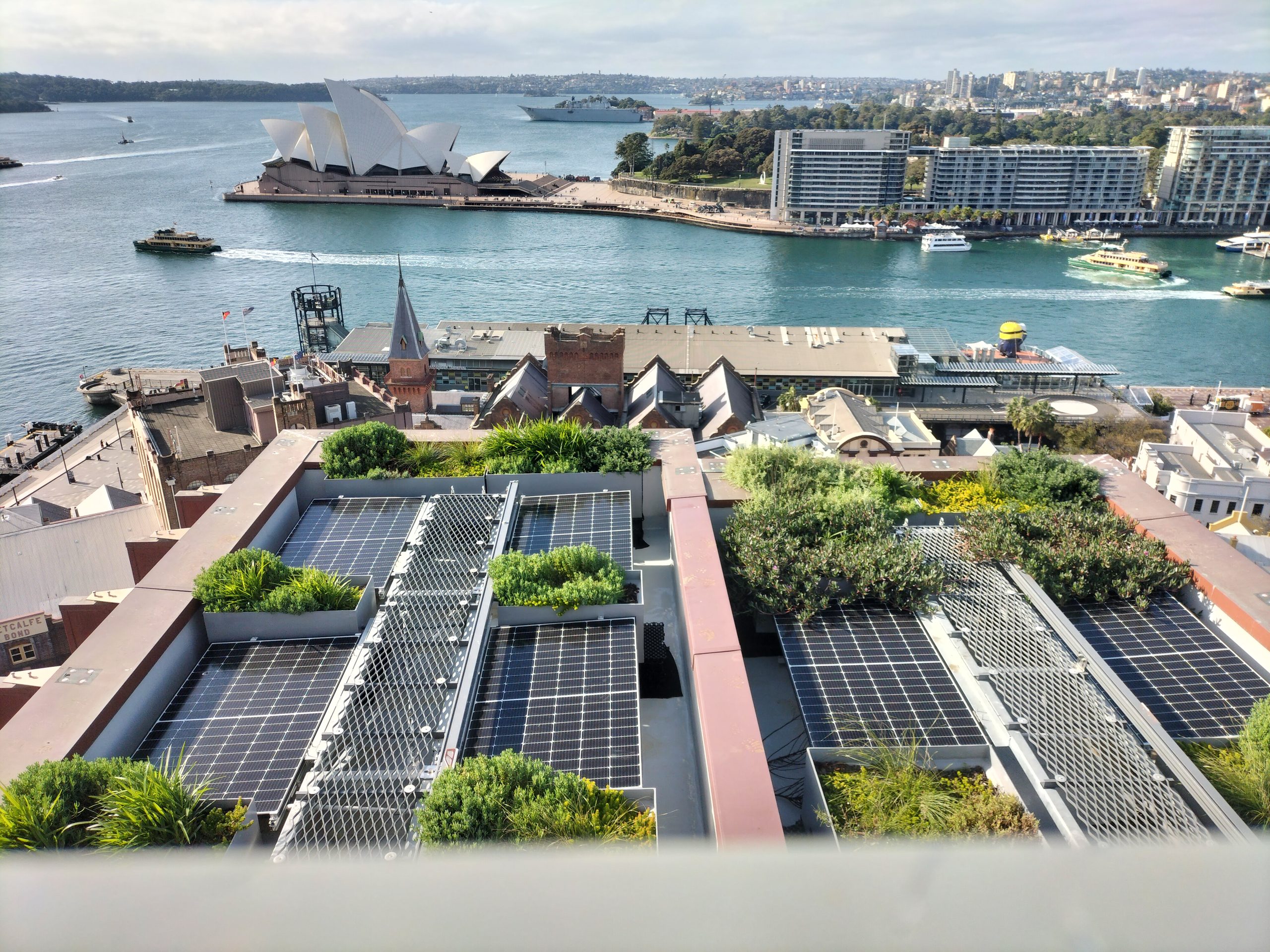
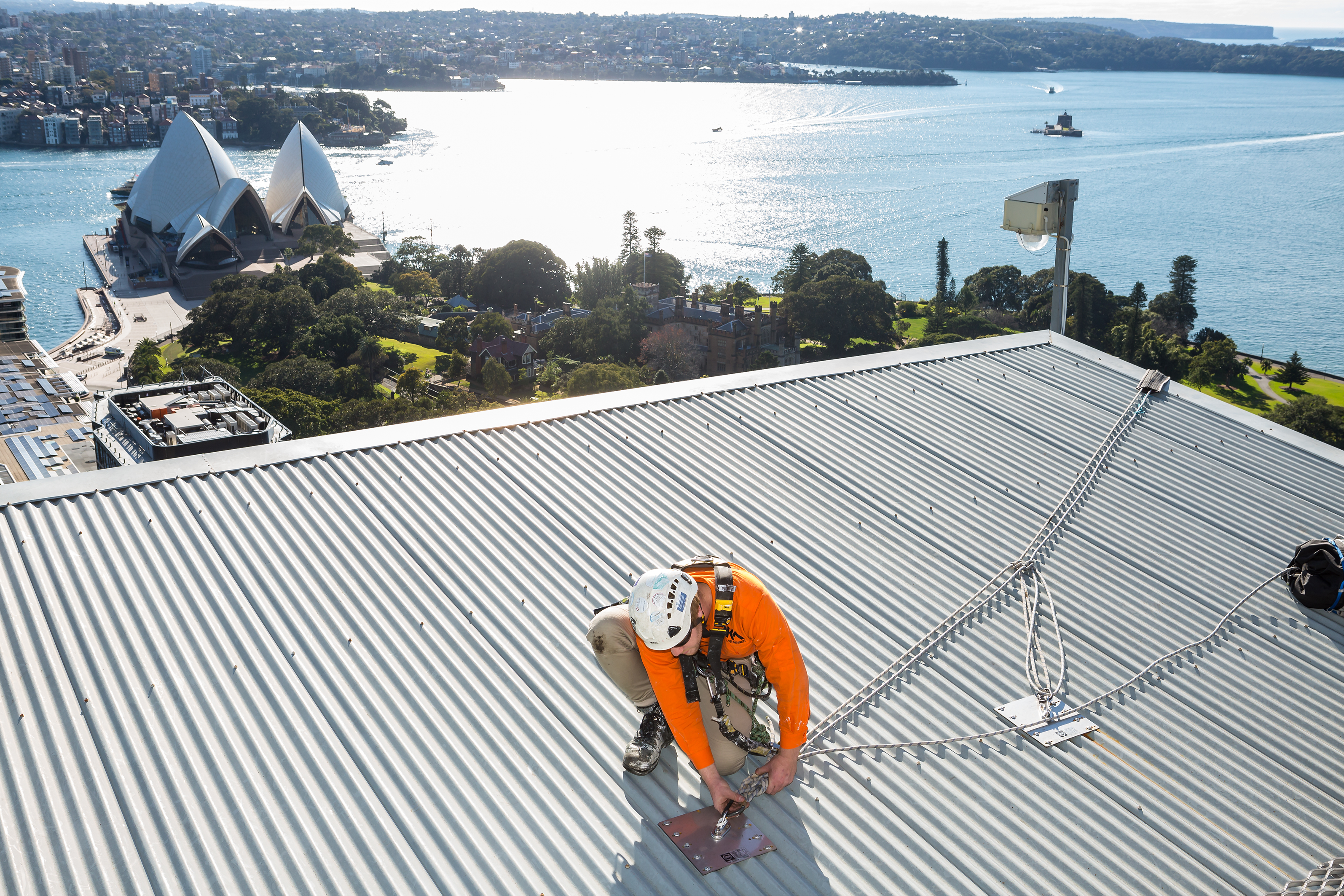
At Western Sydney International Airport in Badgerys Creek, Karabiner installed fall protection and rope access systems. On a roof like the one above, the static line, walkway and solar arrays share the same strip of roof, which is exactly why the plan comes first.
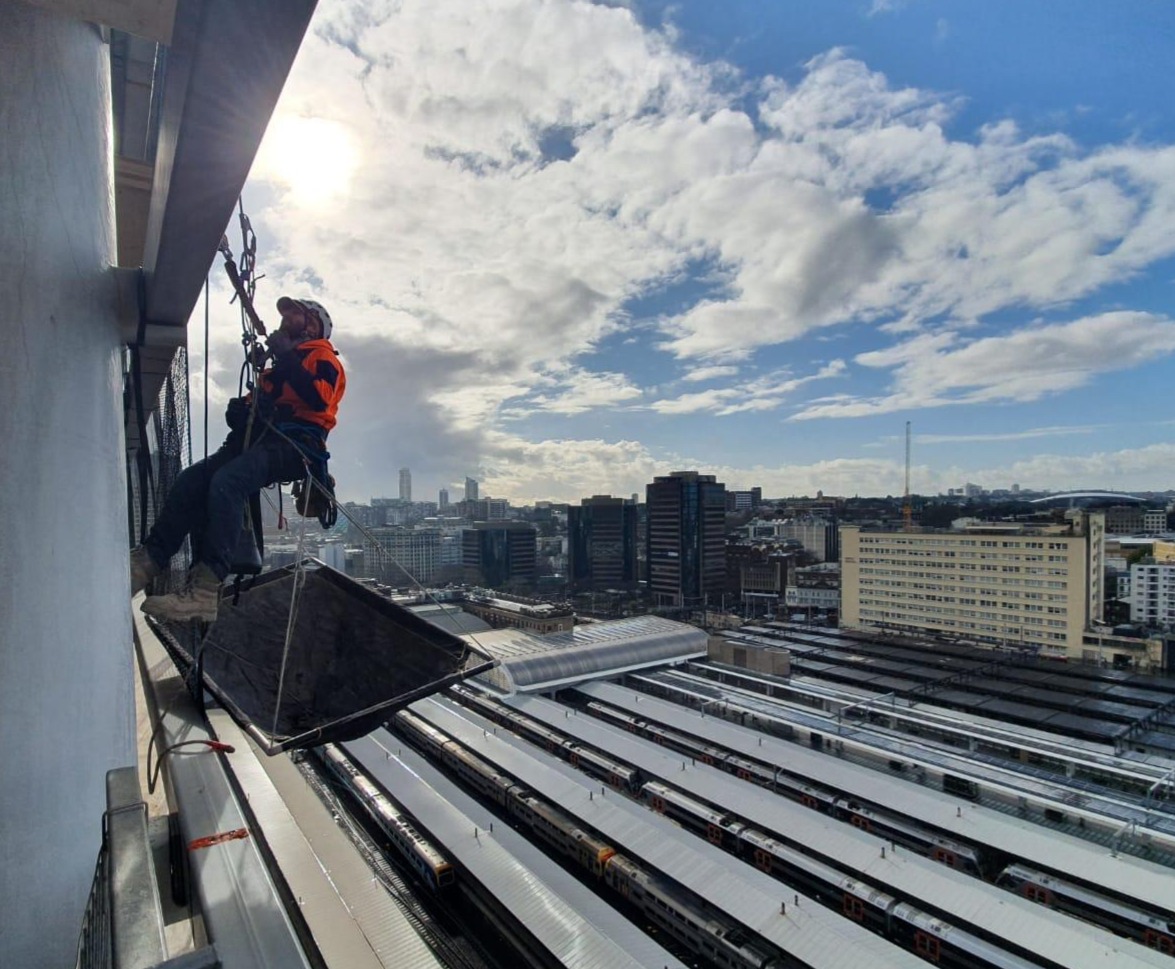
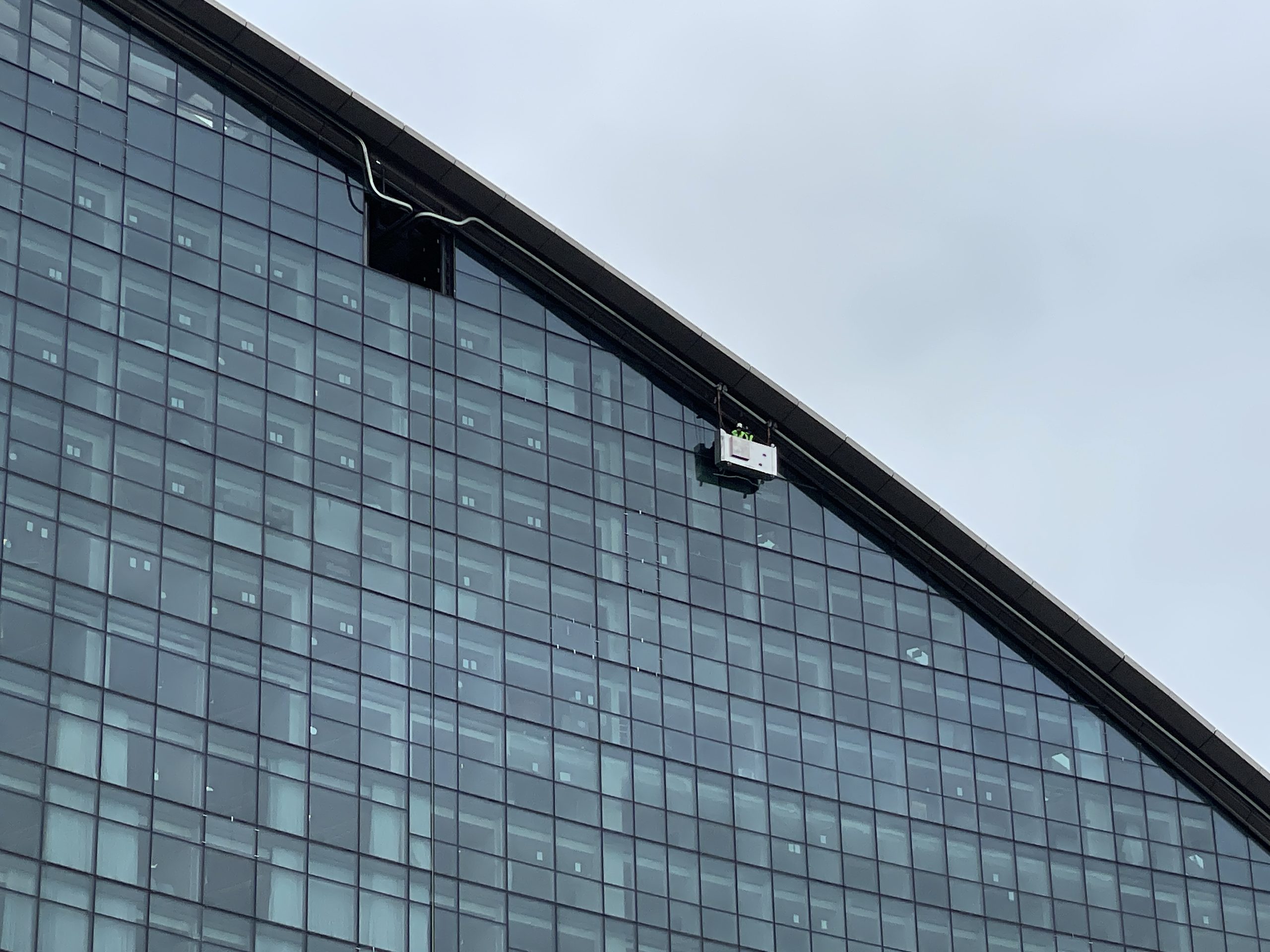
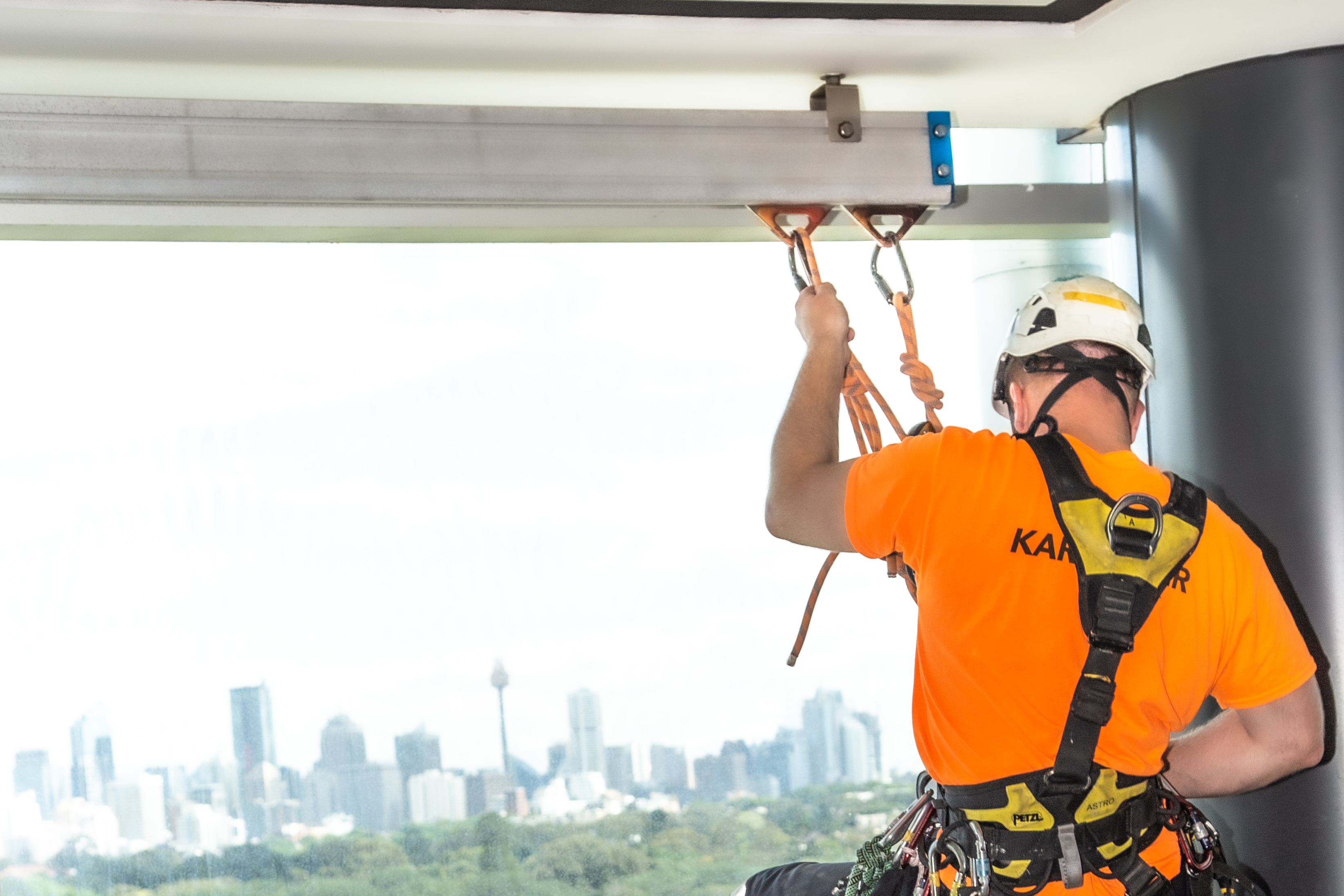
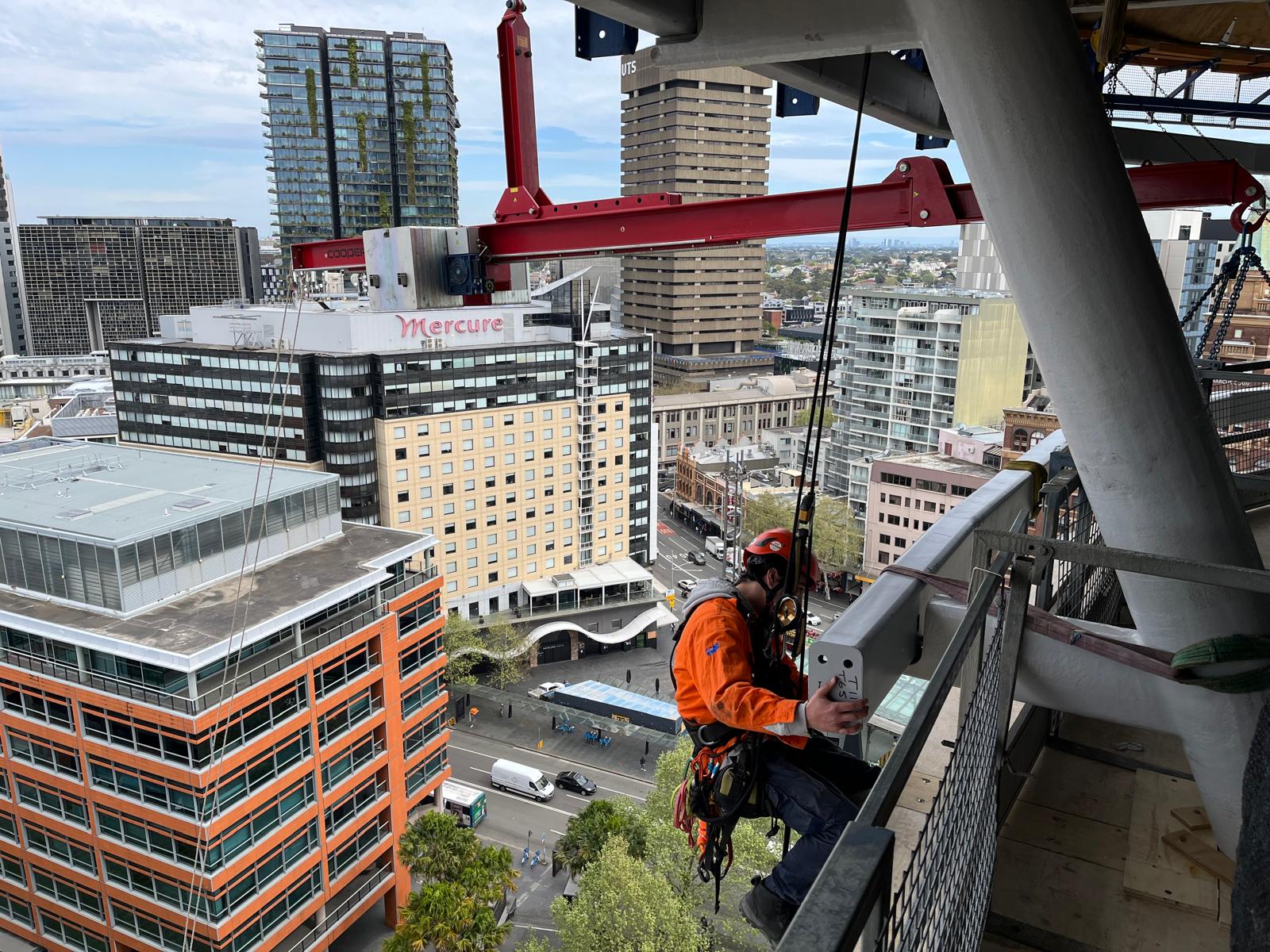
Some anchors serve facade work, not roof work. Our IRATA-certified rope access technicians also hold trades, so that work can often be done on ropes instead of scaffold through our rope access maintenance service.
On cost, no per-anchor price holds across buildings. The number of anchors, the substrate, how hard the roof is to get to, and single points versus a static line all move it. There's more on that in our note on height safety installation cost.
Who can install roof anchor points?
The word the guidance keeps using is competent. The Code says a restraint system should be installed by a competent person in accordance with the manufacturer's instructions, and that anchorages should be tested and approved by a competent person before use. Once the system is in, section 213 of the NSW WHS Regulation puts its maintenance and inspection in a competent person's hands too.
Kattsafe adds a manufacturer's view: installers should hold verified proof of formal training. In practice, ask any installer for the manufacturer's installation instructions for the product they're fitting, and for the test results once it's in. If they can't produce them, that's your answer.
How to audit your own roof's anchors in 10 minutes
This isn't an inspection and doesn't replace one. It tells you whether there's a problem worth a phone call.
Stay safe while you do it. Don't go near an unprotected edge, don't clip on to test anything, and don't walk on roof sheeting or skylights. Look from the access hatch, a walkway or a guarded area. If you can't see the anchors safely, do the records half only.
Records (5 minutes, at your desk)
- Is there a roof plan showing every anchor, static line and rail?
- Do you hold the installation certificate and test results?
- Do you hold the manufacturer's instructions for each product? In NSW they're the first reference for how inspection is done.
- Is the latest inspection report dated, and does it list every item on the plan?
On the roof (5 minutes)
- Does each anchor or system have a legible tag or marking that matches the latest report?
- Any rust, cracked concrete, or loose, missing or corroded fasteners at the base?
- Is anything bent, deformed or showing a deployed energy absorber? The Code says a component should be inspected by a competent person immediately after it has been used to arrest a fall.
- Has the roof changed since the system went in? New plant, solar panels, re-sheeting or waterproofing works can cover, move or damage anchors.
If any answer is "no" or "don't know", treat the system as unverified until a competent person has checked it. Our anchor point testing service covers that, and what happens during a height safety inspection walks through a full visit.
How often are roof anchor points inspected?
In NSW the hook is section 213 of the Work Health and Safety Regulation 2025. Inspection is done by a competent person, following the manufacturer's recommendations. If there are none, a competent person's recommendations apply. Annual inspection is the fallback when neither is reasonably practicable. No Australian Standard is the source of a legal "once a year" rule.
Manufacturers have also published their reading of the 2025 changes. Kattsafe and Anchor Safe both say anchors relying on a single fixing still need pull testing every 12 months, and that anchors with multiple fasteners may not need ongoing pull testing where the required documentation exists (both say those anchors must still be load tested at installation). That's their summary of AS/NZS 1891.4:2025, not the Standard's own text, so check what your product's manufacturer says.
The legal detail, including whether a residential strata scheme is even caught by these duties, is in how often roof anchor points need to be certified in NSW. If your anchors serve window cleaning, read strata window cleaning and anchor points as well. Scheduled inspections and anchor registers run through our certification and audit service.
Services this involves
Trusted by Australia's leading builders
_logo.svg.png)