Most building managers have a height safety inspection report somewhere in the files. Far fewer have ever watched one being done, or know what separates a report worth acting on from a PDF that tells you nothing.
Here is what the day actually involves.
On arrival
The inspector signs in, then asks for whatever documentation the building already has. What is installed, where it is, and what the previous inspection found. On buildings where none of that exists, the first job becomes building the register from scratch, which takes longer and costs more.
Then it is roof access and a systematic walk of every area where the system exists. Not a sample. The point of the exercise is to end up with a complete picture, and a partial walk produces a report that is confidently wrong about the parts nobody looked at.
What gets looked at
Two categories, and buildings often forget the second.
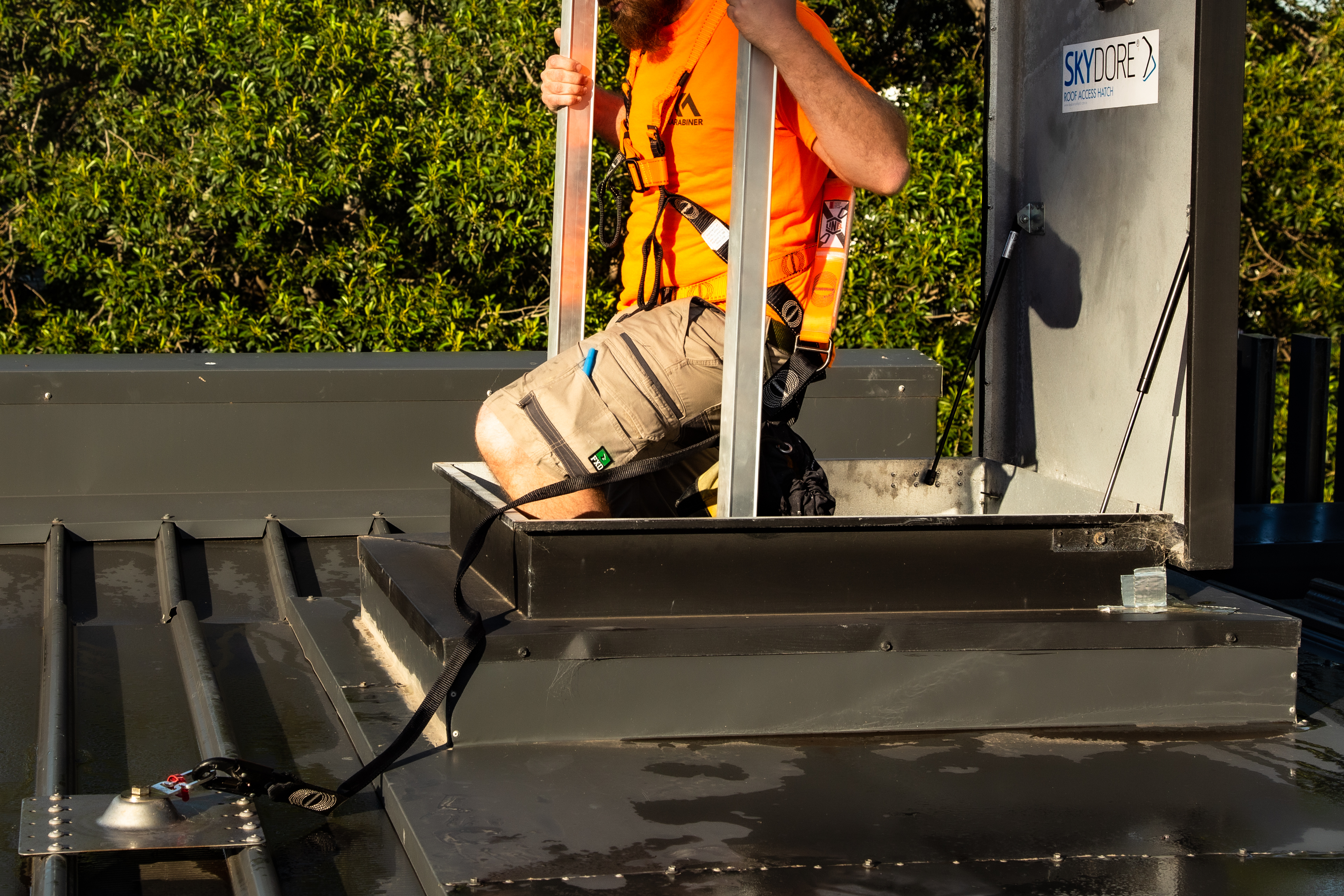
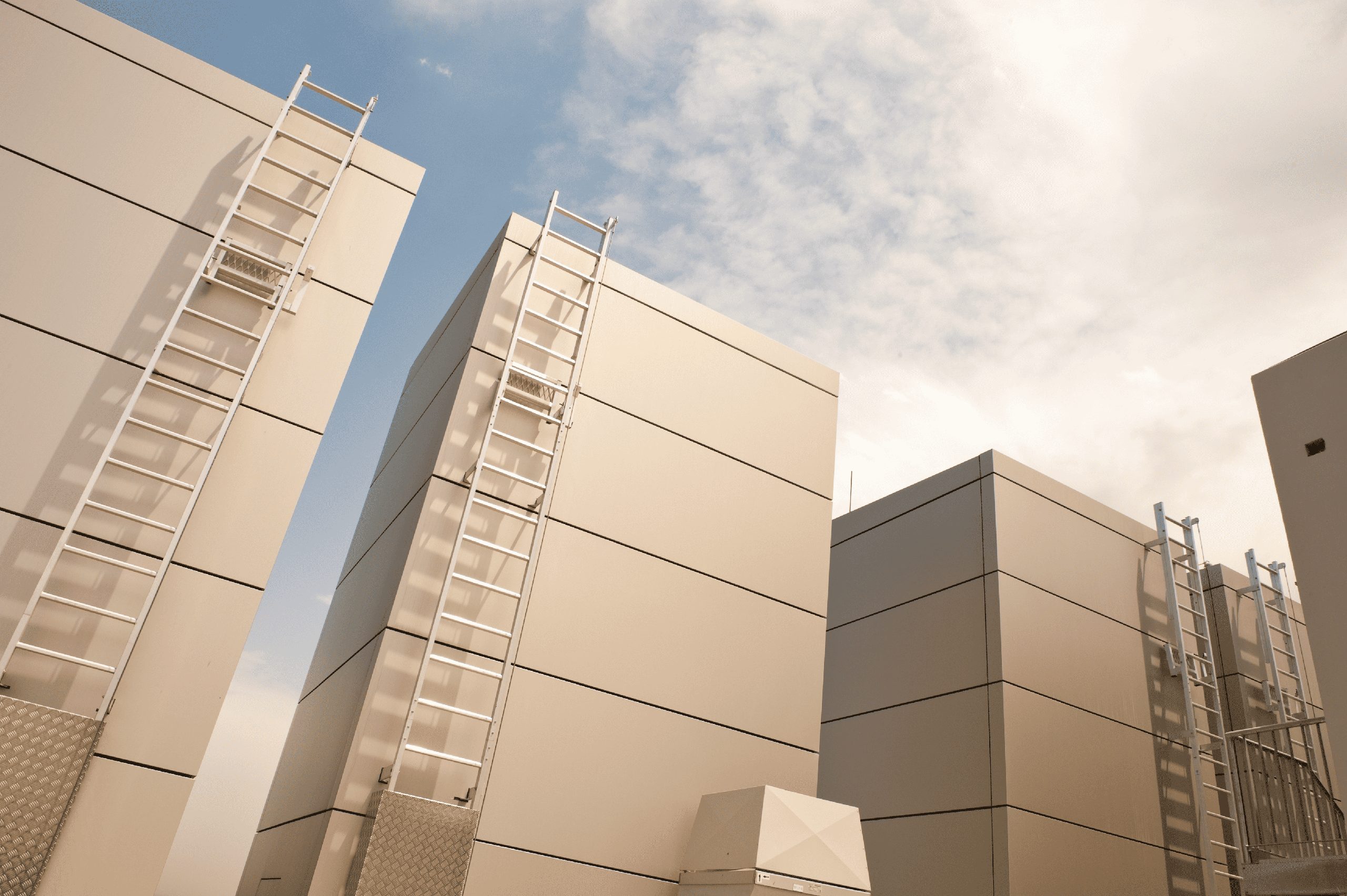
Fixed building systems. Anchor points, static line systems, rigid rail, fixed ladders, step-through platforms, walkways, guardrails, davit bases and davit arms, and roof access hatches.
Personal and common-use equipment. Harnesses, lanyards, fall arrest devices, ropes, slings, connectors, helmets and mobile attachment devices. If the building keeps a store of gear for contractors or its own staff, that gear is part of the system.
What the inspector is actually checking, item by item
Harnesses. Frayed webbing, damage to buckles, signs of heavy wear, and whether the labels are still legible. A harness whose markings have worn off cannot be identified or traced.
Lanyards and shock absorbers. Cuts, burns, chemical exposure, and whether a shock absorber shows signs of having been activated. A deployed absorber means that item has already done its job once.
Helmets. Cracks, wear to the internal padding, damage to chin straps.
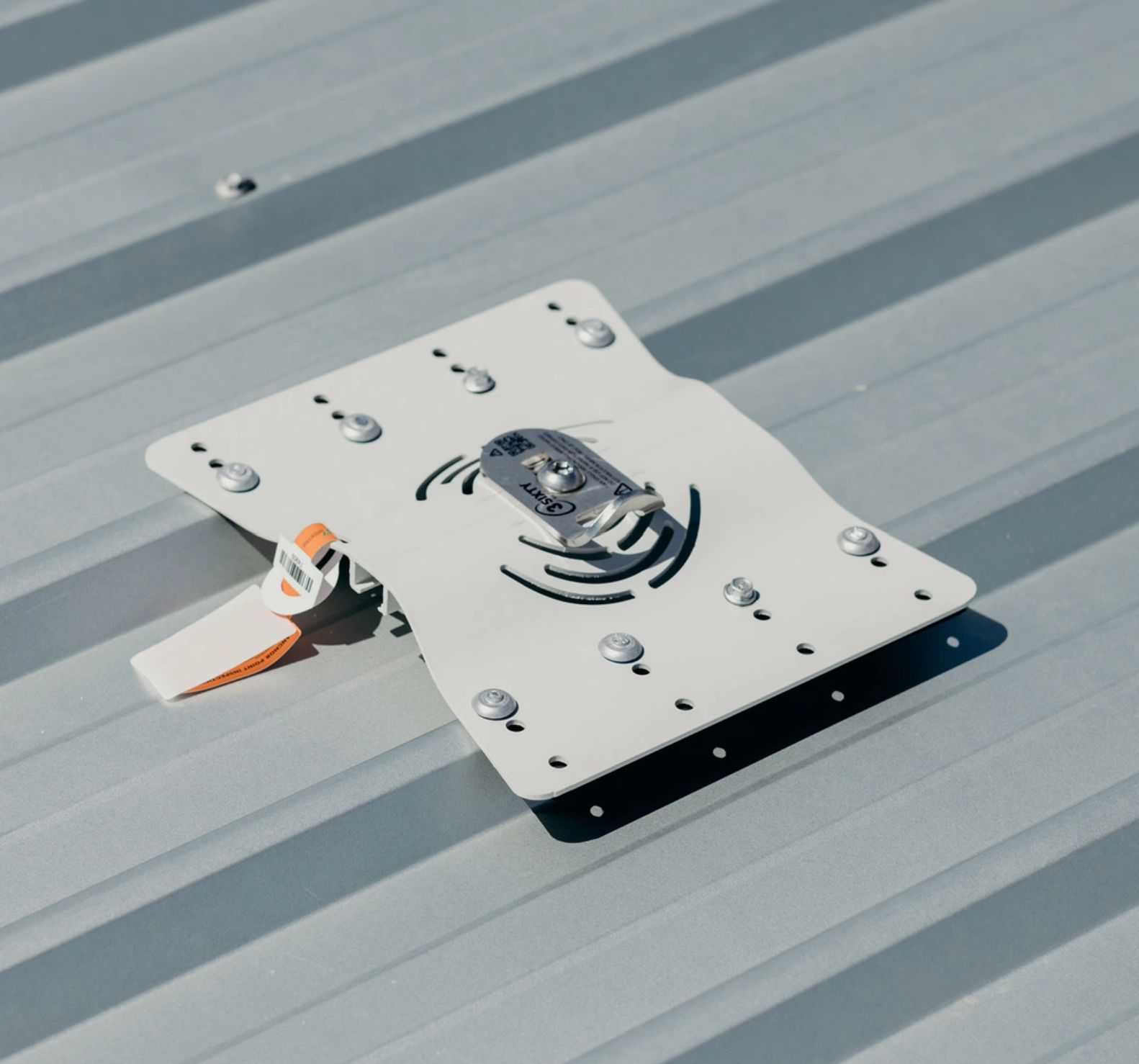
Anchor points. Whether they are securely installed and undamaged, the condition of the fixing and the structure behind it, corrosion at the base, and whether the tag and markings are still present and readable.
Connectors, carabiners and hooks. Wear on gate mechanisms, corrosion, deformation, and whether they lock and unlock cleanly.
Lifelines and safety ropes. Abrasion, cuts, UV degradation, and contamination from chemicals or moisture.
Fall arrest blocks. Whether the casing is intact and the retraction mechanism works properly, and whether there is any sign of internal damage.
Across all of it, the general triggers are the same: dirt and oil build-up, evidence of mistreatment, corrosion, cracking, deformation, missing or illegible labelling, and missing documentation.
How findings get recorded
The clearest published description of what an inspection record contains runs like this: what was looked at, what was looked for, what criteria were used, how it was looked for, what was found, what was recommended, and what recommendations were actioned.
That last item is the one most buildings never close out. A report is not finished when it lands in your inbox. It is finished when the actions coming out of it have been completed and recorded.
What separates a useful report from a useless one
An inventory of every item, individually identified. A report saying "12 anchors inspected, 2 failed" is worthless the moment somebody else reads it. Which two? Every item needs a unique ID so it can be tracked across inspections and across the years.
A roof plan marking each item's location. On a large roof, "the anchor near the plant room" locates nothing. A plan or layout drawing is what lets a contractor find the failed item eighteen months later.
Pass, fail or action-required status per item, not a summary paragraph.
Photographs of anything failed or flagged, with enough detail to price the repair without a second visit.
A clear statement of what has to happen before the system can be used again.
Recommendations where the layout does not suit the work the building actually needs. A system that technically passes but sits in the wrong places for the facade work your building requires is a problem worth knowing about.
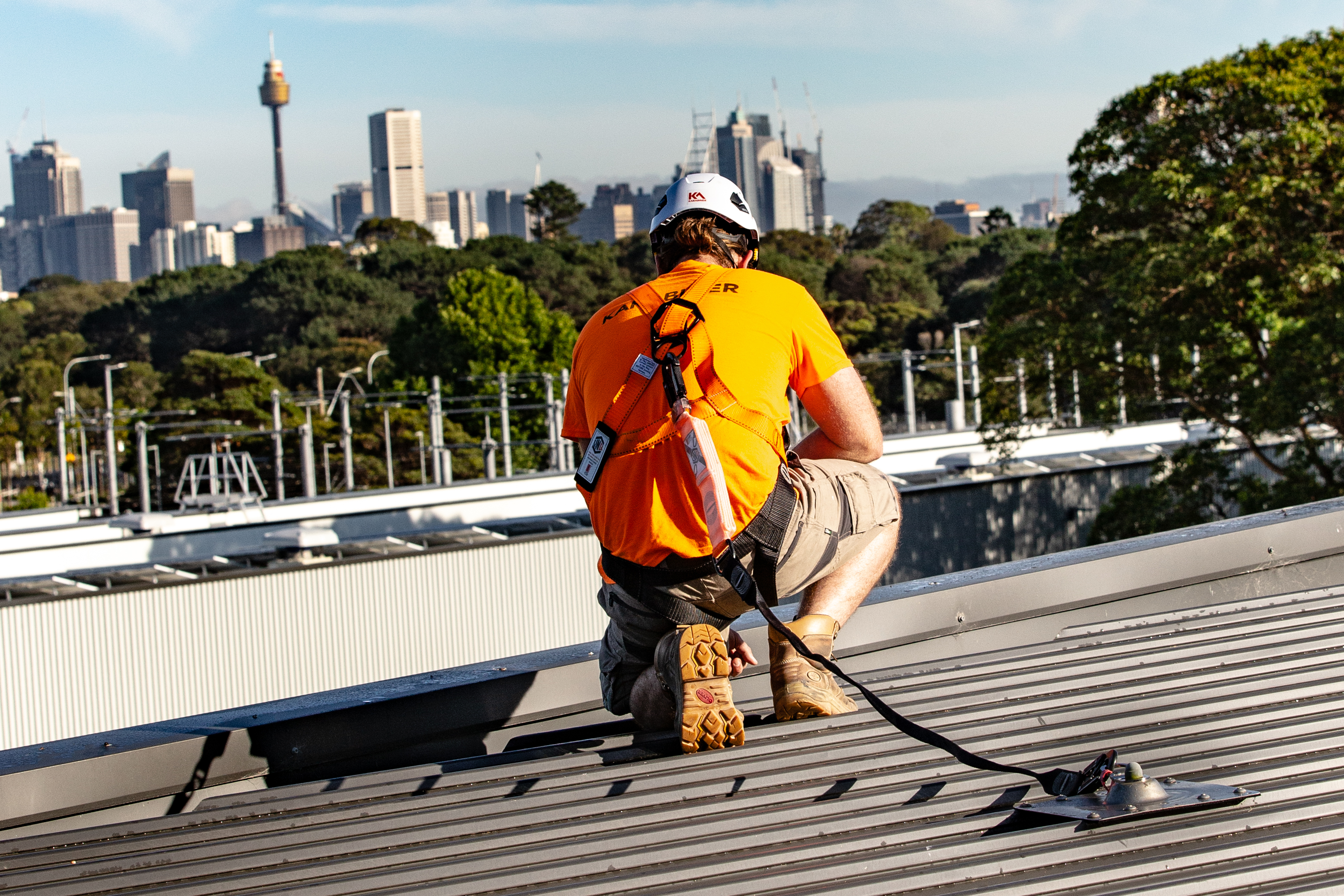
What tagging out actually means
Tagging out is a physical act, not a paperwork state. When an inspector finds something damaged, doubtful, or impossible to verify:
- A tag goes physically on the item, at the item, reading DO NOT USE or OUT OF SERVICE. Usually red, deliberately hard to miss.
- The tag says what is wrong, so the next person standing in front of it knows without needing to find the report.
- The item is photographed and documented with a description of the failure.
- Portable items are removed from site or locked away. A tagged harness left in the equipment cage drifts back into use eventually. That is the reliable failure mode.
- Fixed items stay where they are, tagged, and the rest of the system gets assessed for whether it can still function without them.
- It goes into the report as out of service, with the action needed to bring it back.
- It stays out of service until a competent person clears it.
Anything that has arrested a fall comes out and stays out pending assessment, regardless of how it looks. The damage from arresting a fall is frequently invisible.
The part building managers do not expect
A tagged-out anchor is not a scheduling inconvenience. It is a service outage.
Rigging an elevation often depends on specific anchors being available. Take one out and the next window clean, facade inspection or maintenance visit that relied on it cannot proceed. The gap between the inspection finding the fault and somebody fixing it is a period during which that part of the building cannot be maintained at all.
That is the practical argument for closing out actions quickly. Not paperwork tidiness, but keeping the building serviceable.
It is also the argument for fixing things in the right order. If your anchors are due for attention and you also have facade work coming, sorting the anchors first means the facade crew can actually start. Our anchor point testing and certification handles the testing and tagging, height safety installation covers replacement and new systems, and where the findings feed straight into facade work, rope access maintenance picks it up from there.
To book an inspection or talk through what your building has, get in touch.
Services this involves
Trusted by Australia's leading builders
_logo.svg.png)