A facade inspection has always been two jobs. The first is looking at the building from a distance and working out where the problems might be. The second is getting close enough to find out whether they actually are.
Binoculars do the first job. Drones do the first job far better. Neither of them does the second one, because the second one is not a visual task.
What a close-range inspection is actually looking for
Concrete. Cracking, delamination, spalling, exposed or corroding reinforcement, rust staining and run streaks.
Render and coatings. Debonding, cracking, chalking, peeling, loss of adhesion, and older patch repairs failing at their edges.
Sealants and joints. Splitting, hardening, loss of adhesion to one or both faces of a joint, detachment, joints opened beyond what the sealant can accommodate, missing or displaced backing rod.
Glazing. Cracked or failed glazing seals, damaged panes, failed insulated glass units showing as fogging between the panes, frame corrosion, gasket degradation.
Cladding and panels. Loose or displaced panels, corroded or failed fixings, movement at panel joints, damaged flashings.
Masonry. Cracking, mortar loss, efflorescence, displaced units.
Water. Staining, active leaks, and the path water is taking, which is almost never where it appears inside the building.
Anything that could fall. Loose masonry, spalling above a footpath, panels working free of their fixings.
The tests you cannot do from a photograph
This is the whole argument, and it is worth being specific rather than vague about it.
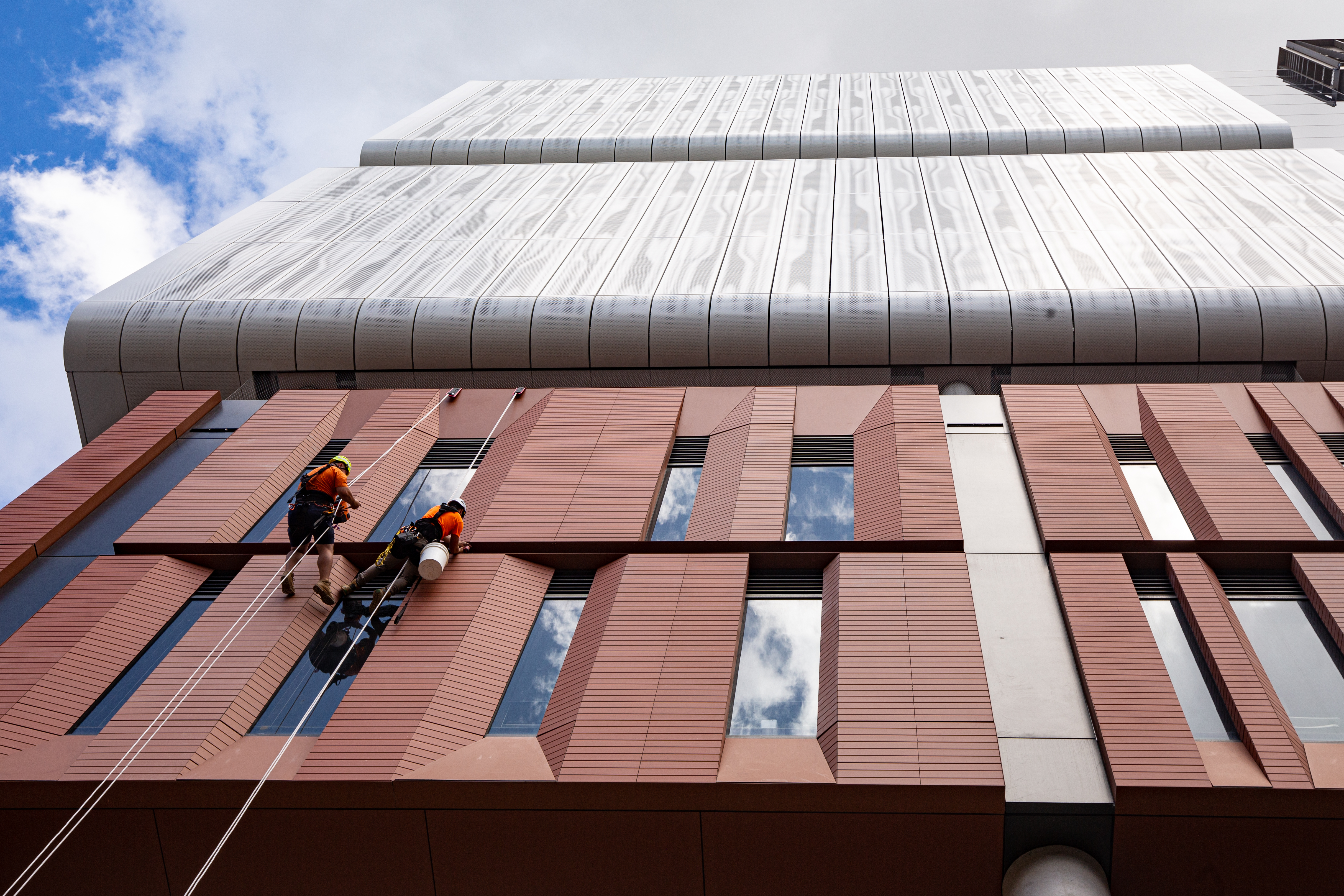
A surveyor on a rope can:
- Tap render and concrete. Drummy, debonded and delaminated areas sound hollow. They also look completely normal at any resolution, from any distance. This is the single most important facade test and it is purely acoustic.
- Probe a joint with a blade. Sealant that has released from one face still looks intact from three metres away. It is not.
- Pull on a fixing or a panel to test whether it is still doing its job.
- Measure a crack with a gauge, rather than estimating width from a scaled image.
- Lift a flashing or a cover strip and look behind it, which is where water paths are usually confirmed.
- Take a sample where material testing is needed.
None of that is available to a camera. A drone can tell you a facade has cracking. It cannot tell you whether the render around the crack has lost its bond, which is the thing that determines whether you are looking at a patch repair or a whole elevation.
Where drones genuinely win
Saying ropes beat drones at everything would be marketing rather than advice.
Drones cover a whole facade quickly, produce a complete photographic record cheaply, and need no roof access, no anchors and no exclusion zone. They also reach places ropes cannot: deep setbacks, atria, and the underside of large overhangs.
For a first pass across a large building, a drone is genuinely the better tool.
The sensible combination is a drone survey followed by targeted rope drops on whatever it flags. That gets you complete coverage and confirmed findings without paying for close-range access to areas that turned out to be fine. It is also usually cheaper than either method alone at the same level of confidence.
Why buildings order one
- Before a repaint or remedial programme. Scoping a facade from the ground produces numbers that move once work starts. Scoping from close range produces numbers that hold.
- After a leak. The internal symptom rarely sits below the external cause.
- Falling material concerns. Visible spalling or loose masonry above a public area.
- Capital planning. Knowing what the facade needs over the next several years, and roughly in what order.
- Before or after a sale. Facade condition is one of the larger unknowns on an older building.
- After a storm or an impact event.

What a useful report contains
A report that says "significant cracking noted to eastern elevation" is not a report, it is an impression. A useful one has:
- Scope, date, building identification, the access method used, and who carried out the inspection
- Findings elevation by elevation, referenced to a facade plan or elevation drawing, so a defect can be found again by someone who was not there
- A photographic record, defect by defect, with location references
- Defect descriptions with a severity or priority ranking
- Anything presenting an immediate risk of falling material, flagged separately for urgent attention
- Recommended rectification per defect, and an indicative order of works
The elevation referencing is the part that separates a report you can act on from one that sits in a folder. Six months later, "the crack near the plant room" locates nothing.
Inspection and access are the same problem
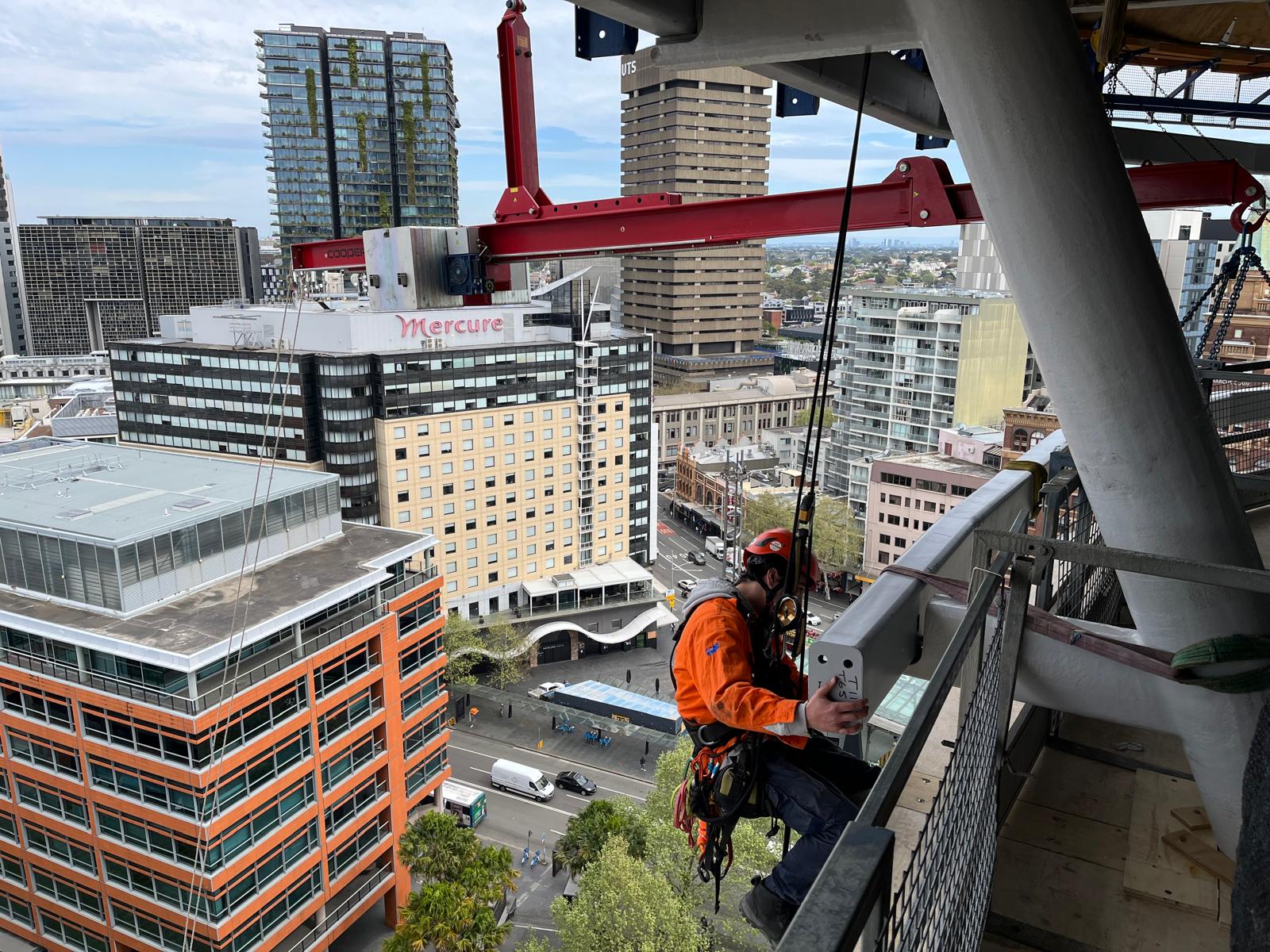
Getting an inspector to the facade means the same rigging, anchors and exclusion zones as any other rope job. Which means two things.
First, a building with an undocumented or unverified anchor system cannot be inspected on ropes until that is sorted out. That is the same blocker that stops window cleans going ahead, and it is resolved through anchor point testing.
Second, once a crew is rigged, adding work is comparatively cheap. Inspection bundled with a clean, or with sealant renewal on the defects already known about, costs materially less than separate mobilisations. The expensive part is the setup, not the work.
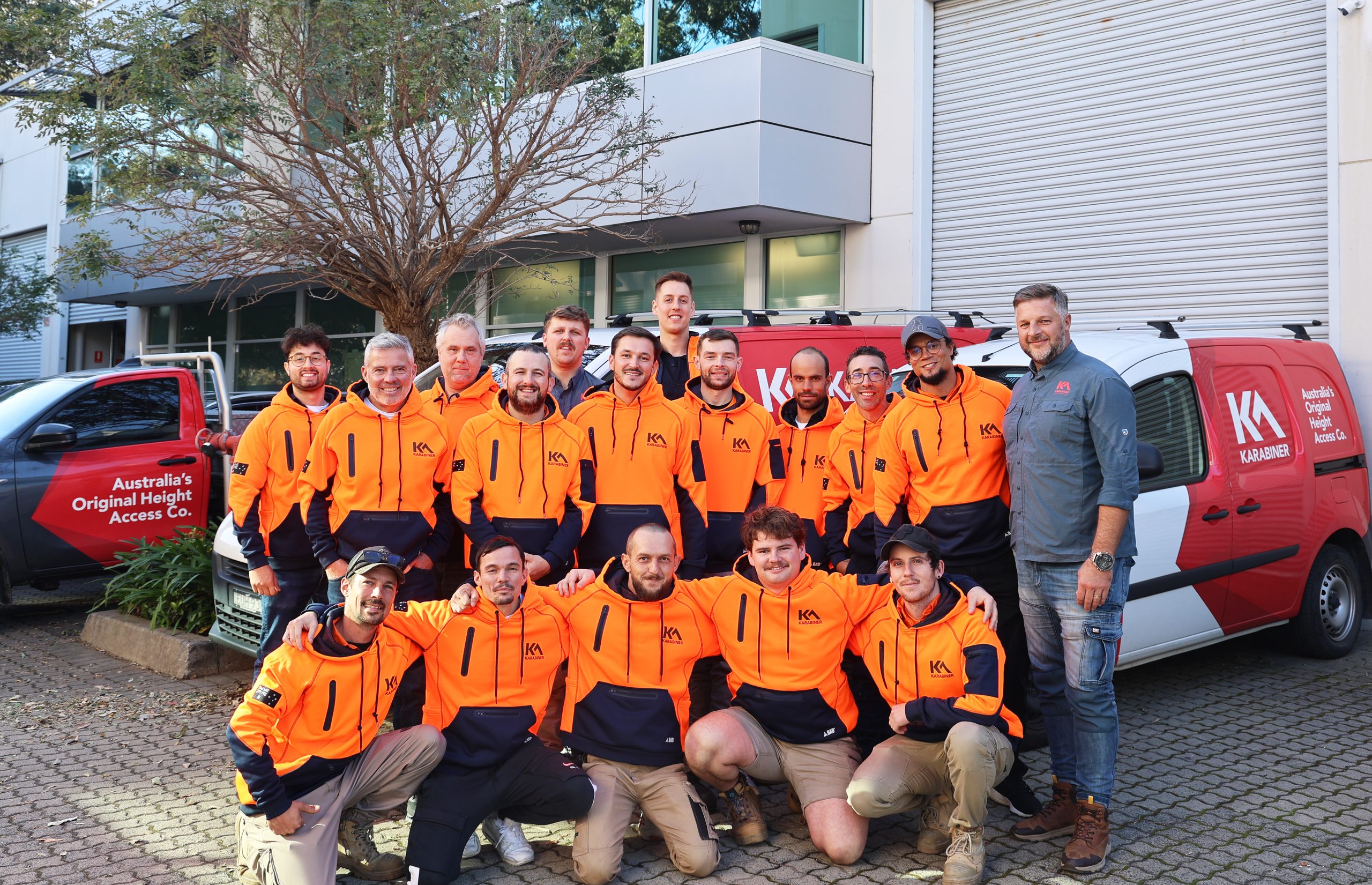
Facade inspection sits inside our rope access maintenance service, and where the findings lead to installation work, our height safety installation team handles that. To get a facade properly assessed, talk to our team.
Services this involves
Trusted by Australia's leading builders
_logo.svg.png)