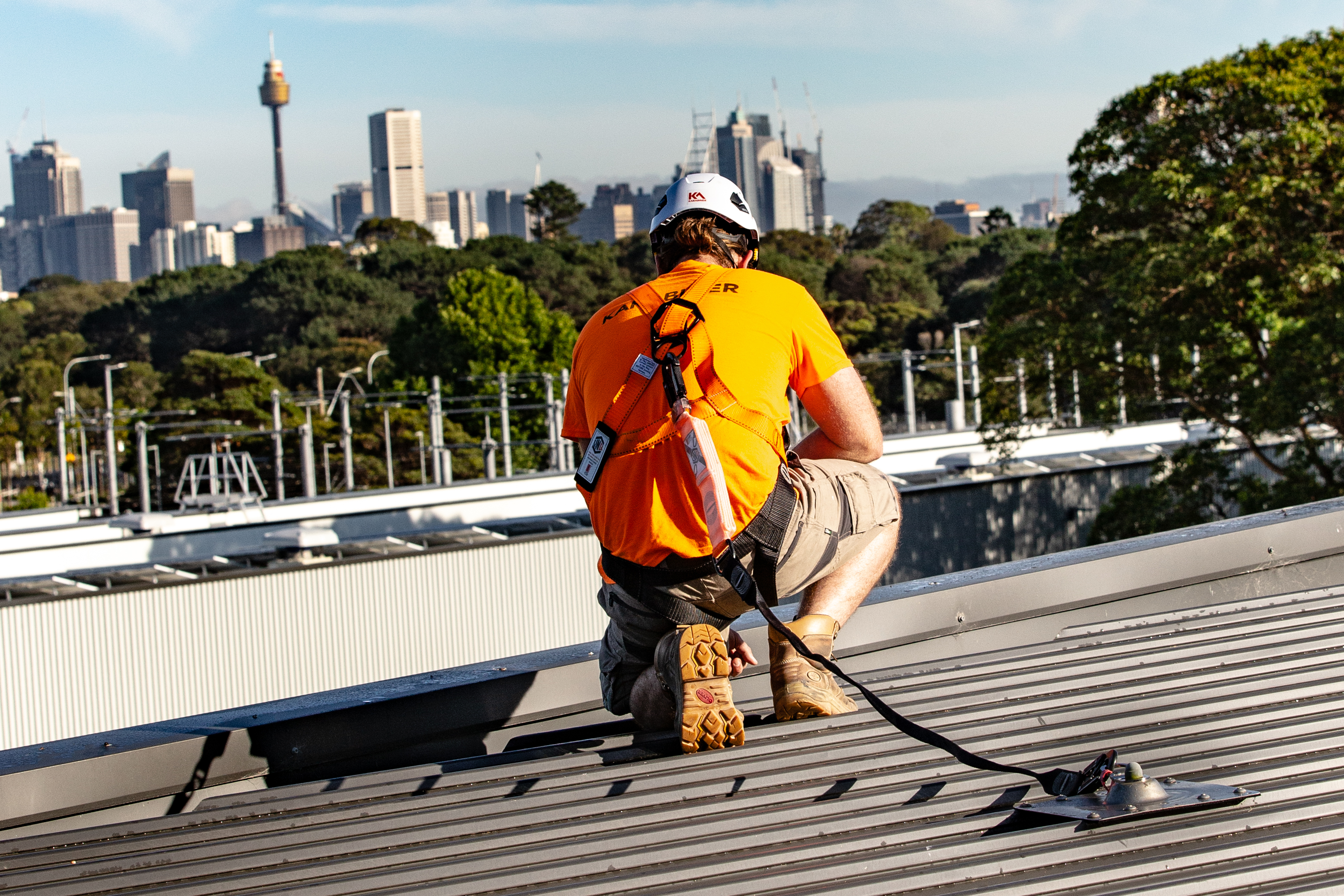
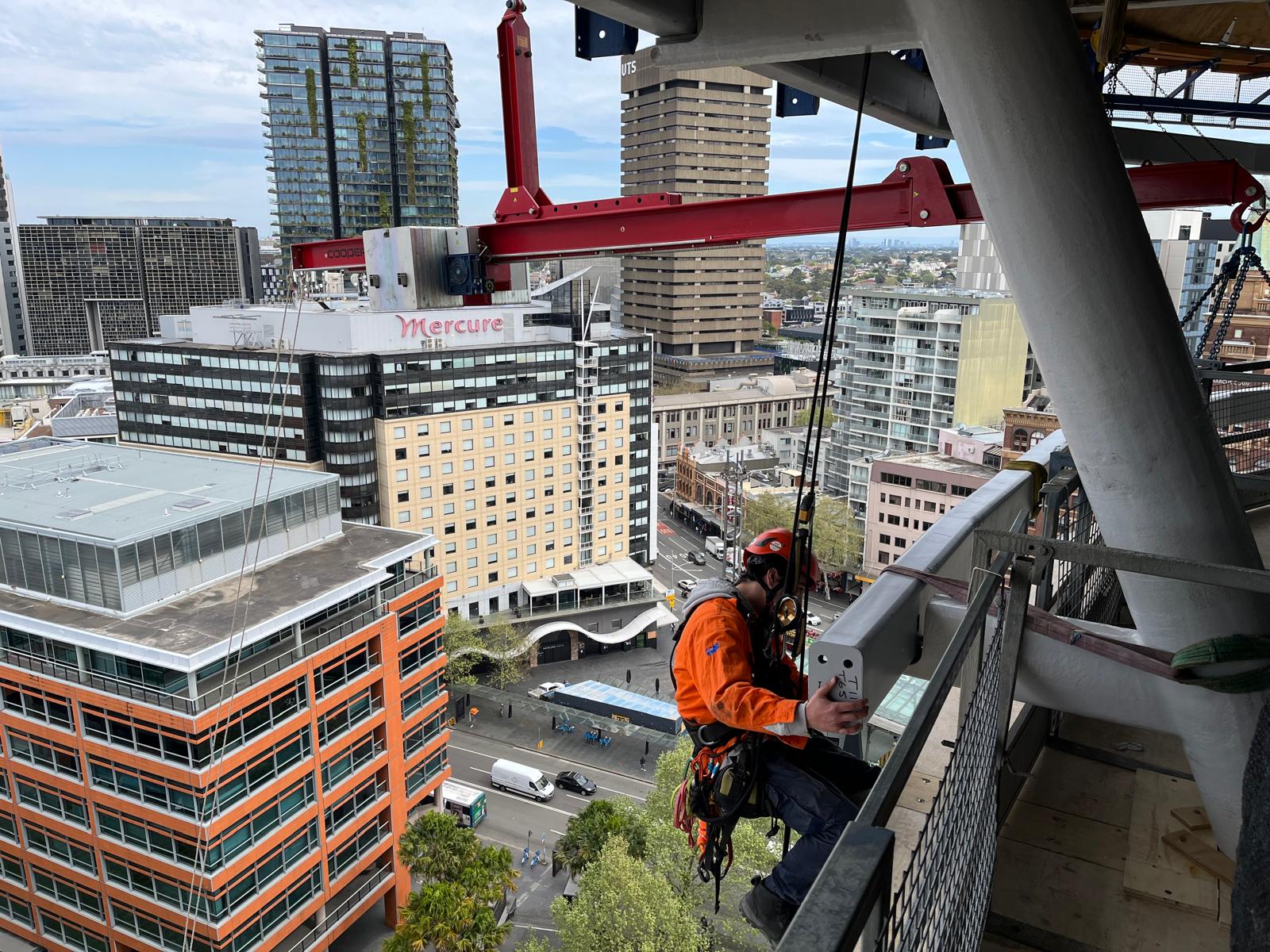
Painting a high-rise facade from ropes is straightforward enough as an access problem. Technicians rig from the roof anchors, work down the elevation, and reach parts of the building a lift will never get to. No scaffold, no road occupation, no three weeks of tenants looking at steel.
The access is the easy part. The part that decides whether the job lasts is what happens before any coating goes on, and that is where most facade painting projects go wrong.
Abseil painting, rope access painting, same thing
You will see both terms. Australian operators advertise abseil painting and abseil painters because that is what building managers search for. The standards and the trade say rope access. Abseiling is the descent technique, rope access is the system of work built around it, and we cover that distinction properly in abseil window cleaning in Sydney.
For painting specifically, the access method matters less than the sequence.
A facade coating is protection, not decoration
This is the part that gets lost. On a rendered or concrete facade the coating is doing a job: keeping water out of the substrate. When it fails, water gets into render and concrete, and once water reaches reinforcement the problem stops being cosmetic.
So the question is never really "what colour". It is "what is the coating sitting on, and is that sound".
The order the work has to happen in
Remedial contractors who do this properly run the same four stages, and the order is not negotiable.
- Inspect. Close range, across the whole facade, elevation by elevation. Not from the ground with binoculars.
- Define the scope. What actually needs repair, where, and what the finish is meant to achieve.
- Repair and prepare. Concrete and render repairs, sealant renewal, cleaning and surface preparation. All of it complete before anything is coated.
- Coat and hand over. Application, then a documented handover with what was done and where.
Skip stage one and you scope the job from the ground. Skip stage three and you are painting over the problem.
What to look for before you spec a repaint
If your building shows any of these, the coating is not the whole job.
Peeling, flaking or chalking paint. Loss of adhesion, UV degradation, or a previous coat that went onto a poorly prepared surface. Recoating over failed adhesion just moves the failure date.
Cracking and spalling. Especially where you can see hollow or drummy concrete, rust staining, or exposed reinforcement. Rust stains running down a facade are a symptom, not a cleaning problem. Something behind the surface is corroding.
Split, hardened or detached sealant. Perimeter joints around windows, glazing joints and expansion joints. Sealant is the facade's first line against water, and it has a shorter life than the coating over it.
Water staining inside or out. The path water takes is almost never where it appears. Staining needs to be assessed before a coating covers the evidence.
These faults are usually connected rather than separate. Failed sealant lets water in, water reaches reinforcement, corroding reinforcement spalls the concrete, and the coating fails over the top of all of it. Repainting alone treats the last symptom in that chain.
What rope access is genuinely good at here
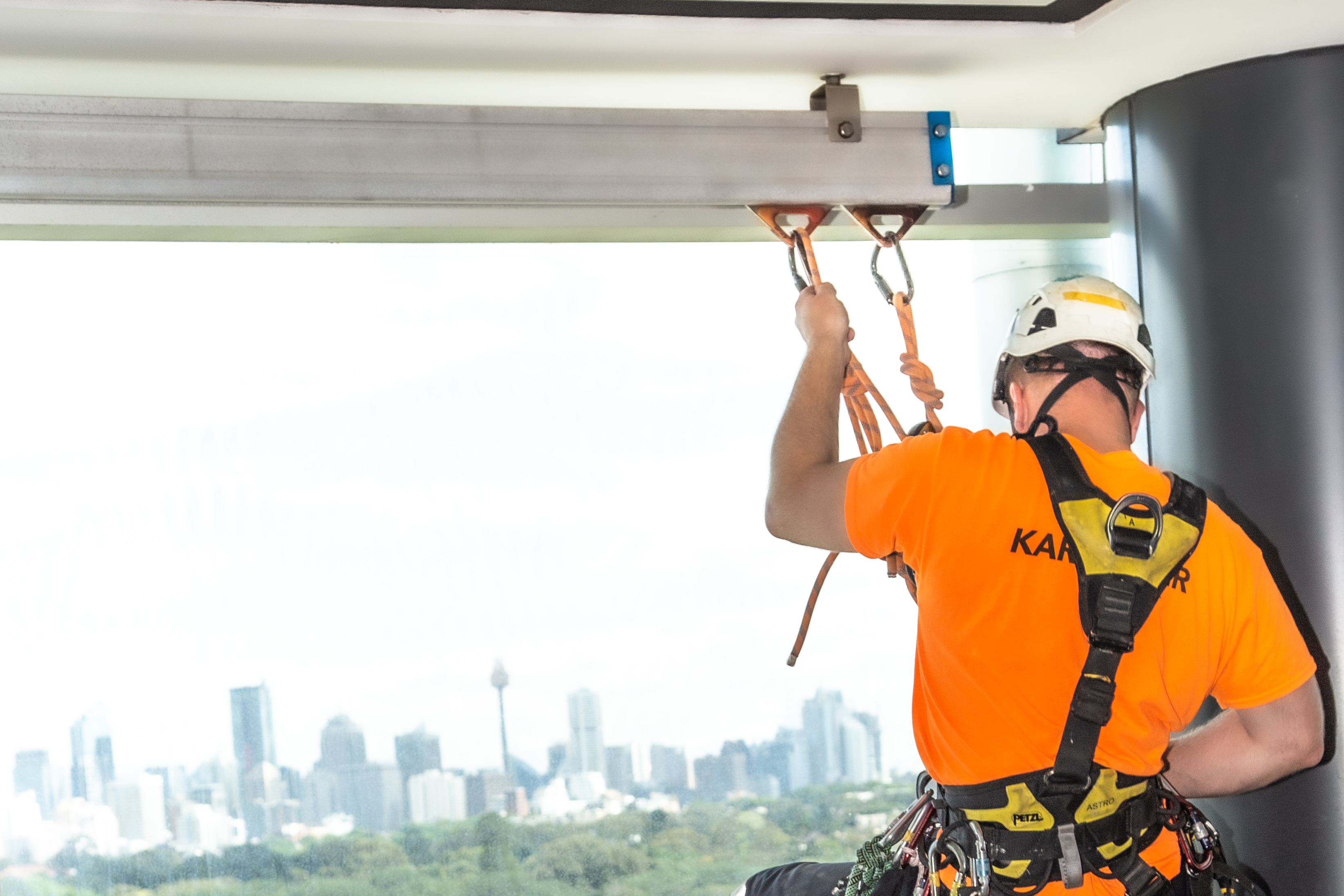
Targeted work spread across a large facade. A dozen defects on six elevations is exactly the case ropes were made for. Every other access method has to build or reposition a continuous platform to reach discrete points.
Occupied buildings. Scaffold around a leased tower or a residential block affects views, entries, pedestrian areas and security for weeks. On a tenanted building that disruption often costs more than the access itself.
Buildings with no ground to work from. Sydney CBD sites at the boundary, harbour-front buildings, heritage frontages and awkward setbacks where there is simply nowhere to stand a scaffold or a lift.
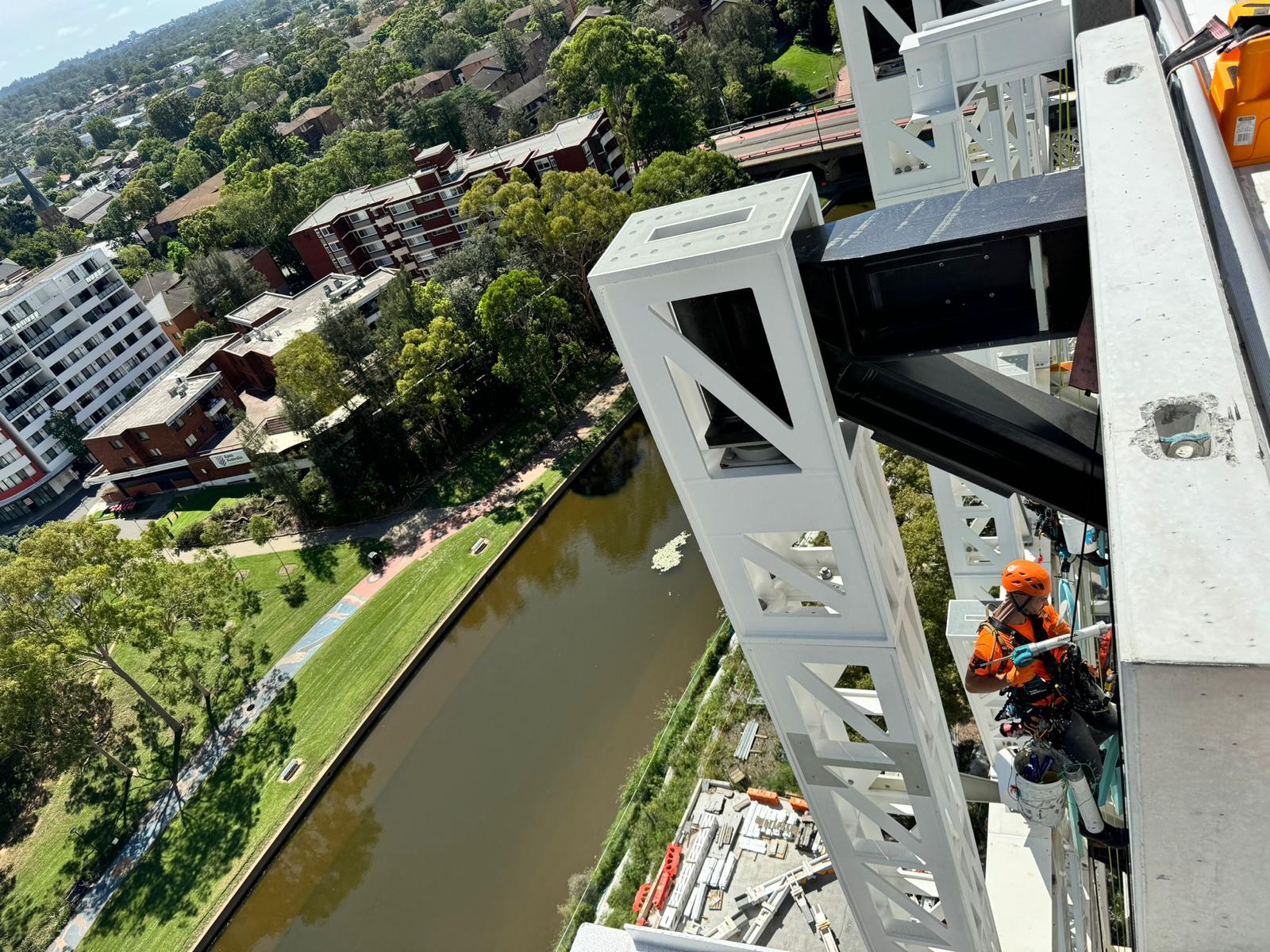
Sealant and joint work. Linear, follows a joint line, needs almost no material at the work face, and the joints are distributed across the whole elevation. Ropes are efficient at this and platforms are wasteful.
Where ropes are the wrong answer, honestly
Any contractor who tells you rope access suits every facade job is selling, not advising.
Large uniform coating areas. A technician working from a single hang point cannot easily maintain a wet edge across a broad expanse. You see the result as banding and inconsistent texture. Continuous platforms exist for a reason.
Heavy or repeated material handling. Everything a rope technician uses is tethered to them or suspended on its own line. Bags of render, sheets of cladding and drums of coating are a platform job.
Work needing full containment. Blasting, hazardous coating removal, or anywhere overspray and debris have to be completely contained. That is scaffold and shrink-wrap.
Multi-trade work on the same elevation. If a glazier, a waterproofer and a painter all need to be on the same face at once, they need a shared platform, not three sets of ropes.
Large-area breaking out. Removing a lot of loose render above a public footpath is a debris-control problem before it is an access problem.
Deep setbacks and atria. Ropes hang where gravity puts them. Inward-stepping facades, light wells and large overhangs can be geometrically out of reach.
The realistic answer on most buildings is a mix. Ropes for the scattered and the linear, a platform where the area is continuous and the materials are heavy.
How access method affects a painting programme
| Rope access | Swing stage | EWP | Fixed scaffold | |
|---|---|---|---|---|
| Setup | Hours | Days | Minutes per position | Days to weeks |
| Ground footprint | Exclusion zone only | Small | Machine plus outriggers, often road occupation | Full perimeter |
| Working surface | None, the technician is the platform | Continuous platform | Continuous platform | Every level |
| Material handling | Poor | Good | Good | Excellent |
| Suits | Targeted and linear work | Medium to long runs | Low and mid rise with clear ground | Long duration, whole facade |
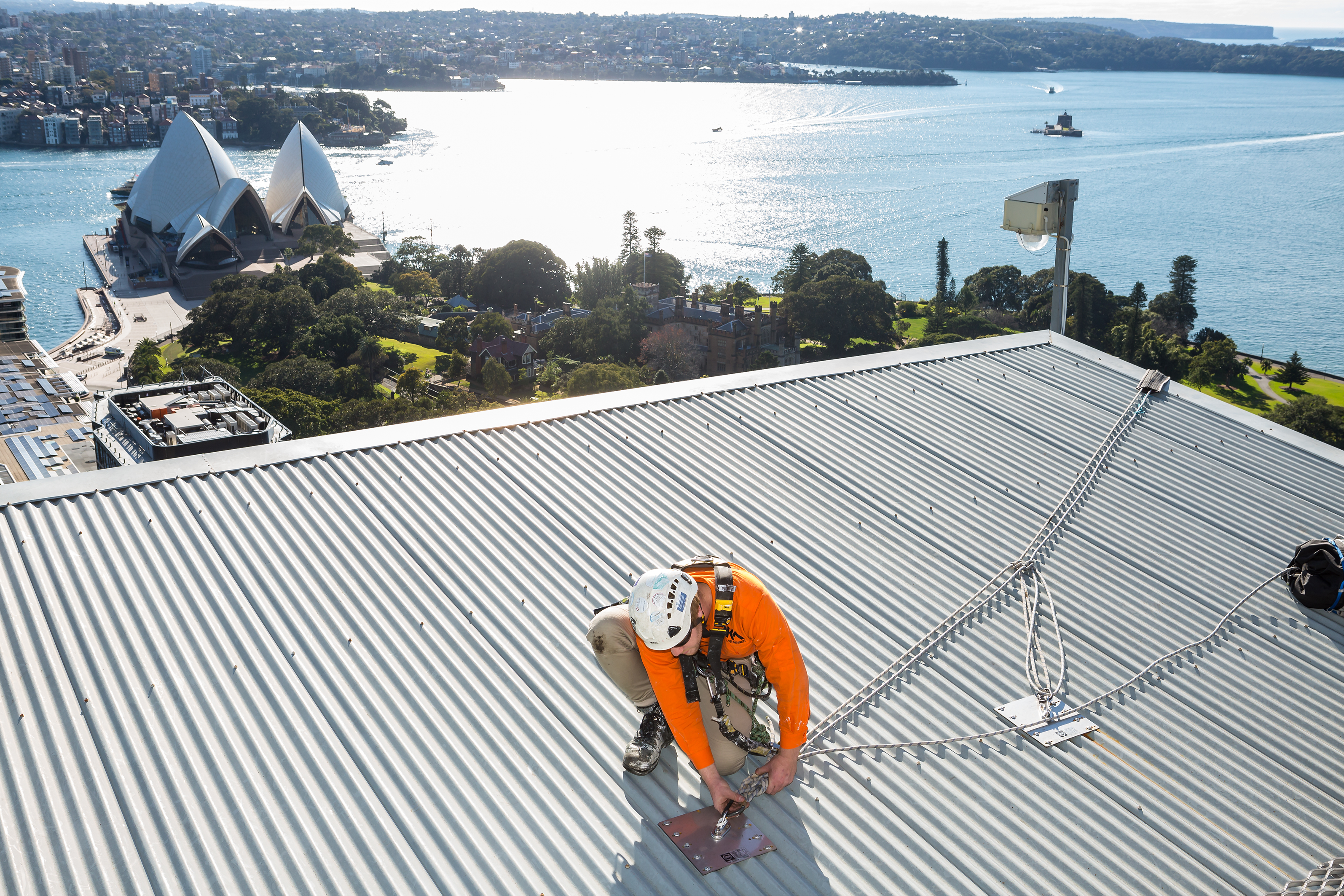
A building with a sound, documented anchor system can take the rope option. A building without one carries a height safety installation project in front of the painting job, and on a one-off scope a lift may simply be cheaper.
Preparation is most of the result
Cleaning and surface preparation is not a tidy-up before the real work. It is how you find out what is actually wrong. Pressure and soft washing strip the build-up that hides cracking, debonding and failed joints, which is why a facade clean and a facade inspection so often run together.
On render and coated surfaces the pressure used matters enormously. Too much and you erode the surface texture wherever the operator lingered, and worse, you drive water in behind the render skin. That turns an appearance problem into a water ingress problem. Soft washing exists precisely because delicate and coated substrates need the chemistry to do the work instead of the pressure.
Getting the facade properly inspected and cleaned first is covered in our rope access maintenance service, and where the system needs certifying before anyone rigs, in anchor point testing.
What a good scope looks like
- An elevation-by-elevation defect register with photographs and locations, not a lump-sum allowance
- Repairs specified by type and quantity, so variations are visible rather than assumed
- Sealant renewal identified separately from coating
- A stated preparation method per substrate
- The coating system named, with the number of coats
- A handover record of what was done and where
If you are planning a repaint and want the facade looked at properly first, get in touch and we can talk through what the building actually needs.
Services this involves
Trusted by Australia's leading builders
_logo.svg.png)