Rope access painting is how a lot of Sydney's high-rise facades get repainted without a scaffold or a crane in sight. A trained technician works from two ropes, a working line and a backup, and paints the building face while suspended, moving down or across as each section is finished. It sets up faster, costs less on tall or awkward buildings, and disrupts the people inside far less than wrapping the whole building in scaffold.
If you manage a strata tower or a commercial building and the facade is looking tired, this is usually the method a contractor will suggest first. Here is how it works and where it makes sense.
How rope access painting works
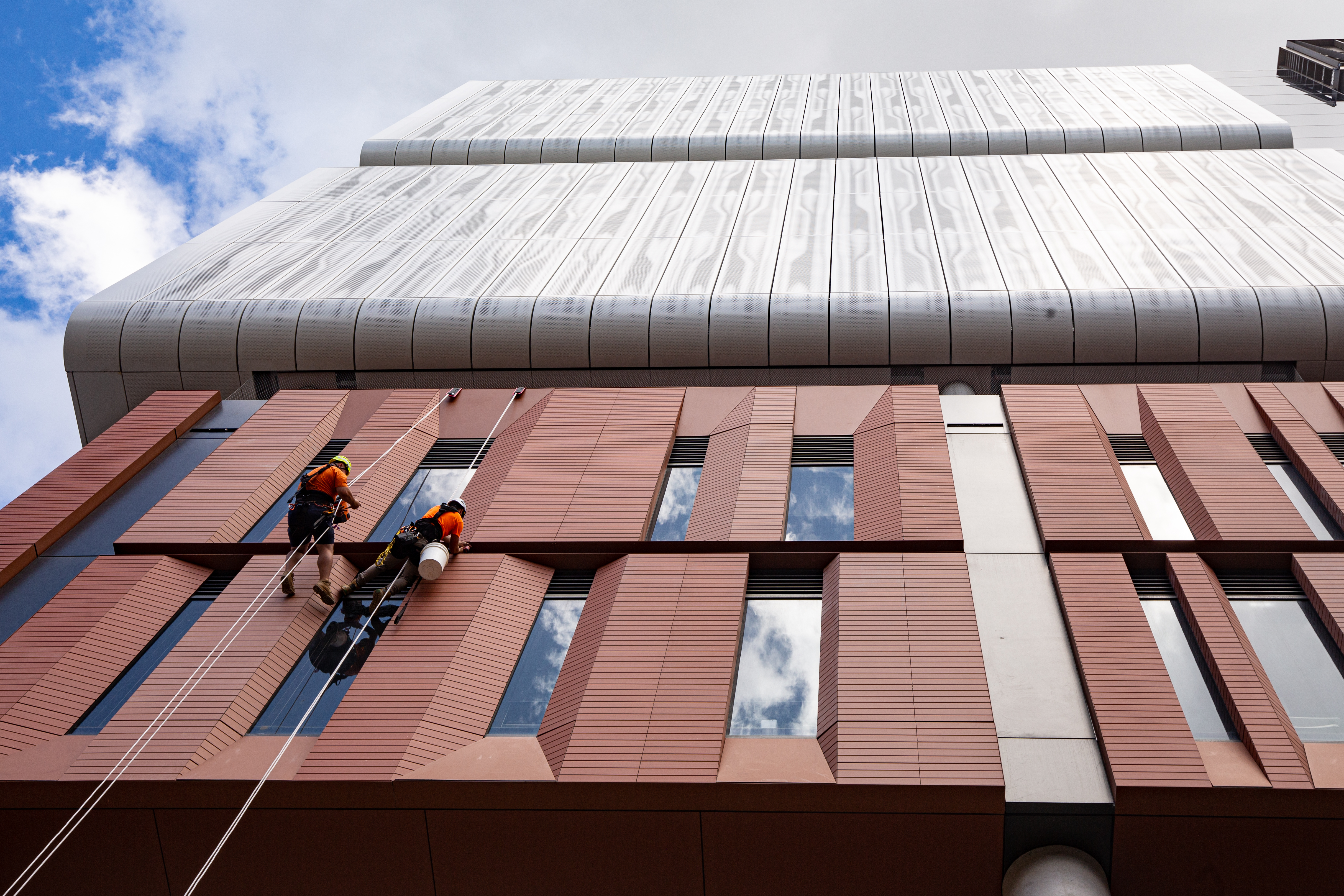
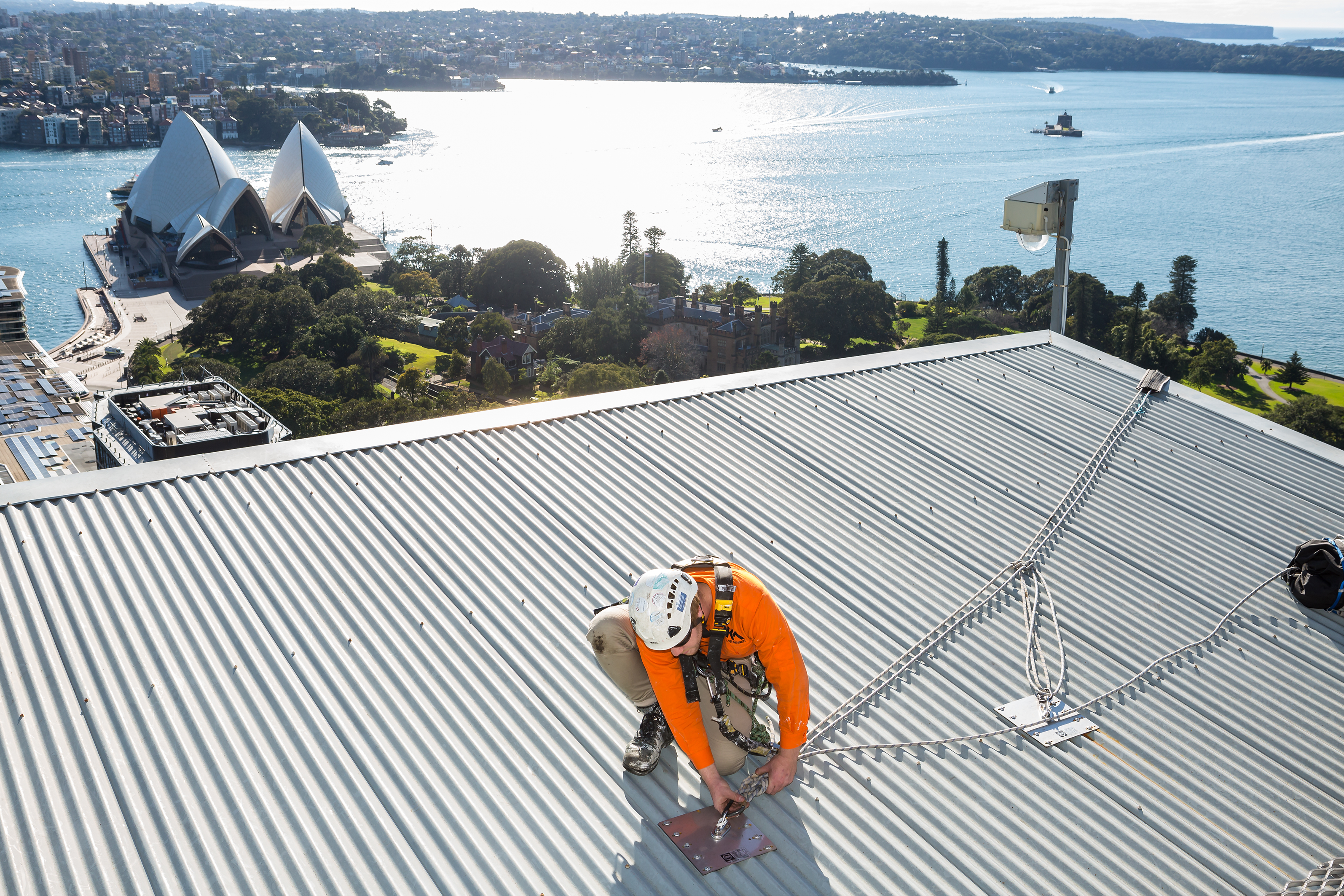
The technician rigs from anchor points on the roof, then descends the face of the building on two separate ropes. One is the working line they sit on, the other is a backup that catches them if anything goes wrong. They prep and paint one drop at a time, working top to bottom, then move across and do the next.
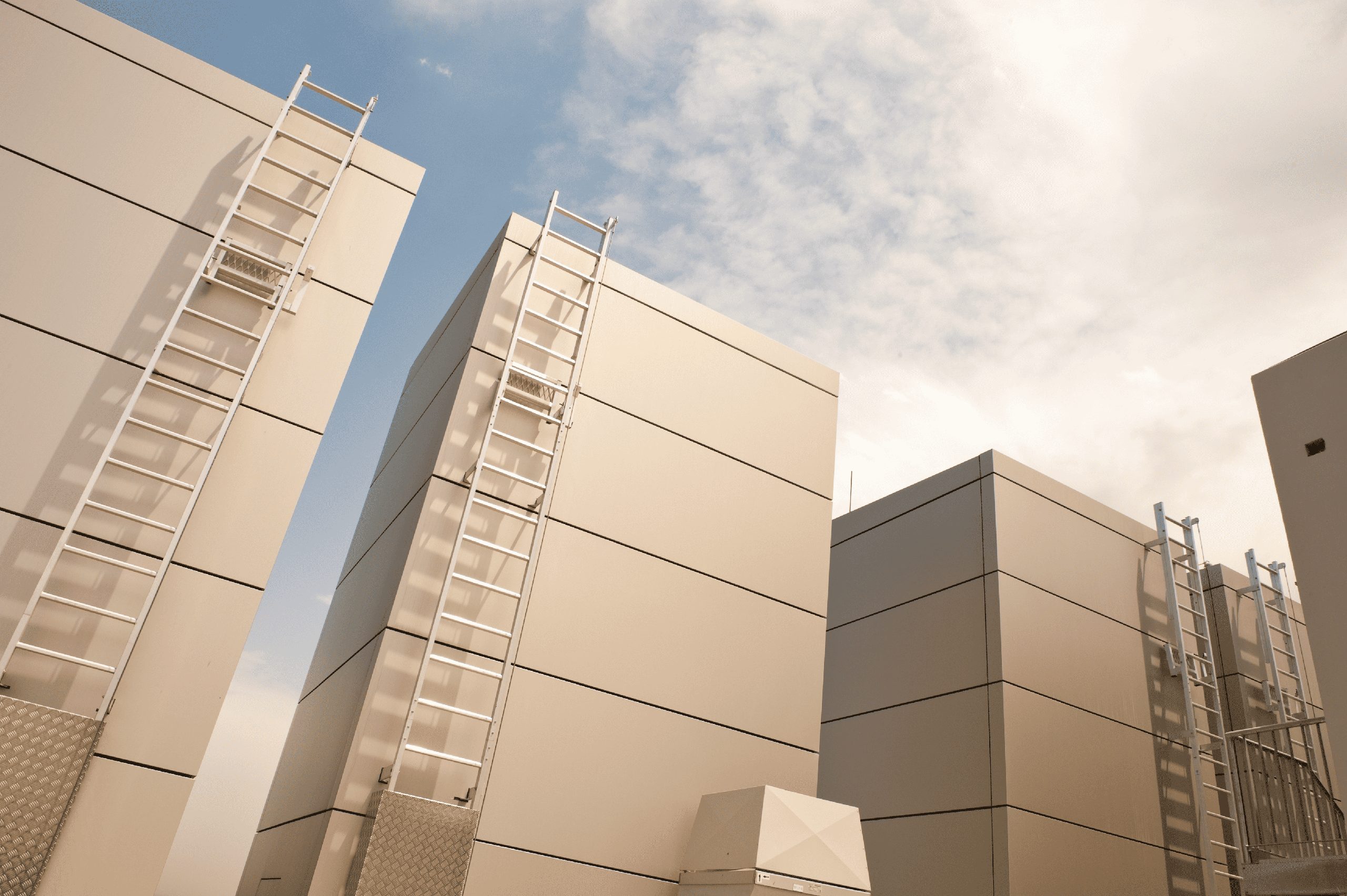
Because everything hangs from the roof, there is almost nothing at ground level: no scaffold, no boom lift taking up the car park, no exclusion zone swallowing the footpath for weeks. That is the whole appeal. Rope access painting is one part of a broader rope access maintenance service, and it relies on the building having sound roof anchor points to rig from. If yours does not, they can be put in as part of a height safety installation first.
Why paint a building on ropes instead of scaffold?
The three access methods each suit different jobs. Here is the short version.
| Method | Best for | Trade-off |
|---|---|---|
| Rope access | Tall buildings, awkward facades, quick jobs, occupied sites | Weather dependent, needs roof anchors |
| Scaffold | Full facades needing constant heavy work over months | Slow and costly to erect, takes ground space, a security risk |
| Elevated work platform | Low to mid rise with clear, flat ground access | Limited reach, needs room to set up, blocked by landscaping |
On a tall building, scaffold can take days to erect and weeks of hire before a brush touches the wall. Rope access technicians can be painting the same morning they arrive. On an occupied building, that difference matters even more, because there is no scaffold outside every window for a month.
What rope access painting is good for
It suits facade repaints, spot repairs on render or concrete, feature elements like blades and soffits, and any spot a ladder or lift simply cannot reach. It is also the sensible choice when only part of a building needs work, since you are not paying to scaffold the whole thing to touch up one elevation.
What a rope access painting job looks like
A typical job runs in a set order:
- Assessment and rig plan. The team looks at the facade, the roof, the anchor points and the wind exposure, then plans the drops.
- Set up. Ropes are rigged from the roof anchors, ground exclusion zones are set, and the first drop is prepared.
- Preparation. Each section is cleaned, sanded or made good before any paint goes on. Prep is most of the work and most of the result.
- Painting. Coats go on drop by drop, cut in around windows and features.
- Inspection and demob. The finish is checked, ropes come down, and the site is cleared.
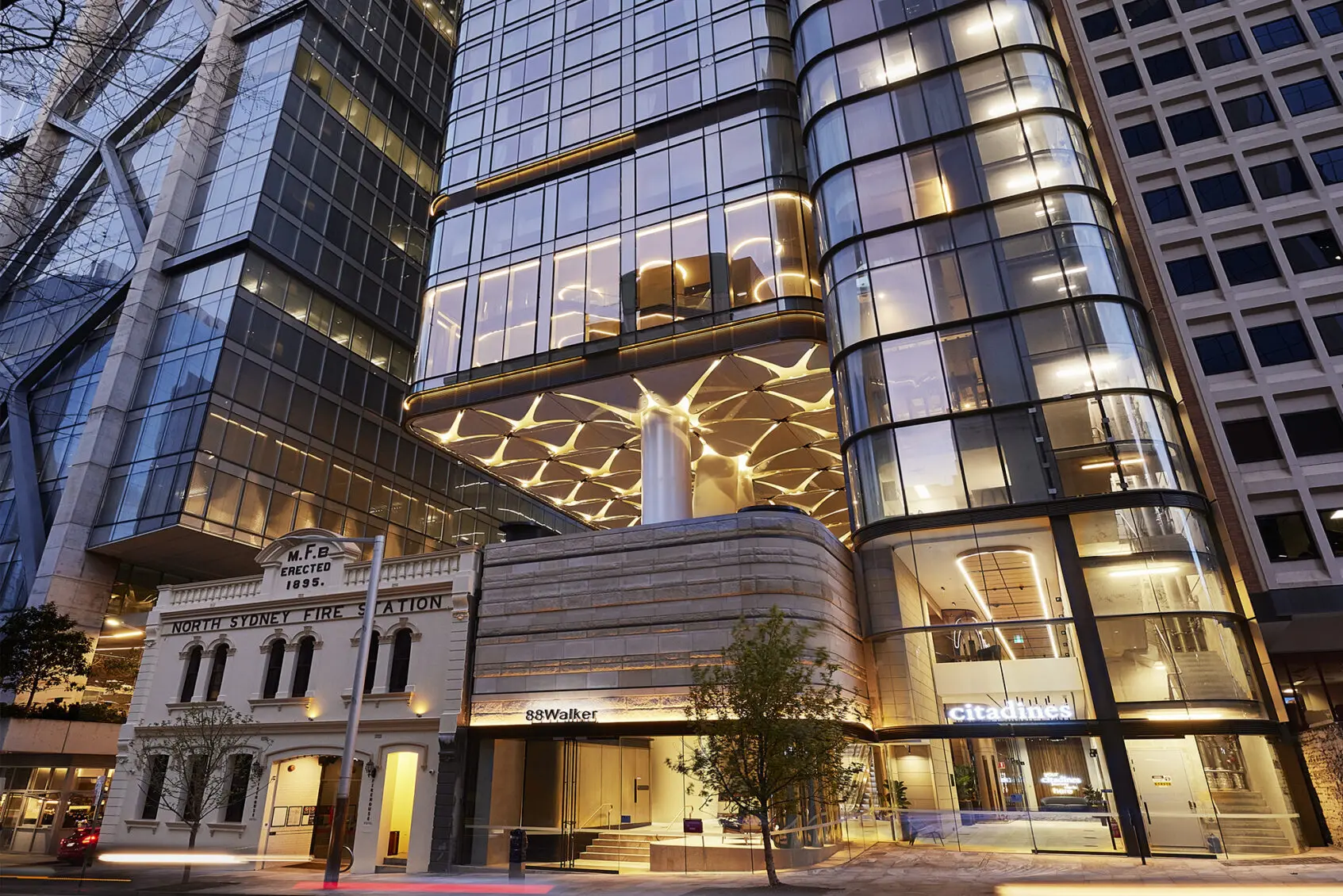
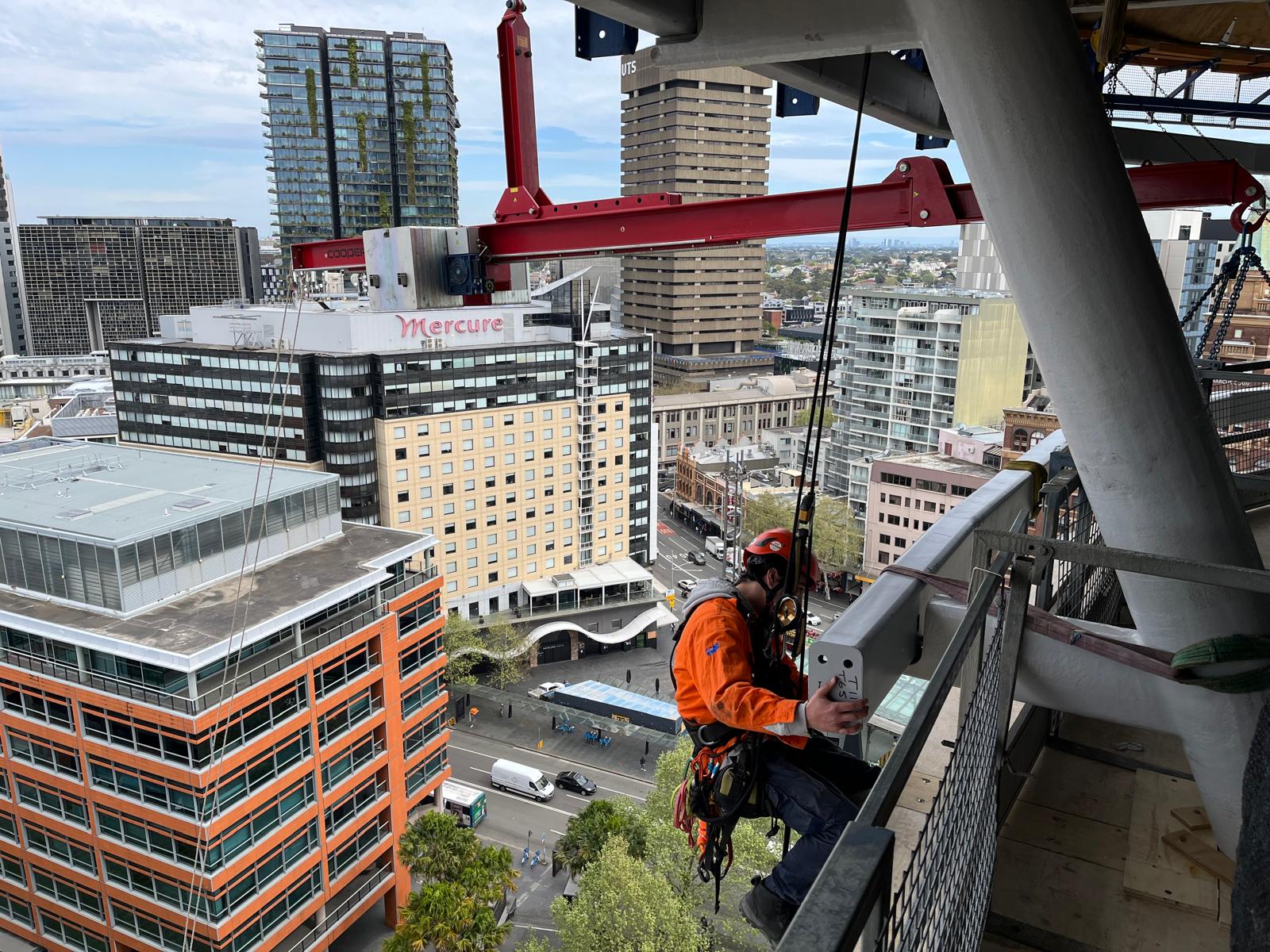
We work at height across Sydney high-rises, including facade access on towers like 88 Walker Street, so the crew that paints your building is the same kind of crew that installs and inspects safety systems on it.
Is rope access painting safe?
Done properly, yes. Technicians train hard for this and never rely on a single rope: there is always a working line and an independent backup, plus a harness, helmet and a planned rescue if someone needs help. The ground below is cordoned so nothing can land on a passer-by. The risk on a rope access job is managed by training and a proper rig, which is exactly why the painting is left to rope access technicians rather than a painter with a ladder and good intentions.
How much does rope access painting cost?
It depends on the height of the building, the condition of the facade, how many coats it needs and how easy the roof is to rig from. As a rule, the taller and more awkward the building, the more rope access saves you against scaffold, because you skip weeks of scaffold hire. The only way to get a real number is a site assessment, so the quote matches the actual facade. If you want one for your building, get a site assessment and we will scope it.
Services this involves
Trusted by Australia's leading builders
_logo.svg.png)