
Concrete cancer is what happens when the steel reinforcing inside concrete starts to rust. As the steel corrodes it expands, and that expansion cracks and pushes off the concrete around it. Left alone it spreads, weakens the structure, and drops lumps of concrete off balconies and facades. It is one of the most common and most expensive problems in older concrete buildings, and it is especially common near the coast.
If you own or manage a building in Sydney and you have seen a cracked balcony edge, a rust stain bleeding down a wall, or a patch of concrete that sounds hollow when you tap it, this is what you are probably looking at. Here is what causes it, how to spot it early, and how it gets fixed.
What is concrete cancer?
Concrete on its own is strong in compression but weak in tension, so it is reinforced with steel bars, called rebar, cast inside it. Normally the concrete protects that steel, because fresh concrete is highly alkaline and that stops the steel rusting.
Concrete cancer starts when that protection breaks down and the steel begins to corrode. Rust takes up far more space than the steel it forms from, so as the bar rusts it swells and forces the surrounding concrete apart. First you get cracks, then the surface flakes or breaks away, and eventually the rusted bar is exposed. Because the exposed steel then rusts faster, the problem accelerates once it starts, which is why catching it early matters so much.

What causes concrete cancer?
A few things break down the concrete's protection of the steel, and most buildings suffer from a mix:
- Water getting in. Cracks, failed waterproofing and poor drainage let water reach the steel. Water is what lets steel rust, so anywhere water sits or seeps is where concrete cancer starts. Balconies and planter boxes are classic trouble spots.
- Salt, especially near the coast. Chlorides from sea air and salt spray attack the steel directly. Sydney's beachside and harbourside buildings are far more exposed to this than an inland one.
- Carbonation. Over years, carbon dioxide from the air slowly reacts with the concrete and reduces its alkalinity. Once that protective alkalinity is gone at the depth of the steel, corrosion can begin.
- Not enough cover. If the original build did not leave enough concrete over the steel, the bars sit too close to the surface and lose their protection much sooner.
The signs of concrete cancer
You can often spot it before it becomes serious. Look for:
- Cracks in concrete, particularly along the line of the reinforcing bars
- Rust-coloured stains bleeding out of the concrete
- Concrete that is bubbling, flaking or breaking away, known as spalling
- Exposed, rusted steel
- Areas that sound hollow or drummy when tapped
- Damp patches, leaks or efflorescence, the white powdery residue left by water moving through concrete
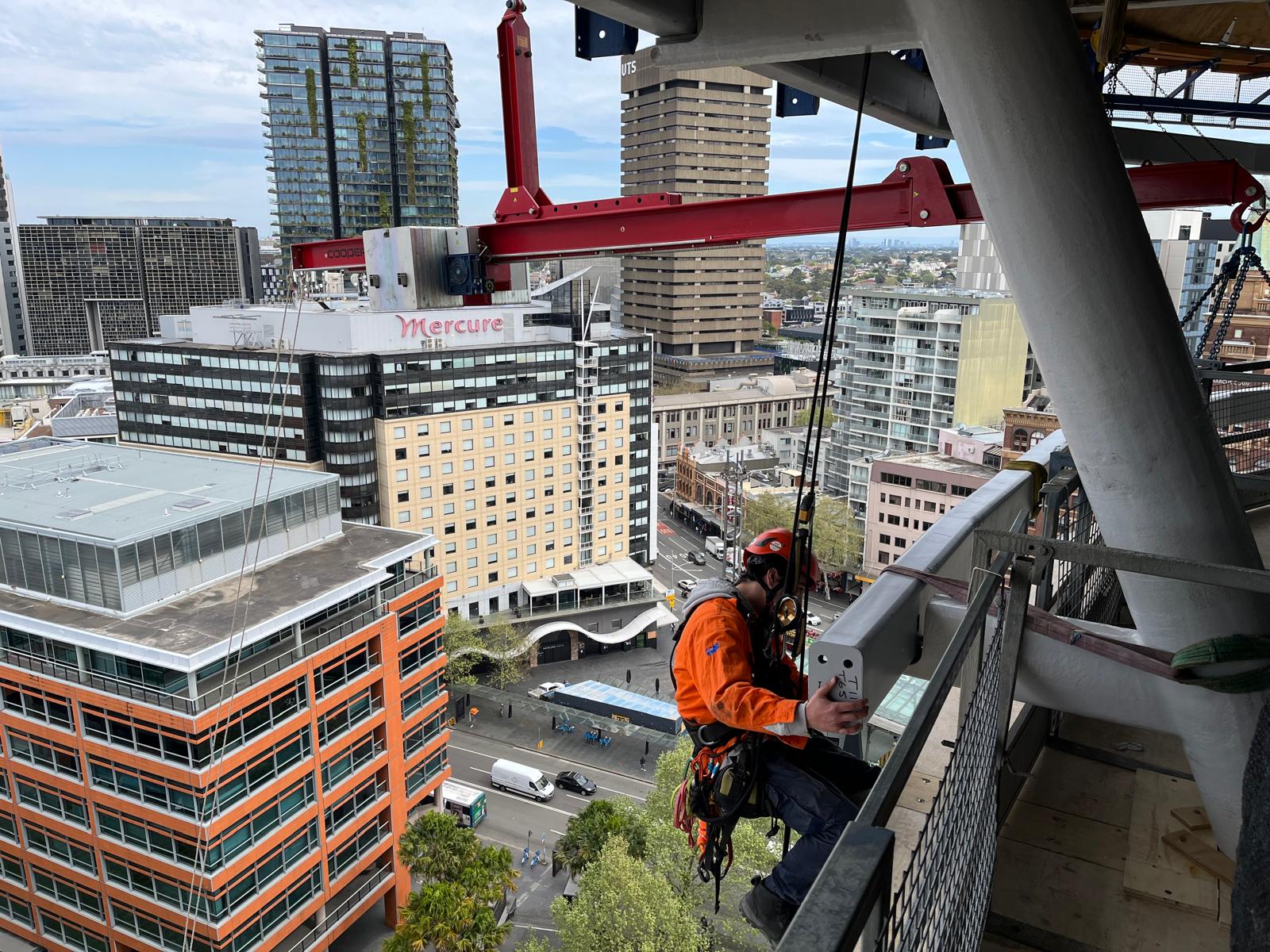
On a tall building, most of this is on the facade where you cannot easily reach it, which is why a proper look usually means getting someone onto the face of the building. That is one of the jobs rope access maintenance is built for, because a technician can inspect the whole facade up close without scaffold.
Concrete cancer vs concrete spalling: what is the difference?
People use the two terms as if they mean the same thing, and they are closely related, but they are not identical.
Spalling is the visible damage: the concrete flaking, chipping or breaking away from the surface. Concrete cancer is the underlying process driving it, the corrosion of the reinforcing steel that pushes the concrete off. So spalling is usually a symptom of concrete cancer, though concrete can also spall for other reasons like fire or freeze damage. If you see spalling on a reinforced concrete building, corrosion is the most likely cause, and it is worth investigating rather than just patching over.
How is concrete cancer repaired?
Patching the surface without treating the steel underneath is the classic mistake, because the corrosion just keeps going behind the new render. A proper repair deals with the cause:
- Inspect and map it. Find the full extent, including the parts that look fine but sound drummy.
- Break out the damaged concrete. Remove the failed concrete to expose the corroded steel completely.
- Treat or replace the steel. Clean the rust off the bar, or replace it if too much section is lost, and treat it so it resists corrosion.
- Reinstate the concrete. Patch back with a repair mortar that bonds and matches.
- Protect the surface. Apply coatings or waterproofing so water and salt stay out and the problem does not simply start again next door.
On anything above the ground floor, this is commonly done by rope access, which lets technicians reach the whole facade to inspect and repair without wrapping the building in scaffold for months. We do this kind of facade and remedial work across Sydney high-rises, including heritage concrete buildings like Sirius and towers like The Ribbon.
Where concrete cancer shows up
Some parts of a building suffer far more than others, because they see the most water and salt.
- Balconies are the classic. They are exposed to rain, often have failed waterproofing under the tiles, and the slab edge is thin, so corrosion shows up early.
- Facades and spandrels on the weather side of the building, especially anything facing the sea breeze.
- Car park slabs and columns, where cars carry in road salt and water pools on the deck.
- Planter boxes and wet areas, where soil and water sit against concrete for years.
- Anything coastal. A building near a Sydney beach or the harbour is in a much harsher environment than one a few kilometres inland.
If your building has any of these, they are the first places to check.
Can you prevent concrete cancer?
You cannot change how the building was originally built, but you can slow the process down and stop small problems becoming big ones:
- Keep water out. Maintain the waterproofing on balconies and roofs, keep drainage clear, and seal cracks before they let water reach the steel.
- Deal with damage early. A single spalling patch repaired properly is cheap. A whole facade left for a decade is not.
- Inspect regularly. On a tall building, a periodic facade inspection catches corrosion while it is still small, which is part of what a certification and audit or rope access inspection program is for.
- Protect the surface. Anti-carbonation coatings and sealers slow down the two things that start corrosion, carbonation and water getting in.
Why you should not ignore it
Concrete cancer does not fix itself and does not stay still. It spreads, it gets more expensive to repair the longer it runs, and in the meantime it drops concrete. A chunk of spalled concrete falling from a balcony or facade is a real safety risk to whoever is below. Catching it early, while it is a small patch rather than a whole elevation, is the difference between a modest repair and a major remediation bill.
Services this involves
Trusted by Australia's leading builders
_logo.svg.png)