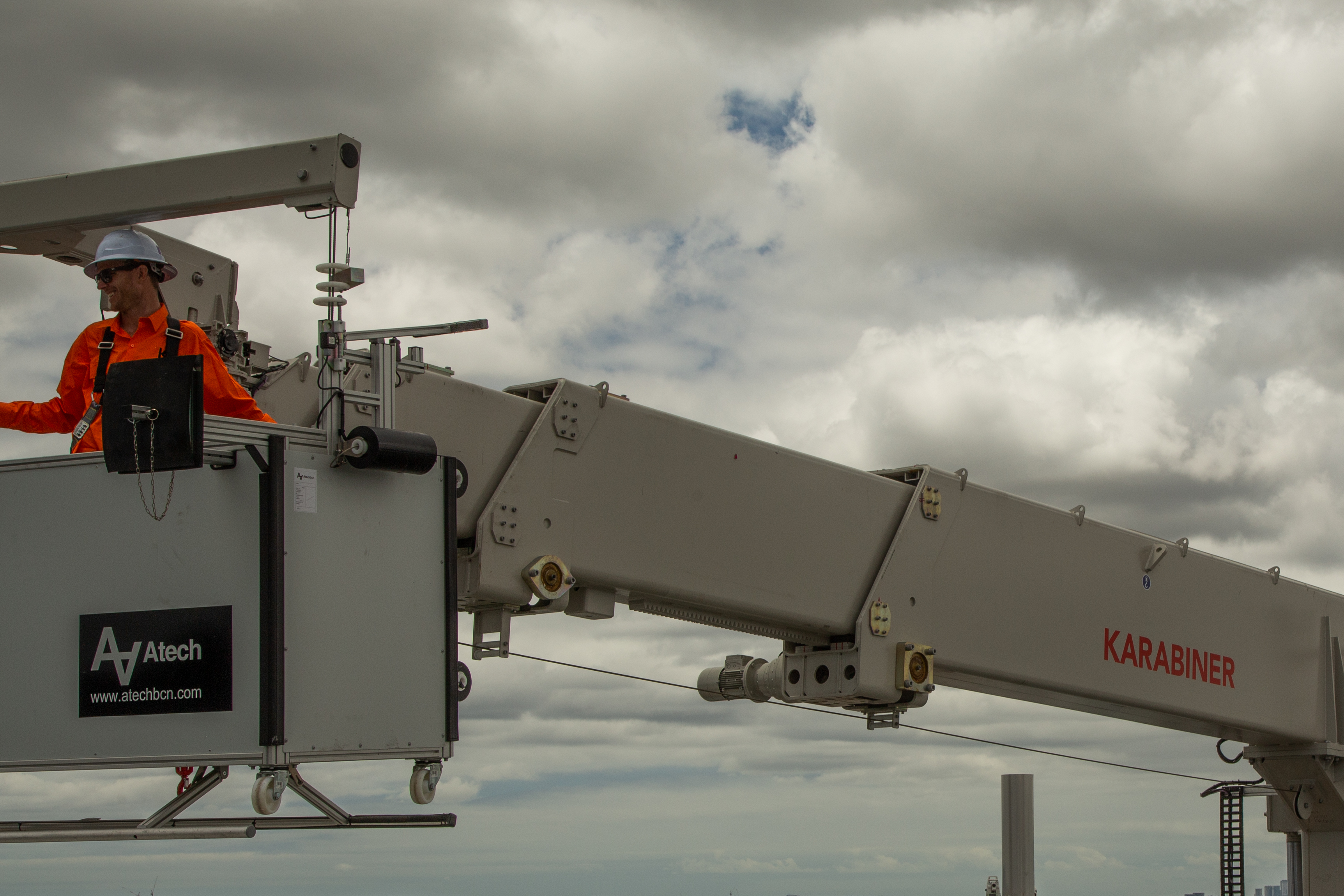
Industrial rope access is a way of reaching the hard parts of a building or structure using ropes and harnesses instead of scaffolding, cranes or lifts. A trained technician works suspended from anchor points on the roof, hanging on a working rope with a second rope as backup, and carries out inspection, cleaning, repairs or installation while up there. It is the same rope and harness idea as abseiling, applied to serious commercial work at height.
For a building owner or facility manager, it is often the quickest and cheapest way to get skilled hands onto a facade without shutting the place down or filling the car park with scaffold.
What industrial rope access is, and what it is not
It is not recreational abseiling. The technique looks similar, but industrial rope access is built around redundancy and skill. The technician is always on two independent ropes, a working line they sit on and a backup that catches them if the first fails, plus a harness and helmet and a planned rescue. Rope access technicians train hard through recognised frameworks like IRATA, and that training is the whole point: the safety comes from the person and the system, not luck.
The work itself is real trade work done at height. It is one part of a broader rope access maintenance service, so the same crew that inspects a facade can often repair it on the same visit.
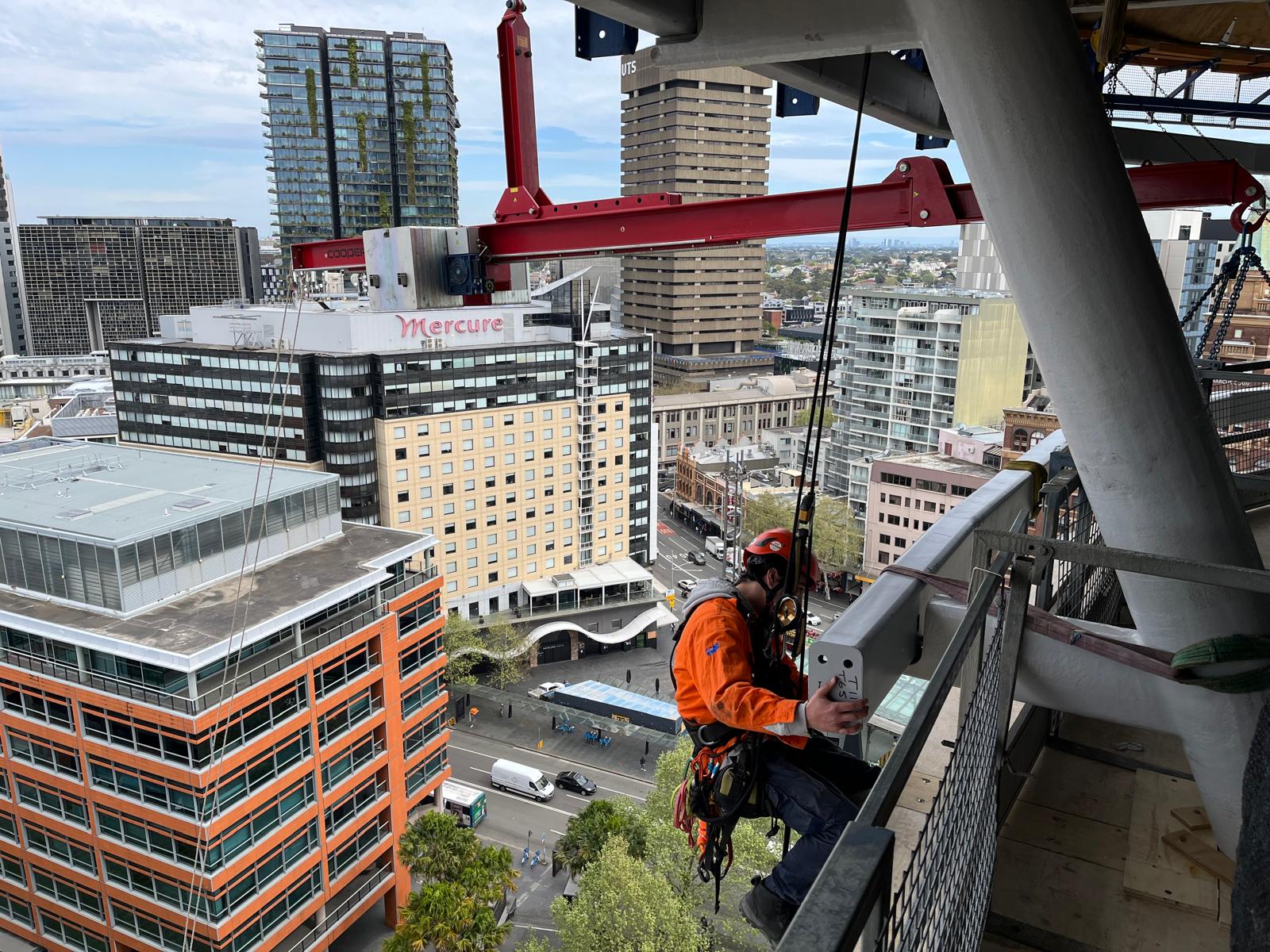
What industrial rope access is used for
A lot more than window cleaning. On commercial and industrial buildings, rope access technicians handle:
- Facade and structural inspections
- Window and facade cleaning
- Painting and protective coatings
- Concrete and render repairs
- Sealant and caulking, and leak investigation
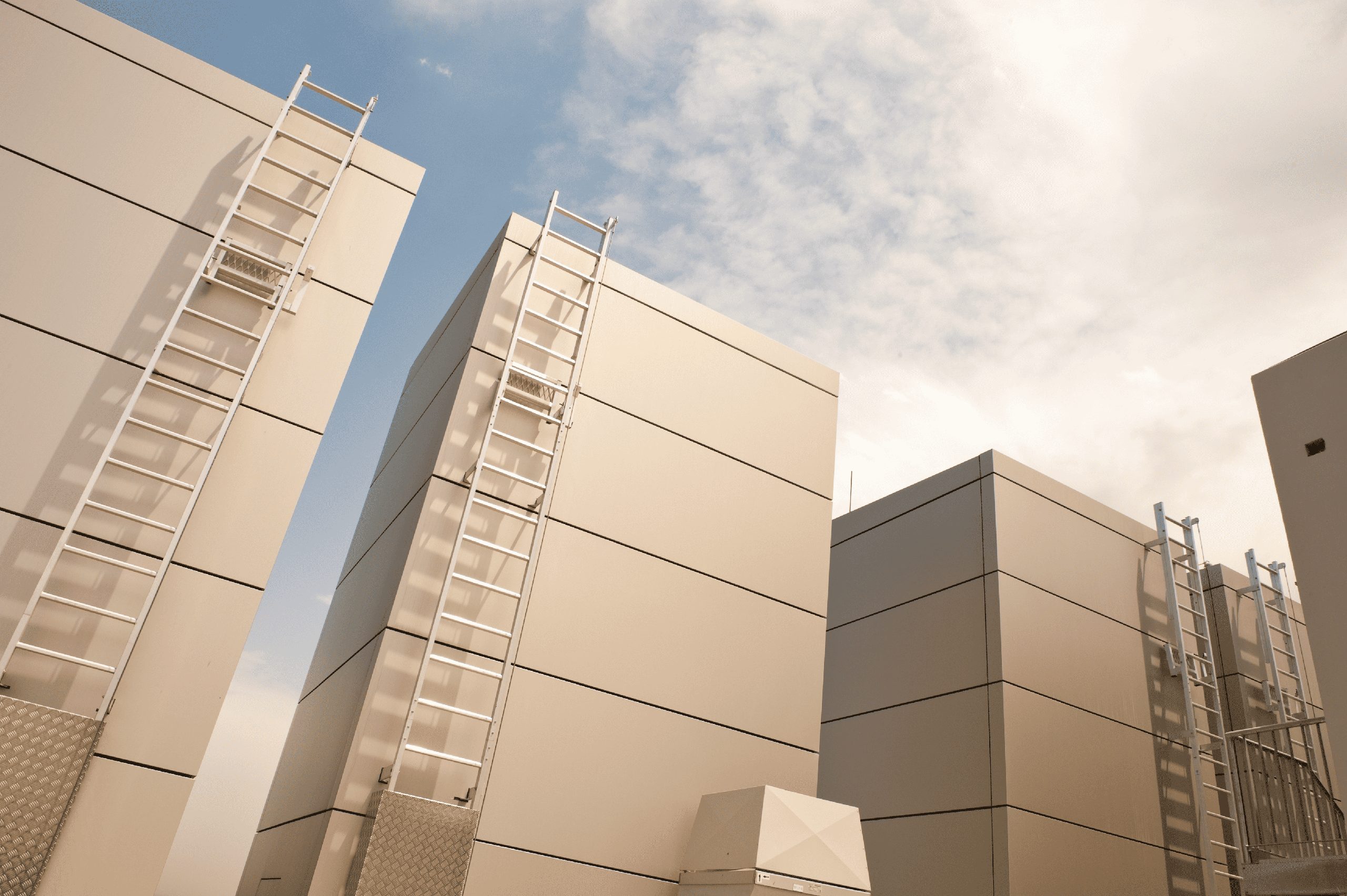
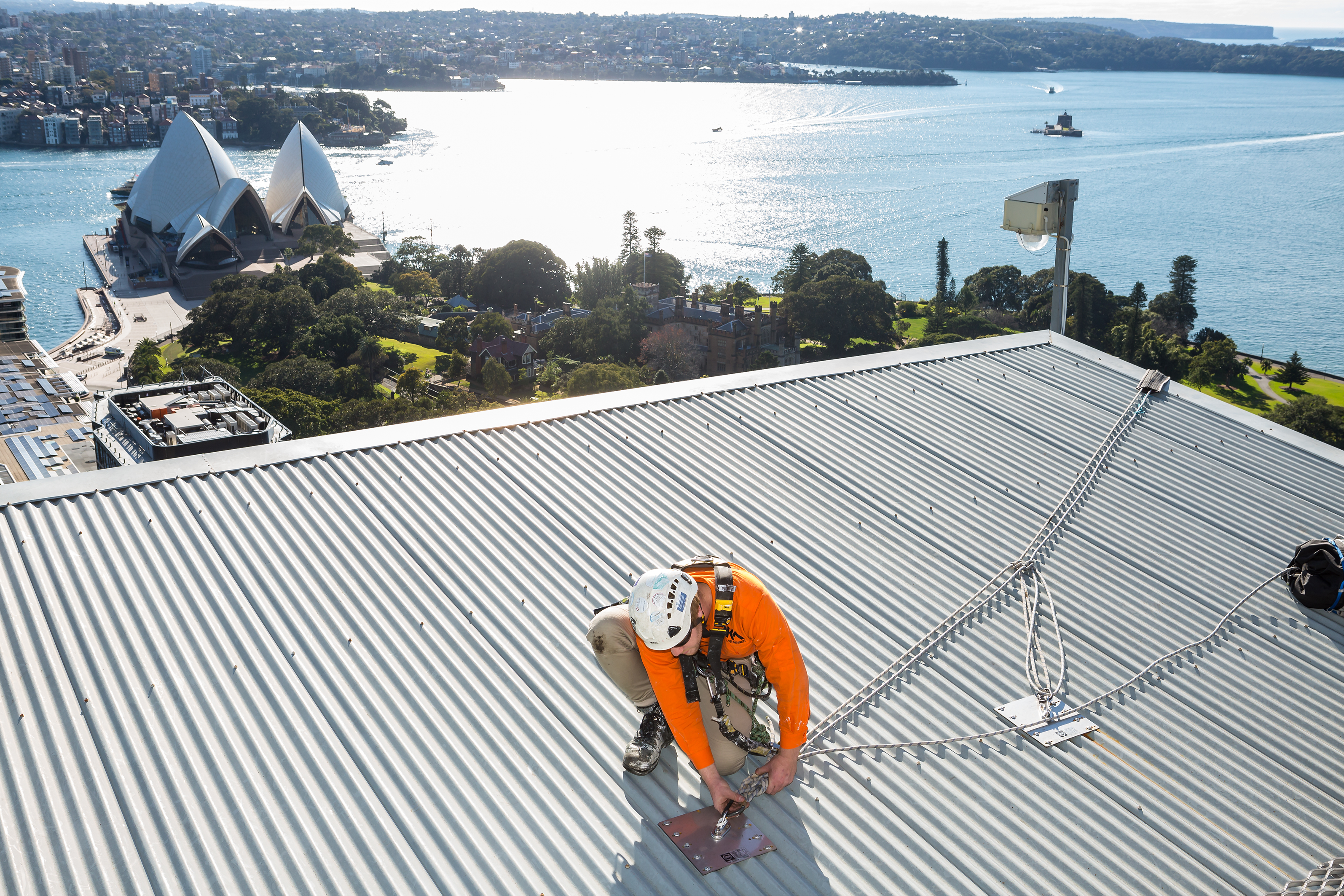
- Installing and inspecting height safety systems
- Signage, lighting and minor building services at height
Because they can get to almost any point on a building, rope access crews are also the practical way to install and check the safety systems other trades rely on, from anchors to static lines. That overlaps directly with height safety installation and certification and audit work.
When rope access beats scaffolding or a lift
Reach for rope access when the building is tall, the facade is awkward, the job is quick, or the building is occupied and you cannot block it off for weeks. There is nothing at ground level, so the footpath and car park stay clear, and the crew can be working within an hour of arriving rather than after days of scaffold.
Scaffolding still wins when a whole facade needs heavy, constant work over months, and an elevated work platform suits low buildings with clear, flat ground around them. But for inspections, repairs and cleaning on a tall or busy building, rope access is usually faster and cheaper.
What a rope access job looks like
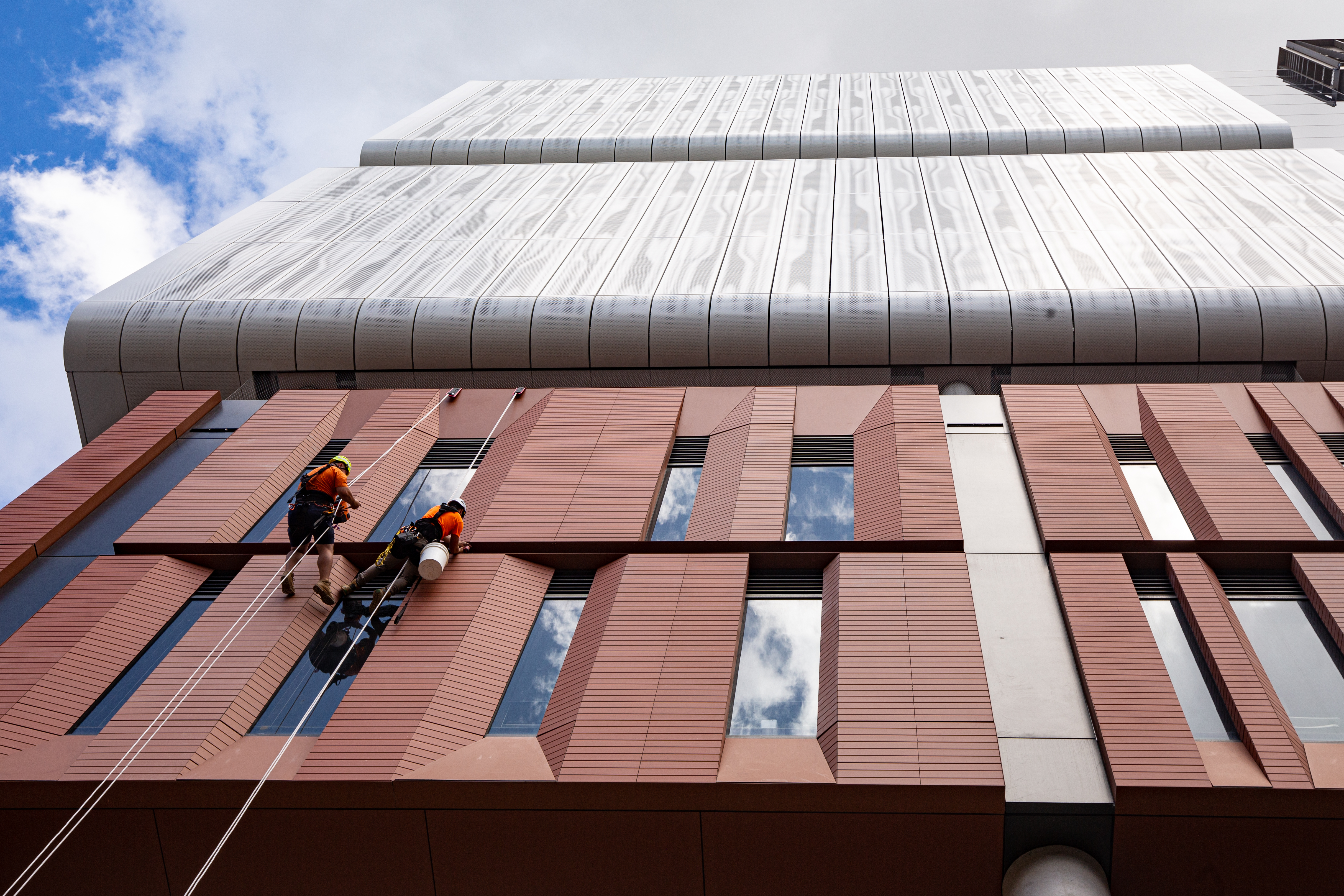
The crew assesses the building and plans the rig, sets up ropes from the roof anchor points, cordons the ground below, then works down the facade one drop at a time. When the job is done, the ropes come down and the site is clear. We do this across Sydney high-rises, including facade access on towers like 88 Walker Street.
Rope access for building maintenance
Rope access is not only for one-off jobs. Many building owners put their tower on a regular rope access maintenance program, so the same crew comes back on a set cycle to clean the facade, check the sealant and glazing, and pick up small repairs before they turn into big ones. Catching a failing sealant joint or a cracked panel early is far cheaper than waiting until water gets in and you are repairing the inside as well.
For a facility manager, the appeal is one contractor who knows the building, keeps a record of its condition, and can reach any part of it without booking scaffold each time. It also means the people cleaning your glass are the same people who can flag a problem on the roof while they are up there. That is the core of an ongoing rope access maintenance arrangement.
What does industrial rope access cost?
There is no flat rate, because it depends on the height and shape of the building, the scope of the work, and how easy the roof is to rig from. As a rule, the taller and more awkward the building, the more you save against scaffold, because you skip weeks of hire. For a real number, the honest way is a site assessment so the quote matches the actual building. If you want one, get a site assessment and we will scope it.
Services this involves
Trusted by Australia's leading builders
_logo.svg.png)