
Strata window cleaning in NSW usually splits in two. Residents clean the glass they can safely reach, and the windows nobody can safely reach are cleaned as one building-wide job, organised by the strata or building manager and done by rope access, a building maintenance unit (BMU) or a boom lift. That second job is height access first and cleaning second. Before you book it, confirm the roof anchors have a current inspection record, someone can open the roof on the day, and you know which access method the building needs.
Cleaning companies rarely tell you what the building needs ready. Here's that list, from the height safety side.
Who is responsible for strata window cleaning in NSW?
Start with your by-laws. NSW publishes a common property memorandum setting out who looks after what, and a scheme can choose to adopt it if its by-laws don't define common property. It isn't automatic.
Where it's been adopted, the memorandum itself lists window cleaning, interior and exterior, as a lot owner job, "other than those which cannot safely be accessed by the lot owner or occupier".
That exception is the whole story on a tall building. Nobody expects a resident on level 14 to clean a fixed pane from the outside. The memorandum doesn't name who picks those windows up, so in practice they're done as a building-wide job. No memorandum? Then your by-laws decide.
The pre-clean checklist
Run through this a few weeks out. Not the morning of.
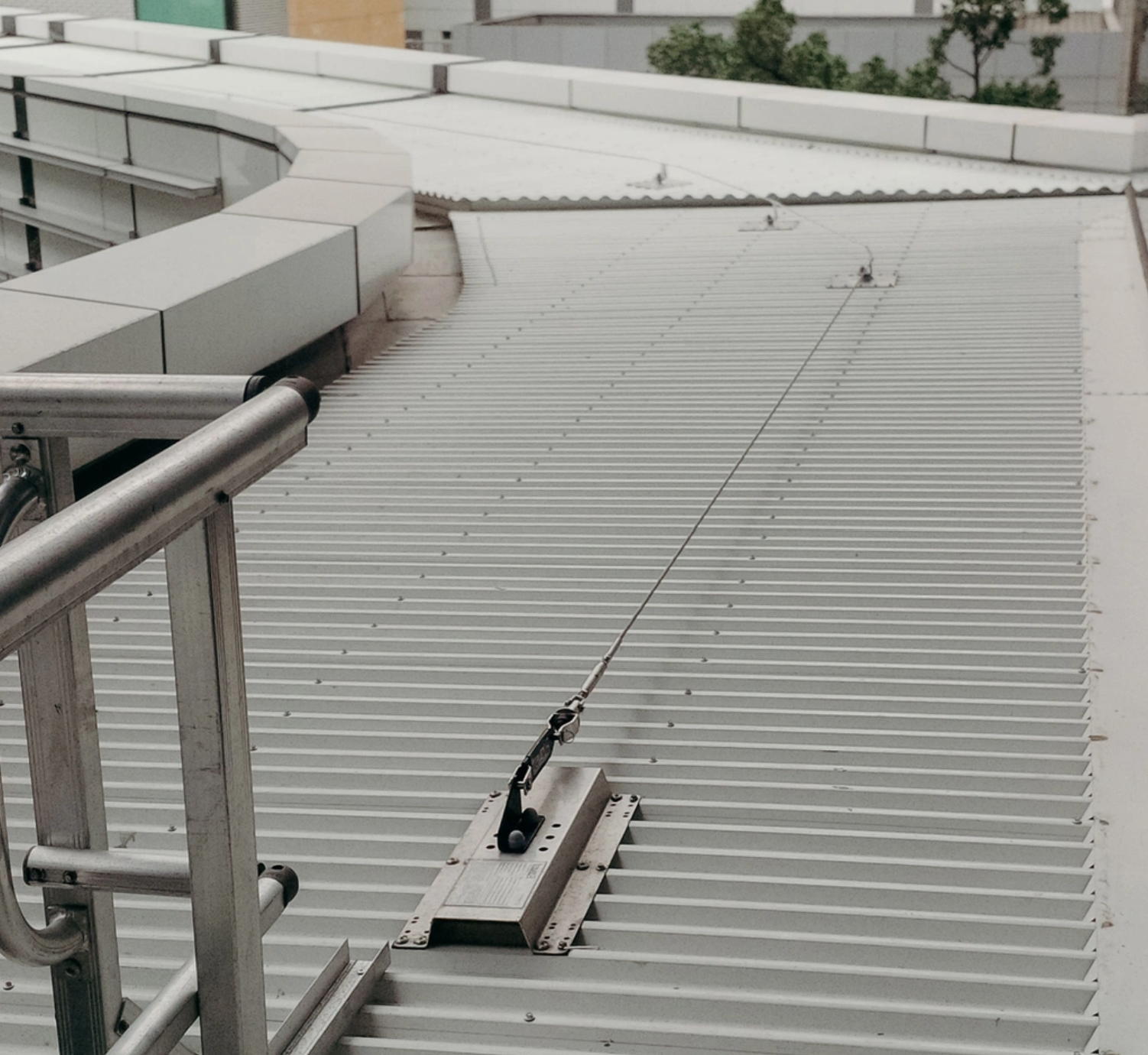
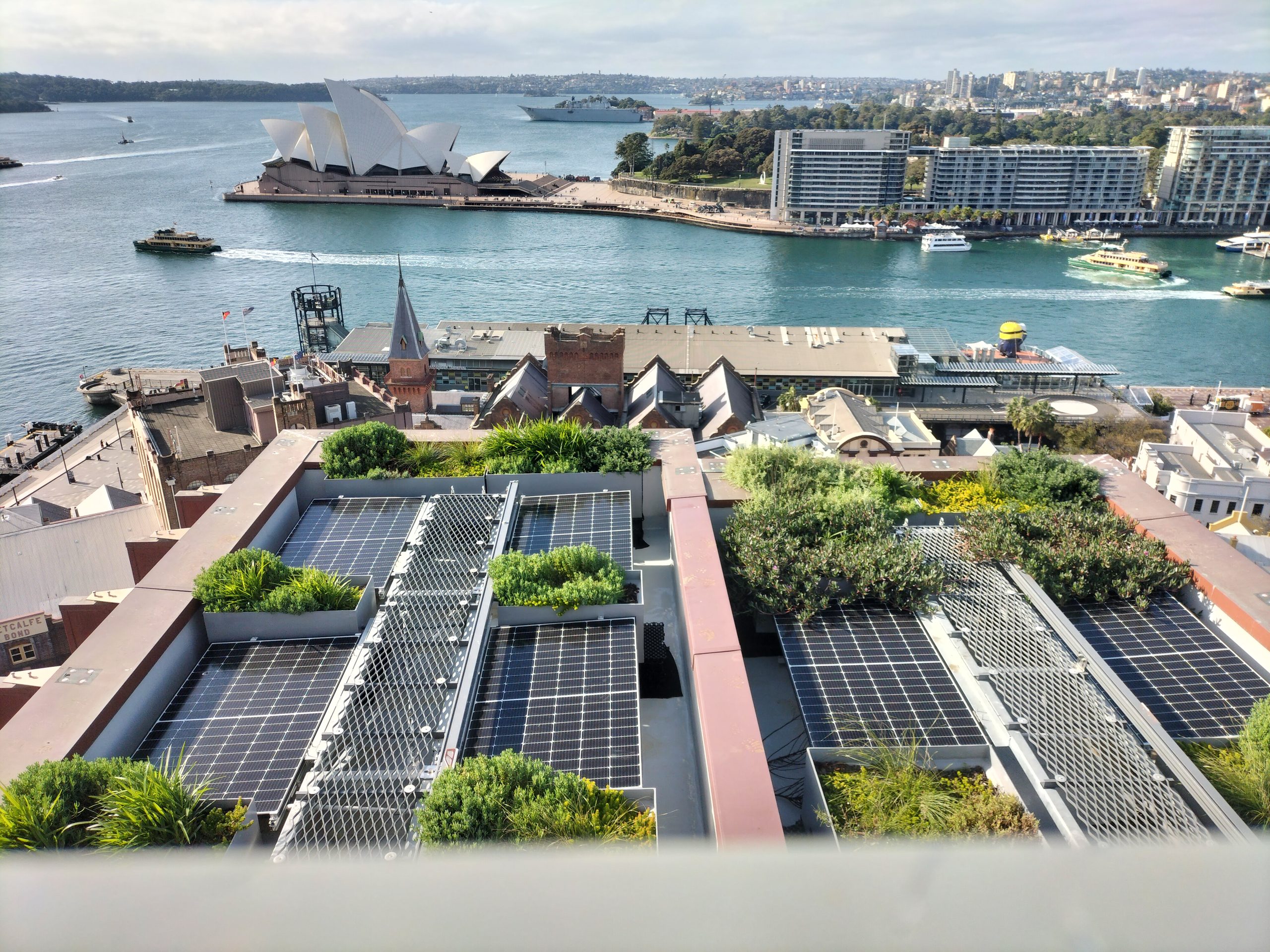
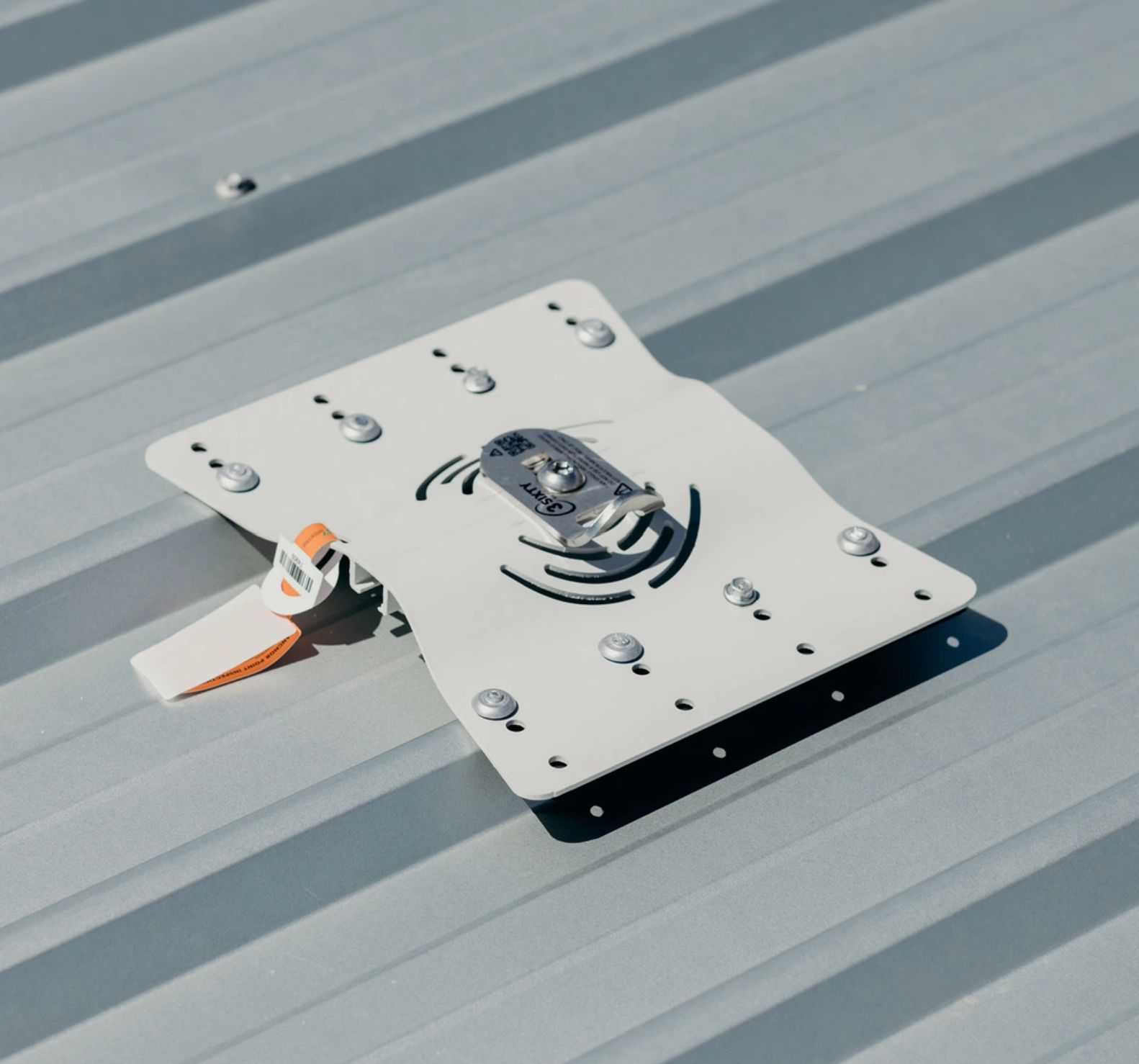
1. Roof anchors and their records. Find out what's up there (single anchors, a static line, davits, or nothing) and find the paperwork: the roof layout plan and the latest inspection report. The crew will hang off those anchors. With no current record, a careful contractor may decline to rig, and the clean is off. Our anchor point testing service closes that gap. For intervals, read how often roof anchor points need certifying in NSW.
2. Roof access. Who holds the roof key? Does the hatch open, or was it painted shut years ago? Crews regularly lose a morning waiting on the only key. Name who meets them, and when.
3. A rig plan. Ask the contractor to mark on the roof plan which anchors they'll use for each drop and where ropes run over parapets. They should do it after walking the roof, not from an aerial photo.
4. Exclusion zones below. Every drop has a zone underneath that must stay clear: a pool deck, the driveway, a public footpath. If it takes in a council footpath, talk to council early. North Sydney Council, for example, requires a permit for works on a council footpath or road, and says works must not start until a valid permit has been issued.
5. Resident notices. Dates, which elevation on which day, and what you need from residents.
6. Balconies. Pot plants on the balustrade, washing, loose screens. Anything that falls from level 12 is a serious hazard to people below, so ask residents to bring things in.
7. Glass and facade notes. Flag tinted or coated glass, sloped glazing, a podium roof the crew will land on, louvres, and any section that's never been cleaned.
Rope access, BMU or EWP: which does your building need?
The building decides the method more than the cleaner does.
| Building or feature | Likely access method | Watch for |
|---|---|---|
| Two or three storey townhouses, ground access all round | Water-fed pole or ladder from the ground | Owners may be responsible where they can safely reach, if the memorandum is adopted |
| Four to eight storeys, hardstand and room at the base | Elevating work platform (boom lift) or rope access | Ground conditions, landscaping, driveways, council footpath |
| Mid to high-rise apartments with roof anchors, no BMU | Rope access | Anchor inspection records, rig plan, roof access |
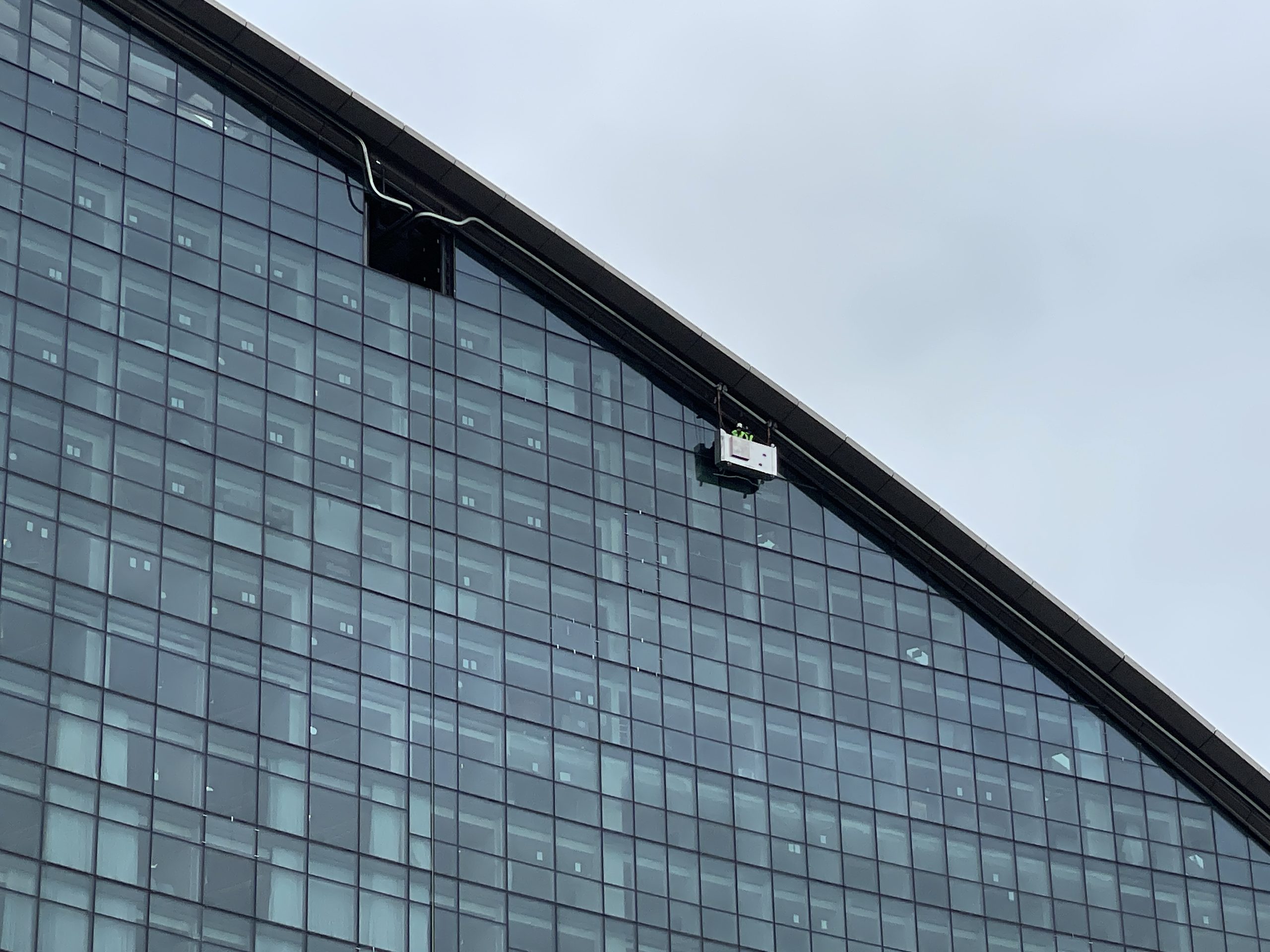
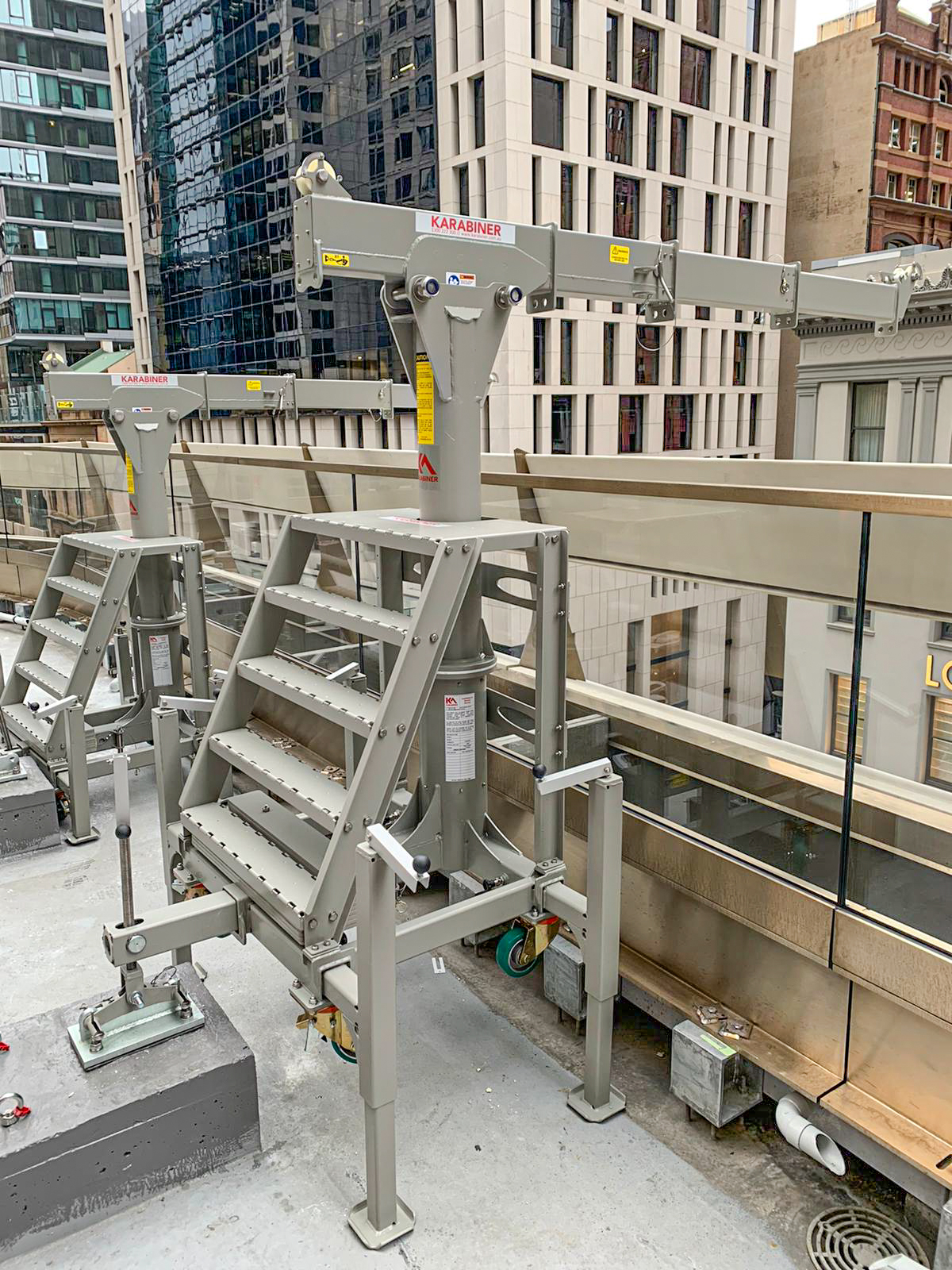
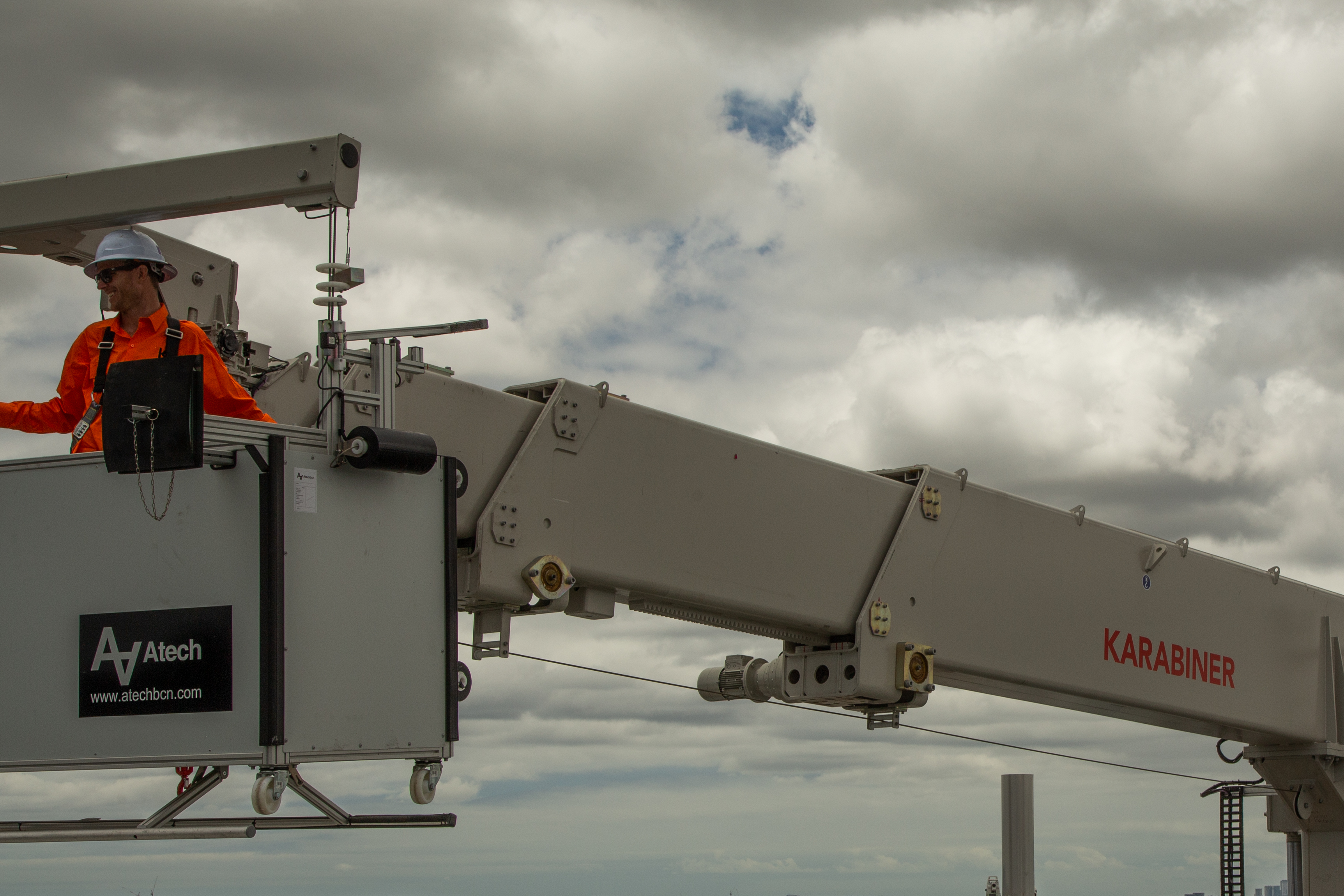
| Tower with a BMU | BMU for the main elevations, rope access for what it can't reach | BMU service records, operator, wind |
| Setbacks, podiums, curved or sloped glass | Rope access with deviations or re-anchors | Extra anchors may be needed for clean drops |
| No anchors, or anchors with no records | Nothing yet: inspection or installation comes first | Lead time before the clean can be booked |
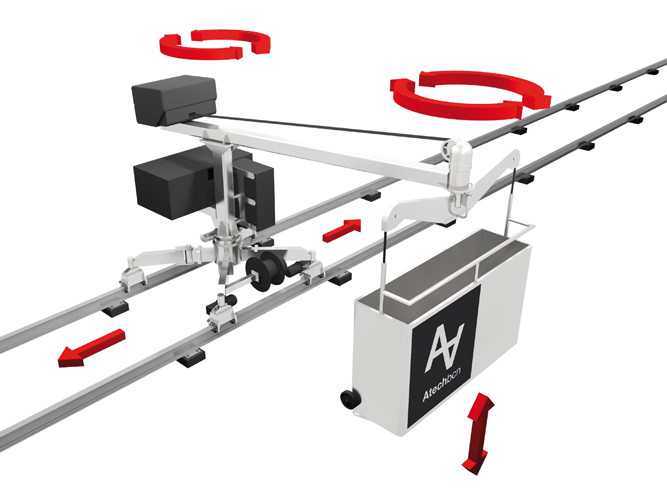
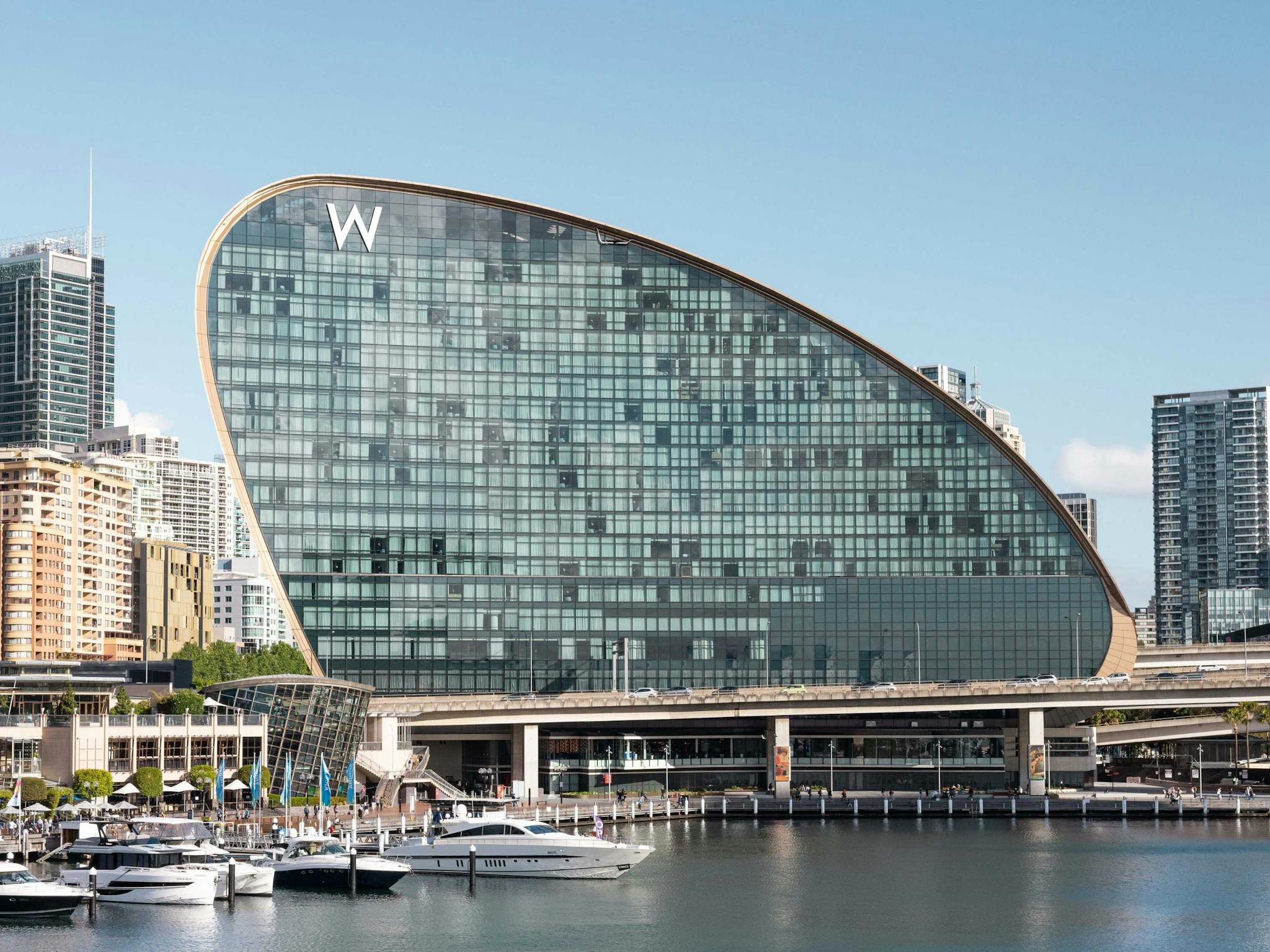
Cost and speed are compared in high rise window cleaning by rope access vs BMU. At The Ribbon in Darling Harbour we installed fall protection, rope access systems and a BMU, so the building is set up for both. The Ribbon case study shows how those systems sit together.
Got a BMU? Get its service records before the cleaners book it. Our building maintenance unit team services machines we installed and ones we didn't.
What does rope access window cleaning in Sydney involve?
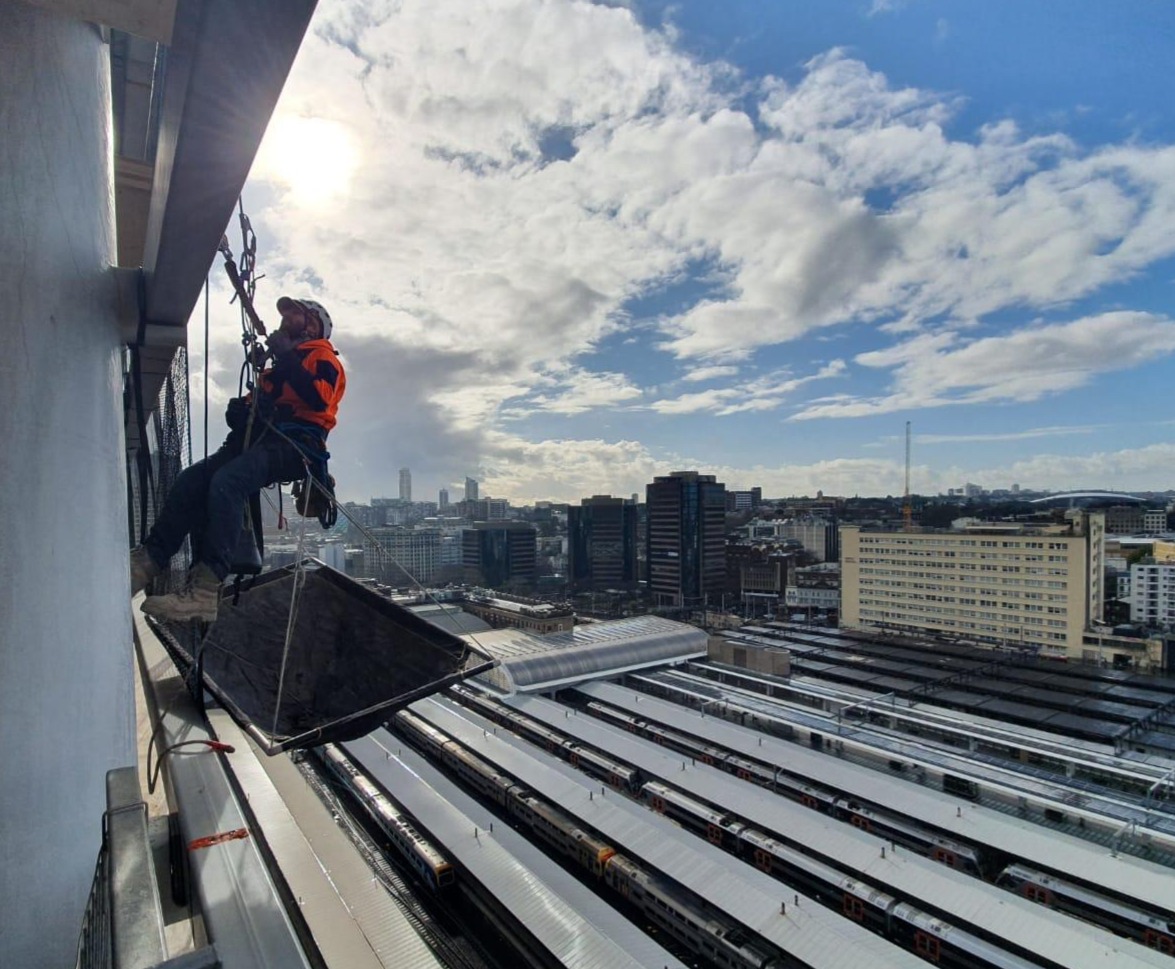
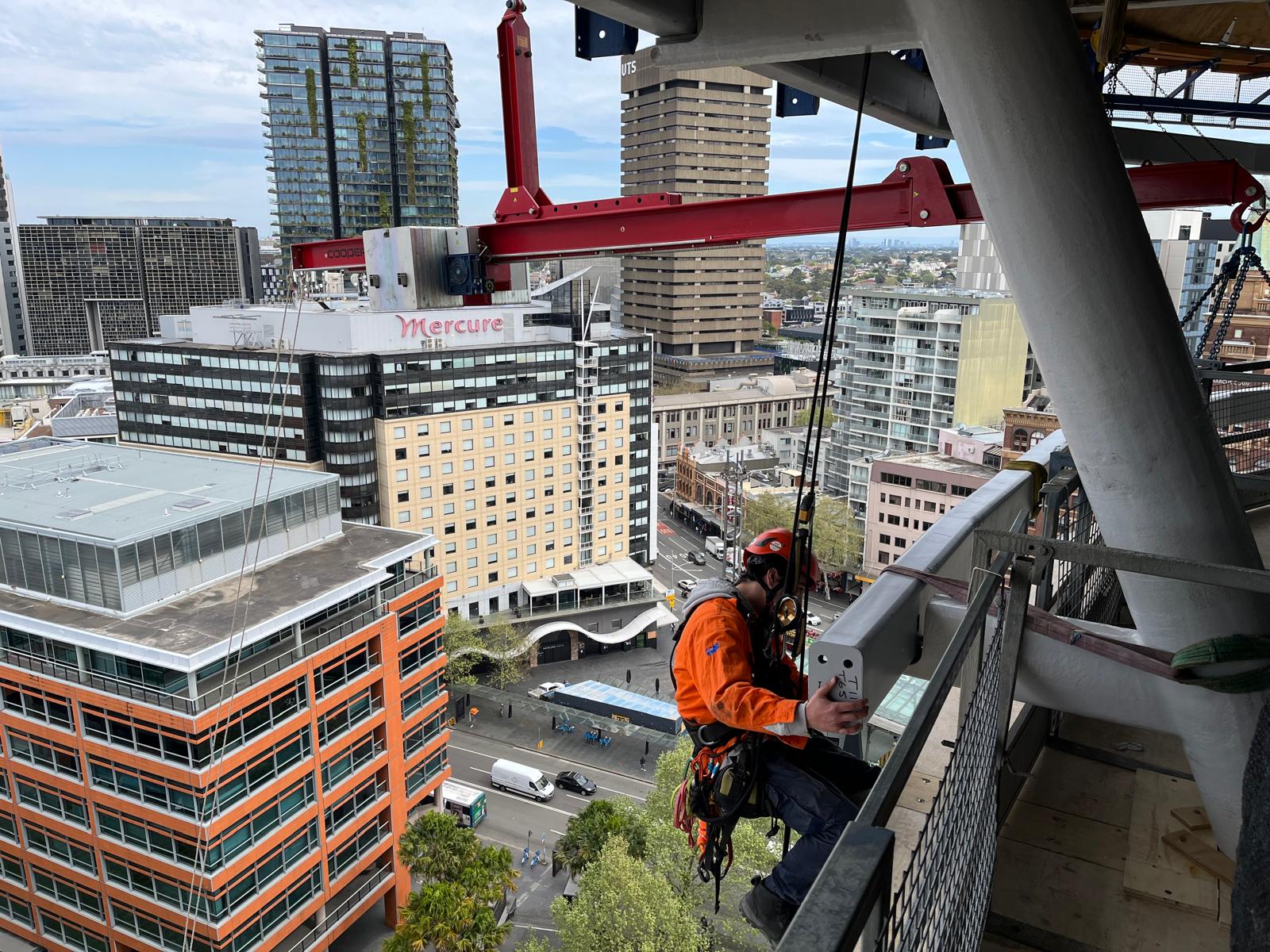
Rope access, often called abseil window cleaning, means certified technicians come down the facade on ropes rigged to the roof anchors, one drop at a time. IRATA calls its approach a two-rope, fail-to-safe method. No machine at the base, no scaffold.
The rope work is only as good as what it's tied to, which is why most of this post is about the roof. Our abseil window cleaning in Sydney post walks through the day itself, and our rope access maintenance service covers window and facade cleaning alongside sealant, painting and repairs.
What drives window cleaning cost on a strata building?
We won't put a dollar figure on it without seeing the building. These move the number:
- Number of drops. Every drop means rigging, moving and de-rigging. A wide, low building can cost more than a narrow, tall one.
- Anchor layout. Anchors in the right spots give clean drops. Anchors in the wrong spots mean re-rigging, or a separate visit to add anchors.
- Roof access. A walk-out roof is quick. A hatch at the top of a vertical ladder, with every bag hauled up by hand, is not.
- Glass and balconies. Glass balustrades are extra panes, and cluttered balconies slow the crew.
- Exclusion zones. Traffic control, a permit or weekend work add cost.
- Weather and frequency. Wind stops rope work. A building cleaned regularly is quicker than one untouched for five years.
The cheapest way to bring the price down is to sort the checklist before you ask for quotes. Less uncertainty means less contingency in the price.
What should you ask a window cleaning contractor for?
Get these in writing before you sign:
- Certificates of currency for public liability and workers compensation insurance, with dates that cover the job.
- A site-specific work method statement naming your building, the access method and the rig plan. Not a template with the address swapped.
- A rescue plan. If a technician is hurt on the rope, how do they get down? It should be specific to your building.
- Technician certifications. Ask for each technician's IRATA level and number. IRATA has three technician levels and requires technicians to re-certify every three years, and you can check a technician's status with its Verify a Technician tool.
A good contractor asks about anchor records and roof access before you do. Our IRATA-certified technicians also hold trades.
Is your owners corporation legally required to certify the anchors?
Probably not in the way you've been told. SafeWork NSW says a strata title, body corporate or owners corporation that is only responsible for common areas used only for residential purposes is generally not a person conducting a business or undertaking (PCBU) for those areas, and is excluded from the PCBU duties. That changes if it employs a worker, and WHS laws will usually apply where common areas mix residential and commercial use. Read the SafeWork NSW guidance on strata title and body corporate.
So on a purely residential building, the case for inspected anchors is mostly practical: the crews you hire carry their own safety duties, and the good ones won't rig from anchors with no current record. Mixed-use buildings are a different conversation. Our guide to roof anchor points, Australian Standards, installation and inspection covers the standards side, and our certification and audit service looks at the whole roof, not just the anchors.
What window cleaning often finds on the facade
A window clean is often the only close look anyone gets at the facade between major works. Technicians on the rope see failed sealant, cracked render, rust stains under balcony edges and spalling concrete, usually early signs of water getting in.
Ask your contractor to photograph and log what they see, drop by drop, so a defect record comes with the invoice. Bigger items need a proper scope: our remedial building works guide explains what happens next, and we do concrete repairs by rope access without scaffolding the building.
Services this involves
Trusted by Australia's leading builders
_logo.svg.png)